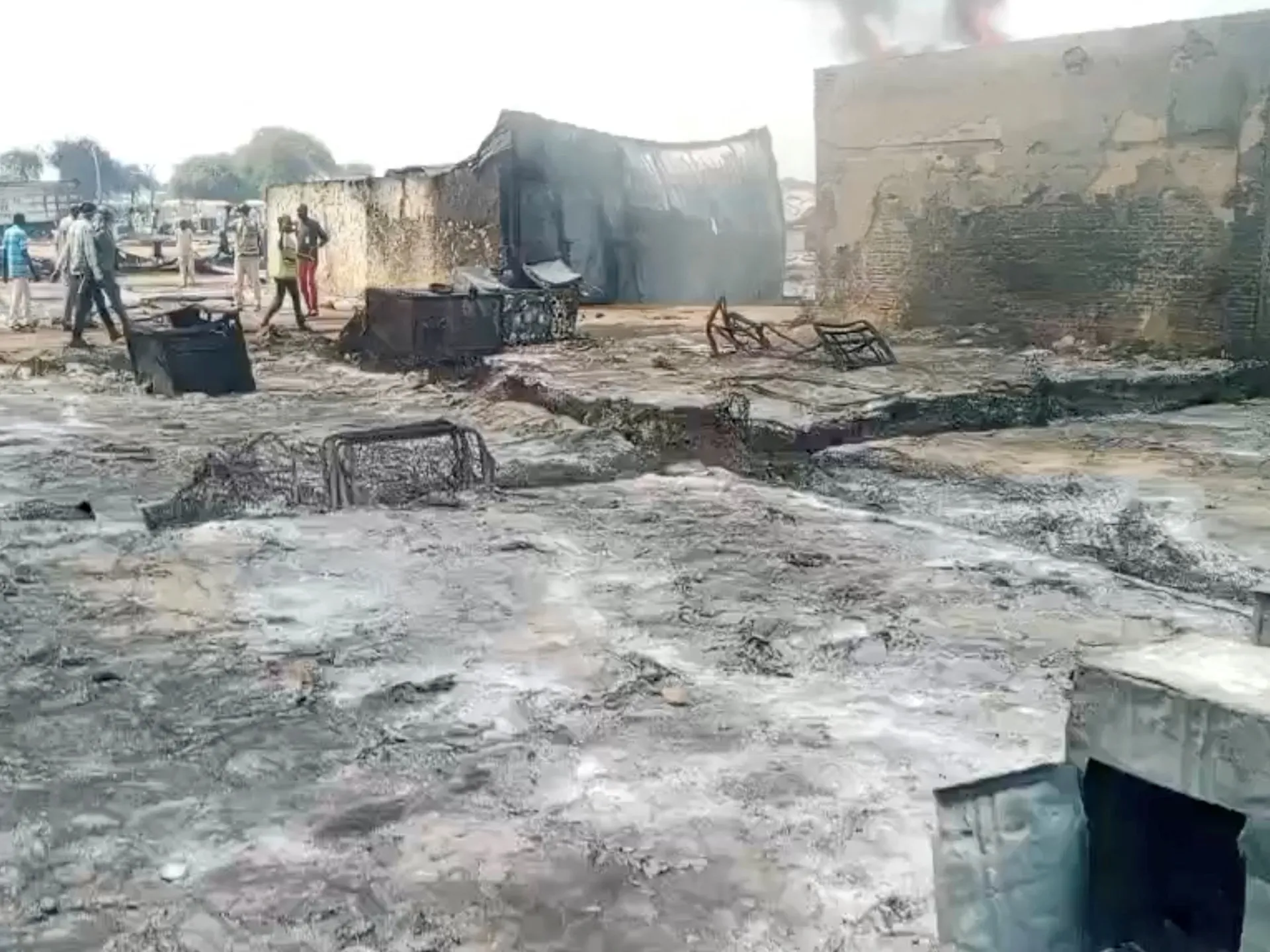
In the Imtidad Nasser neighborhood east of Khartoum, Sudan’s capital, residents are grappling with a terrifying new reality of skies filled with drones. “We heard the drone of drones in the sky, but at first we didn’t pay attention to it,” Ahmed Abdel Hamid, a resident of the area, told Al Jazeera of a recent drone attack by the Rapid Support Forces (RSF). Then, anti-aircraft fire and two huge explosions rocked the area, killing three children from a family in the community. A devastating wave of drone attacks across Sudan has killed more than 160 people in recent days, marking a deadly evolution in the conflict between competing military forces that began in April 2023. The use of drones is a relatively new development in the brutal civil war, which is now in its fourth year and has killed at least 59,000 people, according to the ACLED conflict monitor. Some 14 million people have been displaced from their homes and 4.5 million have fled the country. Meanwhile, the SAF and RSF have continued to compete for control of different parts of the country, mainly through ground invasions and combat, and often at the cost of civilians. The El Fasher massacre in the west of the country last year – described by Amnesty International as “ethnic cleansing” – propelled the crisis into international headlines. RSF fighters slaughtered tens of thousands of the city’s inhabitants after holding it under siege for 18 months and then capturing it, at the time the last stronghold of the Sudanese Armed Forces in the Darfur region. Now, the intensifying reliance on drones by both sides reflects a deliberate shift toward long-range preventive operations. For the SAF, drones offer a crucial tool to navigate complex geography and neutralize the RSF’s advantages. Military expert Abu Bakr Abdel Rahim said the military’s main reason for intensifying drone strikes deep in the Darfur and Kordofan regions is to “target command and control centers, fuel and ammunition depots and main supply routes, especially those linked to the borders with Libya, Chad and South Sudan.” Geography plays a fundamental role in this strategy. “The Darfur region is vast, separated from the current army concentration areas in Kordofan by desert distances and long militarily exposed roads, making ground advance very complex without massive engineering, air and logistics coverage,” Abdel Rahim explained. Through these targeted attacks, Abdel Rahim noted, the army leadership seeks to weaken the RSF’s “ability to rally its forces and launch counterattacks, or recapture the strategic areas it lost.” Furthermore, by attacking towns like Nyala, the army aims to “hit their morale, make them feel insecure even in their rear control areas and disrupt any attempts to establish parallel administrative entities.” Competing narratives on the battlefield Military officials say specific tactical objectives are behind the recent escalation. Mohamed Didan, spokesperson for the Special Action Forces of the Sudanese Armed Forces in Kordofan, stated in a Facebook post that the army launched “75 airstrikes against fixed and mobile targets, together with infantry forces, vehicles, commanders and individuals of the Rapid Support Forces” throughout Kordofan, Western Darfur and Southern Darfur. Didan directly linked the RSF’s recent drone attacks on Khartoum to its battlefield losses, attributing the escalation to “the death of around 80 mobilized personnel.” He added that the RSF is deliberately attacking civilian infrastructure, “as happened at Khartoum airport, fuel stations in Damazin and the electrical transformer station in the town of Tendelti in North Kordofan state last Tuesday, leading to blackouts in cities in the state and the neighboring state of North Kordofan.” In response, the RSF issued a statement on Monday accusing the military of using drones to carry out “massacres in the Nyala cattle market and al-Na’am market in Abyei, and at a truck station in the al-Dabbab area of Western Kordofan.” A Sudanese government official, speaking to Al Jazeera on condition of anonymity, said the military’s use of drones is strictly tactical. “The military does not attack civilians, but considers all military and logistical sites and supply lines of the Rapid Support Forces as legitimate targets,” the official said. The increasing number of civilian deaths Civilians are paying the highest price for all of this. The deadliest recent attack occurred near a market in the town of al-Dabba in Western Kordofan, where a drone attacked a transportation hub, killing 80 people. Early on Monday, an army drone strike hit the RSF stronghold of Nyala, killing 17 people, while an attack by the paramilitary group on a gathering of displaced people in Blue Nile province killed 41 people. The United Nations has condemned the attacks. “We are alarmed by the continued deadly drone attacks across the country, which are killing civilians, including children, and disrupting central services,” Stéphane Dujarric, spokesman for the UN secretary-general, told reporters. A research report by the Center for Information Resilience (CIR) revealed that 21 different models of drones have been used since the war broke out. China, Russia, Sudan and Turkiye. According to the CIR investigation, the RSF has deployed 10 different types of drones, while the SAF has used five different models. The overall result is a terrifying and rapidly mechanized conflict where the skies offer no shelter to civilians below.