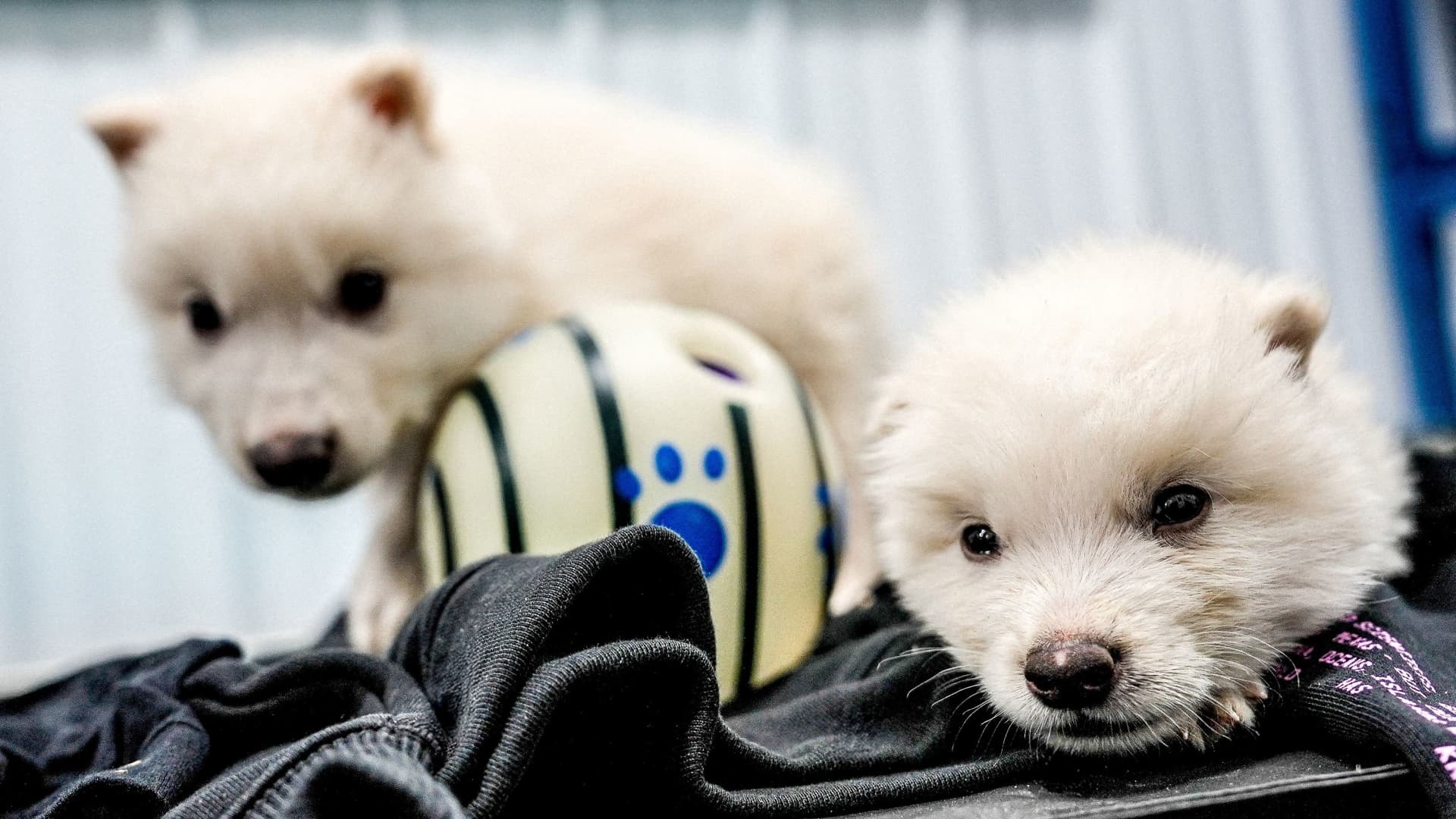
Colossal Biosciences’ efforts to bring back extinct animals like the woolly mammoth and direwolves have drawn comparisons to Jurassic Park. CEO and co-founder Ben Lamm told CNBC’s Julia Boorstin on the CNBC AI Forum last week that he understands those comparisons. “I think anyone who watched Jurassic Park in the ’90s and didn’t say it was great, I don’t think they’re probably very funny at parties,” Lamm joked. “But yes, I saw the movies. I love them. They entertained us. They scared us.” However, Lamm said, “I constantly have to remind the X people that, you know, they were movies,” he said. “I don’t think Jurassic Park had any model for conservation or general human benefit, so we’ve tried to take a slightly different perspective.” Since viable dinosaur DNA is no longer available, recovering dinosaurs is, in fact, impossible. But what’s going on at Colossal, in addition to the dire wolf and woolly mammoth projects, is work to genetically engineer the dodo bird, the Tasmanian tiger, and a giant bird called the moa, among others. “It’s very likely that in the next year or two people will continue to see us returning extinct species to Earth, and we might even have more dire wolves as well,” Lamm told Boorstin. The process of creating the wolf pups involved taking genetic material from a skull and tooth that were tens to hundreds of years old. Using AI models, Colossal used ancient DNA to reconstruct the dire wolf’s genome and map it to its closest living relative, the gray wolf. The team then created embryos by editing cells from modern gray wolves. Three puppies, named Romulus, Remus and Khaleesi, were born to domestic dogs used as surrogate mothers. Genetically modified wolf pups Romulus and Remus, two of three successfully bred by reconstructing a genome from ancient fossil DNA of the dire wolf that had been extinct for more than 12,500 years by Colossal Biosciences, considered “the world’s only extinction company,” are seen a month after their birth on October 1, 2024 in North Texas, US. Colossal Biosciences | Via Reuters Skeptics, Boorstin noted, say they didn’t actually extinct a dire wolf, but rather created a genetically modified gray wolf. Lamm called this a “semantic argument” that “misses the forest for the trees.” “Gray wolves are genetically modified dire wolves. They were created by nature or by God or however you want to classify it,” he said. Colossal is undertaking a similar process in its woolly mammoth project: which involves genetically modifying an Asian elephant. Lamm told Time in August that the company aims to have a woolly mammoth birth in the 2030s. “We call it a woolly mammoth,” he said. “Because if it looks like a duck, quacks like a duck, fulfills the ecological functions of a duck, it is a duck, in our perspective.” Lamm became interested in this work after a 2019 meeting with renowned Harvard geneticist George Church, whom Lamm called “arguably the father of synthetic biology.” Church, who started the Personal Genome Project, had been dreaming of bringing back the woolly mammoth for decades, he told CNBC in 2021. However, the vision of reviving animals like the woolly mammoth goes far beyond creating a real-life Jurassic Park with previously extinct creatures. “[Church] “We had this vision that we could leverage CRISPR and all of these tools and technologies to bring back extinct species, use some of those technologies for human healthcare, and then build this programmable model of life that we could apply to so many different use cases on Earth,” Lamm said. Those use cases include the aforementioned conservation-focused benefits that de-extinction promises. For example, engineered woolly mammoths could help combat climate change by trampling snowpack in high-altitude Arctic regions, which keeps the ground frozen, and felling trees, thereby converting heat-absorbing forests into grasslands, but processes related to extinction are also opening new doors in genomic engineering and developmental biology, Lamm, co-founder and CEO of Colossal Biosciences, said at the CNBC AI Forum in Dallas, Texas, on 1 October 2026. Carla Thorpe | CNBC That could have implications for “everything from microbes to plastic in the oceans to genes.” therapies and targeted deliveries to humans to eradicate genetic diseases,” he said. Lamm theorized that these efforts around DNA synthesis could even lead to the development of crops or trees that grow faster. “We’re pushing the limits of DNA synthesis to synthesize the largest payloads of DNA,” he said. “That will be hugely transformative in the way we think about programmable life.” A company spun off from Colossal, called Astromech, is driving what Lamm called “evolution.” convergent,” studying what causes species that are similar in almost every way to have different immunities or other health problems, such as why elephants get cancer at a slower rate than humans. That research could be leveraged to solve human health problems or responses to pandemics, Lamm said. So we need cryopreservation, we need biobanks, we need genetic rescue and these kinds of tools,” Lamm said. “This opens the door for us to say, if we take these models and we take these evolutionary trends, what can we learn from that and how can that be applied to other use cases, and how can we use directed evolution in everything from crops to human healthcare and beyond?” These efforts to address some of the world’s biggest problems have made Colossal Biosciences attractive to investors. In July, the company announced a $200 million Series C round led by TWG Global, bringing its valuation to $10.2 billion. In total, the company has raised more than $435 million since its founding. But Lamm is not unaware that many people are inspired by the idea of bringing animals back from extinction, especially young ones. Lamm said 30% of the company’s investors “come to us from their children.” conservation, and then building a synthetic biology platform that can be leveraged for so many different use cases, that’s the real mission here,” he said. “Our children will inherit our problems and the decisions about how to solve them.”