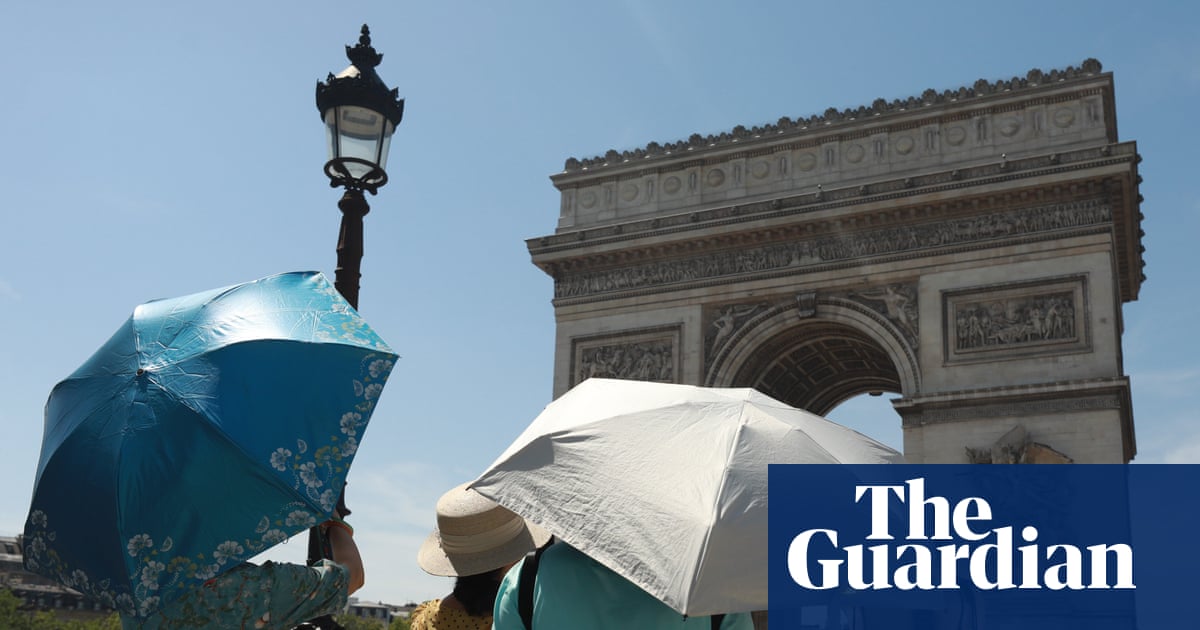
Heat killed a record 50,000 people in European cities this summer, new research suggests, with scientists blaming climate breakdown for two in three of the deaths. Morgues and funeral homes filled with bodies from June to August as added heat from planet-baking pollution cut an additional 32,000 lives in urban areas, researchers found. Hot days pushed vulnerable bodies into overdrive, and warm nights kept them from recovering. The “staggering” number of deaths, modeled using historical relationships between heat and health in 854 cities, was the worst on record, the study found. Hot weather marked by relentless heat waves killed nearly twice as many people as in each of the next two most dangerous years. A bar graph showing heat deaths in European cities between 2000 and 2026, divided by the proportion of deaths attributable to climate change. “In some ways, the absolute numbers of heat-related deaths estimated in the 854 urban areas are truly staggering,” said Malcolm Mistry, a climate and health scientist at the London School of Hygiene and Tropical Medicine. who was a co-author of the study. “But perhaps what is even more alarming is the proportion of these deaths that we attribute to anthropogenic climate change.” The proportion of deaths due to climate collapse has risen from around 40% at the beginning of the century to 65% this summer, the study found. People succumbed to the heat at the highest rates in Malta, Italy and Hungary, while the absolute number of deaths was highest in Italy, France, Spain, Germany and the United Kingdom. Because death certificates rarely record contributing factors (such as dangerous temperatures that push a stroke victim or lung cancer patient beyond their limits), families rarely know that heat and human activity hastened their relatives’ deaths. “These shocking figures represent thousands of families who have lost a loved one this summer due to the climate crisis,” said Katie White, climate transition minister for the United Kingdom, where scientists estimated 4,354 heat deaths this summer. Heat, based on age-standardized estimates from the study Mario Guarino, an emergency room doctor at Ospedale CTO in the city’s north, said he witnessed a 15% increase in emergency room visits during the hottest weeks. Naples was the worst-affected city in Europe, with 815 people per million dying from the heat, according to the study. Photograph: Ansa/Ciro Fusco/EPAThe “defining characteristic” of the period was the complexity of the health problems exacerbated by. The heat, he added, and the loneliness and poverty made the situation even worse. “We took in a terminally ill cancer patient who lived in a hot attic simply because his family couldn’t find a company to install air conditioning during the summer,” Guarino said. “An elderly man with dementia was abruptly abandoned by his Ukrainian carer who returned home to say goodbye to his son, who had been called to war. Emergency services found [the man] “The study found that people over 85 accounted for almost half of the death toll, although younger people were not immune, and 833 people aged 20 to 44 are also believed to have died due to the heat. The scientists said the death toll in the cities studied, which represent around 40% of the European population, cannot be easily extrapolated to estimate the total number of deaths, including those in cities and towns. Slightly less severe temperatures in Eastern Europe brought the average continental to its third highest level on record. Greenhouse gases have warmed Europe about twice as fast as the global average, exposing more people to intolerably hot summers and fewer people to dangerously cold winters. “We did not incorporate real data on deaths that occurred in the summer of 2026,” he said. (the main driver of rising temperatures) while strengthening health systems, making cities greener, installing air conditioning and encouraging people to drink water and seek shade. They have also highlighted the benefits of people checking on their vulnerable neighbors and family members so they can get help before a tragedy occurs. “The real epidemic these days is loneliness,” said Guarino. If they have it, they avoid turning it on because of the cost of electricity.”