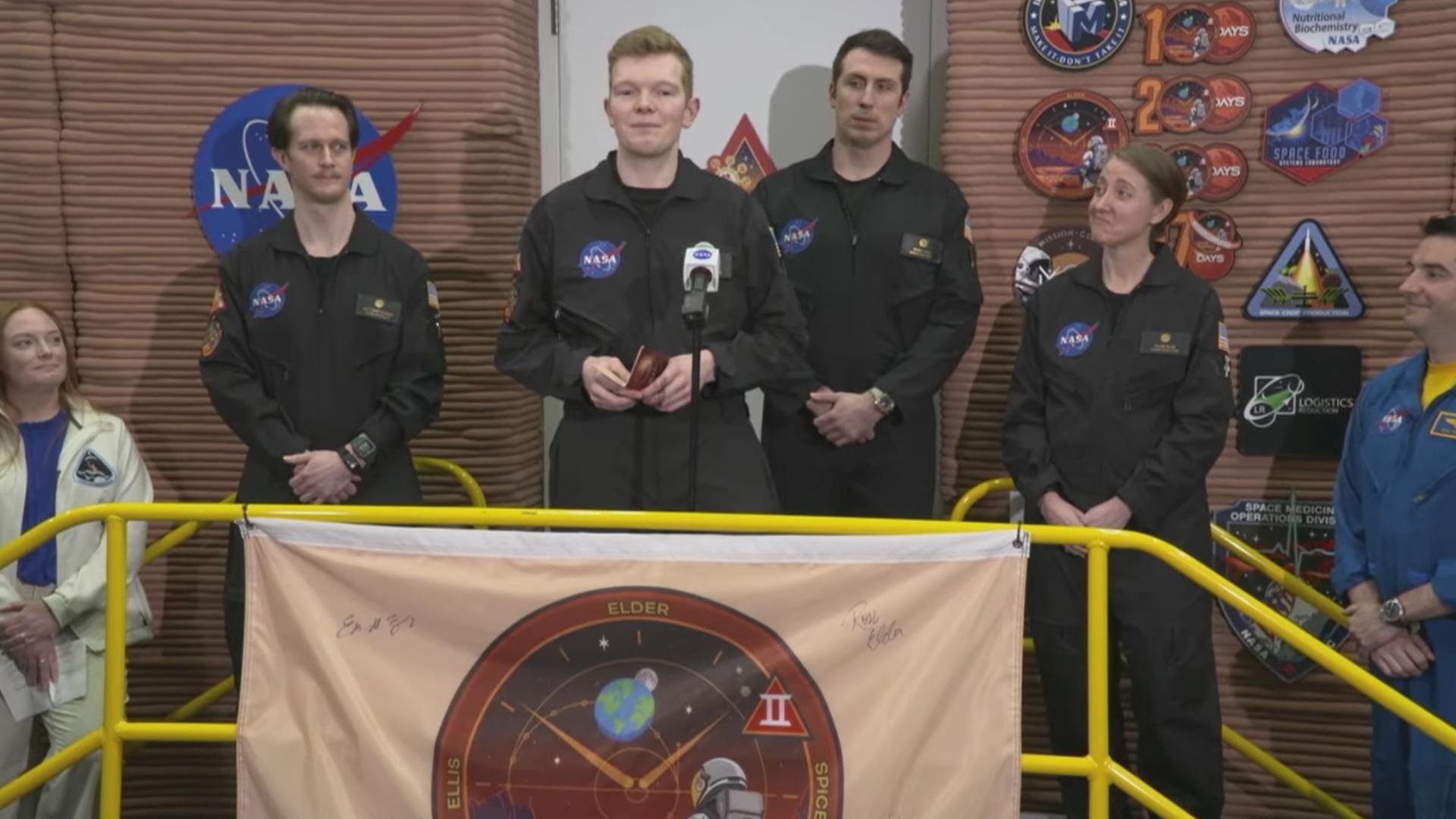
The four volunteers were in a 3D-printed habitat designed to simulate what it would be like to live on Mars. HOUSTON – NASA’s CHAPEA-2 crew is officially out of isolation! The volunteer crew of four has been living in a 3D-printed habitat simulating Mars at the Johnson Space Center. Crowds of family, friends and supporters gathered under two white tents outside the building Saturday afternoon where the simulation is located. Everyone looked toward a television to see the team emerge after more than a year conducting research and collecting data. The crew did this in several ways, including growing crops and conducting simulated operations on Mars. This story continues below. More locally Why four volunteers spent more than a year in isolation here in Houston on behalf of NASA Wings Over Houston: NASA provides a special experience for families “I know we’re all looking forward to seeing your smiling faces when you come out,” said Vanessa White, director of NASA’s Johnson Space Center. White was with Jack Hathaway and several people outside the simulation. They thanked the crew for their dedication over the past 378 days to the mission at hand. The goal is to help officials better understand what it will take to get humans to Mars. During the year of isolation, the crew also dealt with technology as if they were on Mars, which meant intentional message delays and planned communication outages. Hathaway was the one who had the honor of alerting the crew that it was time to re-enter the world they volunteered to leave behind. “Trick or treat,” Hathaway said, a nod to the crew who will be released on Halloween. Commander Ross Elder, Medical Officer Ellen Ellis, Chief Scientist Matthew Montgomery and Flight Engineer James Spicer came out to greet Hathaway, White and their immediate family members who were allowed into the facility. The crew read prepared speeches, their voices filled with gratitude and pride for the work they did together. “The goal of putting humans on Mars is not only achievable, but inevitable,” Elder said. “For my crewmates, it’s been an incredible year. Analog astronauts living in captivity of our own free will,” Ellis said. “I am sincerely grateful to all the people who made this mission possible,” Montgomery said. “Thank you, of course, to the crowd. To the friends and family who have supported us this year,” Spicer said. Back outside, under the two white tents, the crew’s followers were waiting for their meeting. “It’s amazing. I feel like I’m exploding inside even though I’m just a friend,” Rain Doyle said. Before the crew opened the doors to the outside world, we heard Dr. Suzanne Bell tell us how the data collected inside will also help in future missions. “The sheer amount of data we generate and can analyze to inform future space flights is enormous,” said Dr. Bell, a CHAPEA co-investigator. As the team headed outside for the first time in a year, they wore sunglasses to protect their eyes as they adjusted to seeing the sun. They waved and cheered while taking photos of the team as the applause went on for minutes. They will now enter a two-week deload period where they will review everything they learned while locked away from the world. “What the results of this will really do is inform people planning a lunar base. Where do we need the technical support? Where are things really not as difficult as we thought they would be?” Dr. Bell said. Do you have a news tip or story idea? Email us at newstips@khou.com and tell us the best way to contact you, or call 713-521-4310.