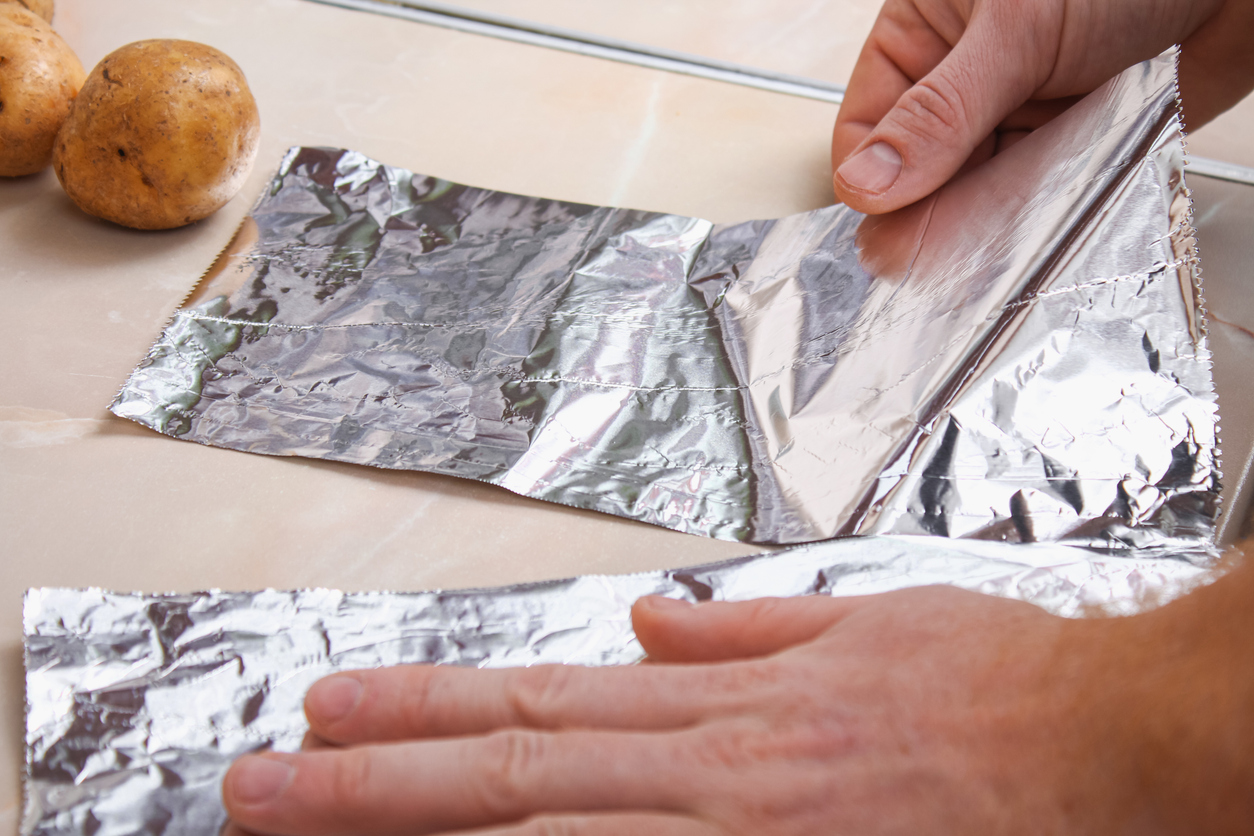
Take a sheet of aluminum foil off the roll and you’ll see: one side is shiny like a mirror and the other is matte. Some cooks swear that one side should always touch the food, and Spanish newspaper MARCA recently set out to explain what each side is for. The answer comes from the factory, and the company behind Reynolds Wrap has a clear position on the matter. In Summary The two sides come from manufacturing: In the final pass, two sheets of aluminum foil pass through the rollers together. The side against the polished rollers remains shiny and the side against the other blade remains dull. For regular, heavy-duty aluminum foil, Reynolds says both sides work the same. The exception is non-stick aluminum foil: the opaque side should face the food. Why Aluminum Foil Has Two Different Sides Aluminum foil starts out as a thick slab of aluminum that is pressed between rollers over and over again until it is very thin. As Apartment Therapy explains, at some point the sheet becomes too thin to handle on its own, so two layers are pressed together for the final pass and then separated. The side that touched the rollers remains shiny and the side that pressed against the other layer becomes matte. Food scientist Abbey Thiel, quoted by EatingWell, puts it simply: “The side of the foil that touches another sheet during grinding ends up dull.” He adds that the two sides do not differ in how they conduct heat. So which side should you take on food? For most frustrated people, it doesn’t matter. Reynolds, the maker of Reynolds Wrap, told EatingWell that “it’s perfectly fine to place food on either side” of your standard, heavy-duty aluminum foil. The company gave Apartment Therapy the same answer: “the performance of the film is the same regardless of which side you use.” The idea that the shiny side reflects heat back to the food, or that the dull side cooks faster, doesn’t hold water. The question is raised by MARCA, whose explanation of the matte side and the shiny side was picked up this fall by French and Romanian housing websites. The only exception is the non-stick film. It has a coating on only one side, so which side you use does matter, notes Apartment Therapy. Reynolds is explicit: “For Reynolds Wrap Nonstick Aluminum Foil, you’ll want to have the opaque side facing up,” toward the food. Turn it upside down and the coating will face the pan instead of the food. The limit Before tearing off a sheet, check the box. If it says “nonstick,” the opaque side goes against the food; If not, whether the color is bright or opaque is purely a matter of preference. The rule about sides also says nothing about where aluminum foil can be safely placed: some uses, like the air fryer, come with their own precautions. This is the only mistake to avoid with aluminum foil in the air fryer. Aluminum foil has more surprising functions around the house, from aluminum foil balls in the freezer to lining kitchen drawers. Glossy or dull, the food doesn’t care, unless the box says nonstick. That’s the trick.