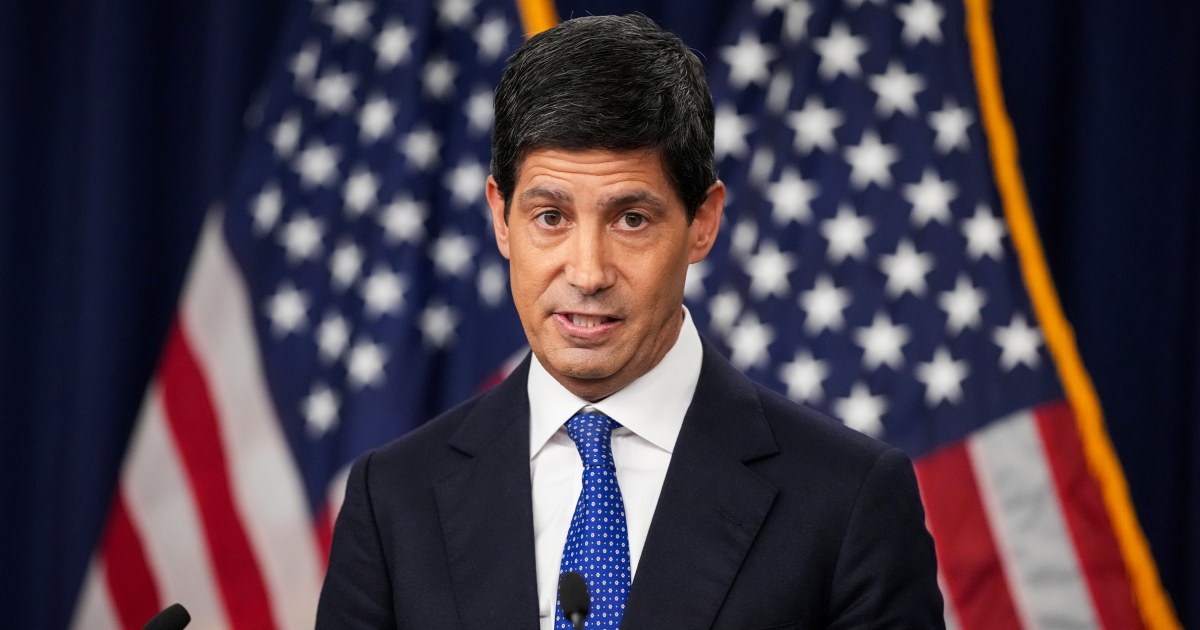
On Wednesday, the Federal Reserve raised its benchmark interest rates for the first time since 2023, in a move aimed at slowing inflation that picked up again last month. The Fed’s 0.25% hike raises the central bank’s flagship rate to between 3.75% and 4.00%. Federal Reserve officials unanimously supported the rate hike and signaled that another rate hike could come before the end of the year. The Federal Reserve’s decision, which defied the president’s wishes for lower interest rates, comes in response to elevated inflation readings as the war with Iran drives up prices. “Uncertainty remains elevated due, in part, to geopolitical developments,” the Federal Reserve statement said. “Today’s political action will support a more timely return to the Committee’s 2 percent goal.” The increase could also be the start of a rate-hiking cycle. Historically, when a central bank raises rates once, it follows with additional increases. “The fact is that inflation is too high and has been for too long,” Federal Reserve Chairman Kevin Warsh said at a news conference in Washington after the announcement. “We must be sure that core inflation is moving towards our target, clearly and at sufficient speed,” he said. “Today, the FOMC decided that this standard has not been met.” Along with the Federal Reserve’s rate decision today, economic projections were released. As of this week, all but two members of the Federal Open Market Committee predicted another rate hike later this year. The rate hike comes despite years of demands from President Donald Trump for lower interest rates. In early February, Trump told NBC News that Warsh wouldn’t have gotten the nomination unless he wanted to lower tariffs. On Wednesday night, Trump responded to the rate hike by demanding: “LOWER INTEREST RATES FOR THE UNITED STATES OF AMERICA, AND FAST!” Trump said the funds’ benchmark rate “should be 1% or less” because the United States has “the best credit in the world.” However, that is not accurate. Several countries, including Canada, Australia and Germany, have higher ratings from S&P. “Warsh and the committee are sending a clear message that the Fed will not tolerate inflation straying further above target, even in the face of political pressure from the White House,” said Brian Rehling, co-head of global fixed income at Wells Fargo. A reporter asked Warsh on Wednesday what his message to the president was about raising rates. “I have nothing for you about a conversation with the president,” he responded. 00:23Kevin Warsh says the Fed will “stay in its lane” 00:0000:00But the war with Iran changed all that, after the United States and Israel launched it on February 28. After less than four months in office, Warsh now presides over a Federal Reserve that is raising rates. This, in turn, has driven up gas prices by more than 45% since the war with Iran began in late February. These energy prices have helped push inflation up to 3.4% in August, above average US wage growth of 3.1%. But Warsh was clear Wednesday about the limits of the Fed’s power to impact the direct costs consumers pay. “We can’t affect any individual price, whether it’s oil prices or food prices in the supermarket,” Warsh told reporters. “But what we can do, and will do, is ensure that any changes in relative prices do not spread, do not have second and third order effects on the economy.” As Warsh spoke, major stock indexes reversed their earlier gains and fell during the trading session. The S&P 500 closed the day down 0.4%, while the Nasdaq Composite finished flat. The Dow Jones fell 630 points, affected by significant falls in the shares of IBM, Goldman Sachs, Boeing and American Express. Following Wednesday’s rate hike, the 30-year Treasury yield declined slightly but remains at its highest level in years. The 10-year Treasury yield had fallen earlier in the day, but by 4 p.m. ET it had risen back to near its highest level since 2007. Warsh attributed the recent rise in bond yields to three factors. “The first thing is economic strength,” he said. The second was “the situation in hotspots around the world,” an apparent reference to the war in Iran and the war in Ukraine, both of which have restricted global energy supplies. The third factor, he said, is competition for capital from artificial intelligence companies.