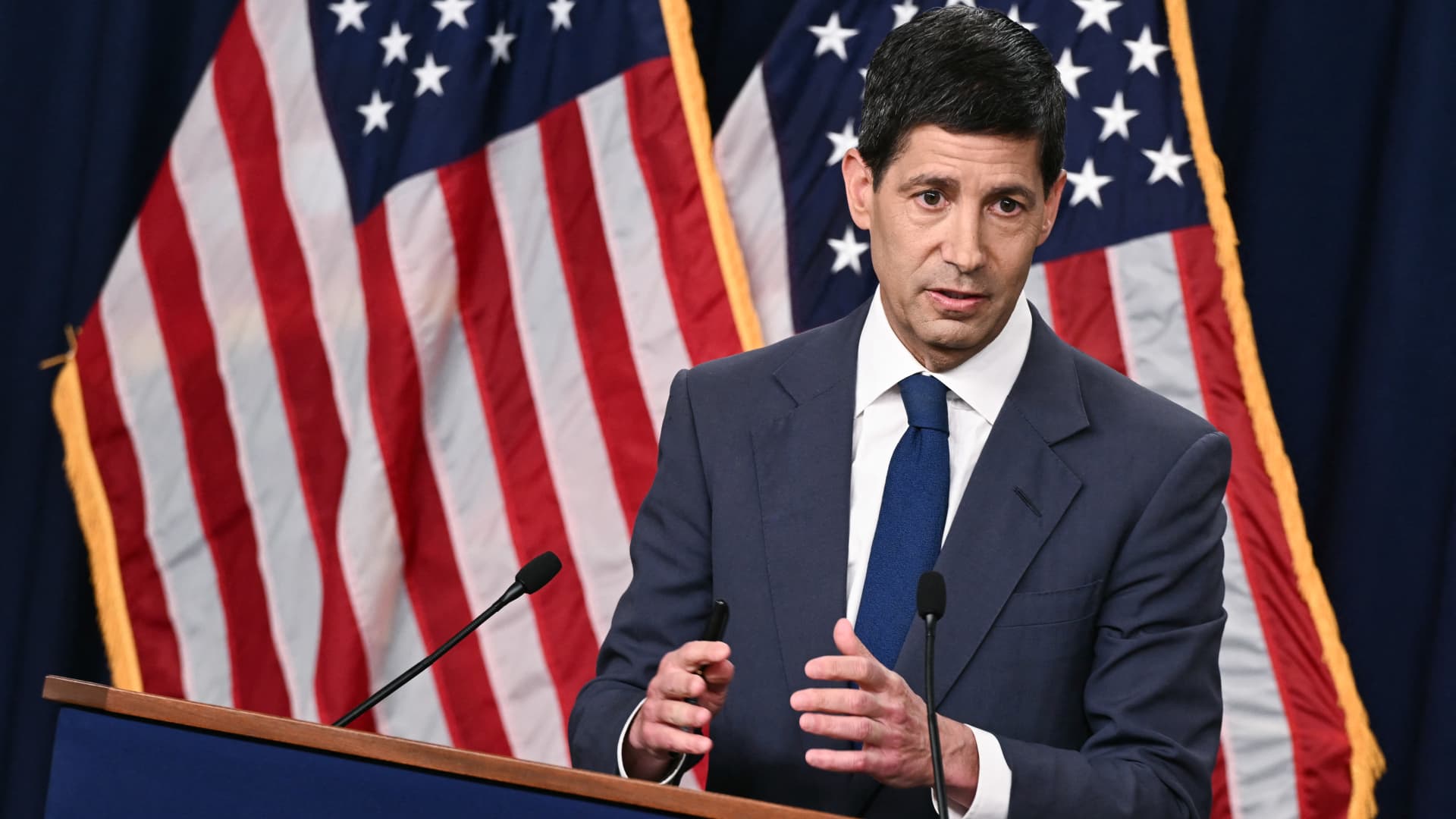
Federal Reserve officials indicated at their last meeting that they would need to raise interest rates soon unless there was more progress in reducing inflation, minutes released Wednesday showed. “Many participants assessed that tightening policy would probably be necessary if inflation did not decline,” said the summary of the meeting, held on July 28 and 29. “Some participants commented that financial conditions may not be tight enough currently to facilitate a return of inflation to 2 percent.” Finally, the Federal Open Market Committee voted 9 to 3 to keep the federal funds rate targeted in a range of 3.5%-3.75%, where it has been all year. The overnight borrowing rate serves as a guide for a variety of consumer debts, including mortgages, credit cards and auto loans. Those who voted against the decision were in favor of an increase of a quarter of a percentage point. The minutes stated that the dissenters “judged that doing so would likely help prevent the need for a steeper and potentially more costly sequence of tightening measures at a later stage.” Each of the three “no” votes were regional chairs: Beth Hammack of Cleveland, Lorie Logan of Dallas and Neel Kashkari of Minneapolis. Since the July meeting, data releases have mostly shown modest price increases on a monthly basis, although all leading indicators have inflation well above the Federal Reserve’s 2% target. The central bank’s main forecast data, the personal consumption expenditure price index, actually recorded a 0.1% decline in June, although the annual rate was still at 3.7%. At the same time, the employment outlook has softened. Nonfarm payrolls fell by 23,000 in July, even as the unemployment rate fell to 4.1%, the latter mainly due to a shrinking workforce. Most Federal Reserve officials have said they are more concerned about inflation than the labor market, although that was before the most recent data. Federal Reserve Chairman Kevin Warsh has shown a penchant for being patient when it comes to rates. Markets interpreted his comments at his post-meeting press conference as dovish on inflation, which in turn sent Treasury yields sharply higher. Yields have continued to rise, particularly at the longer end of the curve. However, they fell on Wednesday following the Treasury Department’s announcement that it would increase its purchases of longer-term government debt, the part of the duration curve that has been particularly sensitive lately. Following the recent set of inflation data, market prices shifted to an expectation that the Fed would remain on hold likely until December before raising again. Previously, traders expected an increase in September. The summary also reported a discussion on changing the FOMC meeting schedule. The minutes noted that economic indicators changed little since the June meeting. Warsh “noted” that reducing the current schedule of meetings from eight per year to six, “held approximately every two months,” could be productive. Such a move “would allow more information to be accumulated between meetings than under current practice and would provide policymakers and staff with more time to consider strategic monetary policy issues,” the minutes said. 2026,” the document said. Also at the meeting, the board discussed “an intermeeting incident that involved a disruption in trading arrangements.” The minutes noted that the Fed’s policy of maintaining “ample” bank reserves “helped maintain the orderly functioning of money markets in the face of this disruption.” In a related note, the committee held what appeared to be an extensive discussion about the Fed’s balance sheet and its various bond holdings. Committee members said a task force Warsh has created to examine the topic. Choose CNBC as your preferred source on Google and never miss a moment of the most trusted name in business news.