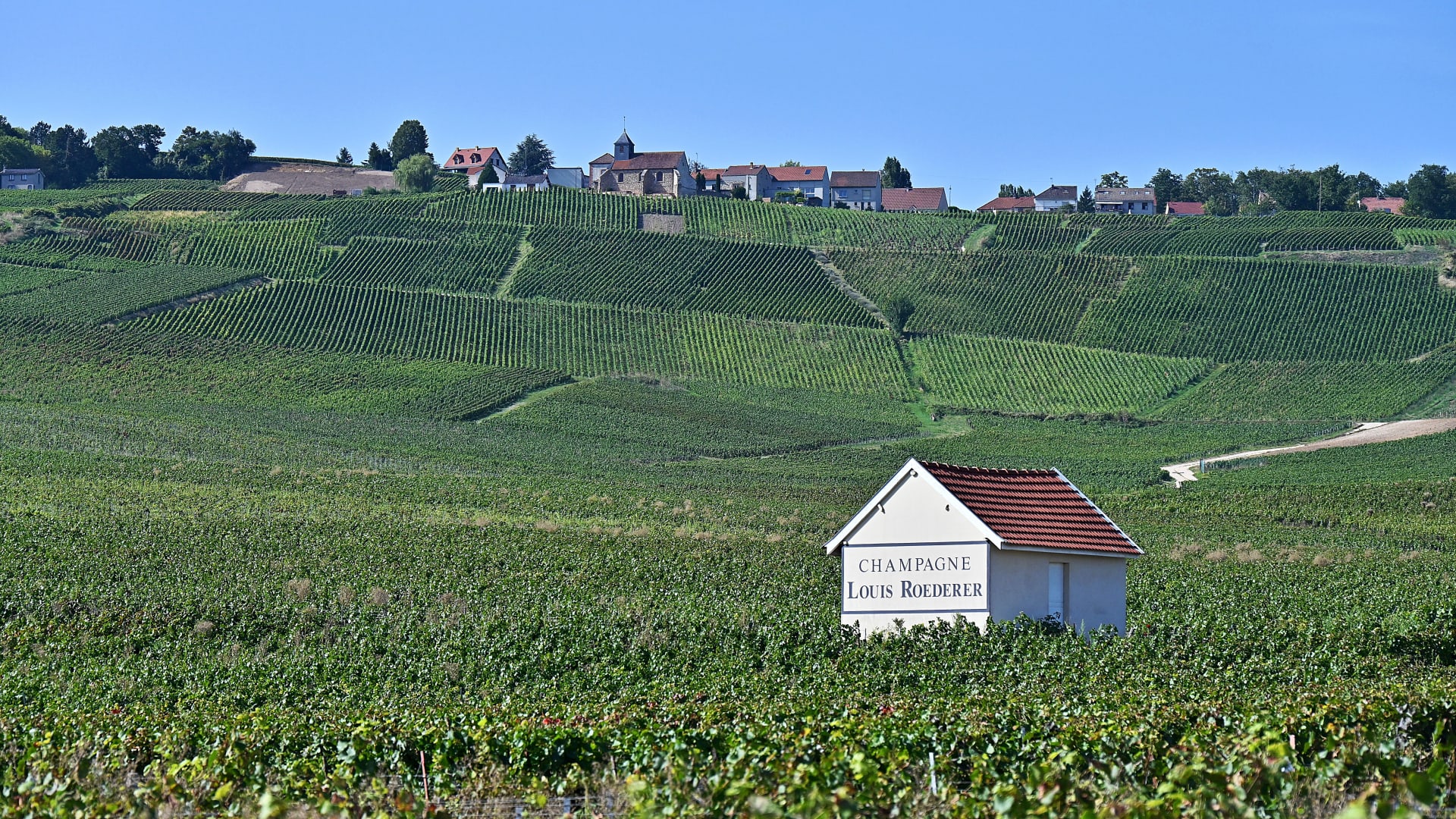
Pickers collect grapes in vineyards during the 2025 champagne harvest in Hauvillers, northeastern France, on August 28, 2025. Francois Nascimbeni | AFP | Getty Images It looks like sweltering summer temperatures will spur the earliest and potentially one of the most challenging Champagne harvests on record. Winemakers in the French region face lower crop yields, lower consumer demand and a threat to the iconic drink’s famous fresh taste. Champagne season officially begins on August 15 this year, with most of the picking expected between August 20 and 25, about two weeks earlier than usual in recent years. Before the early 2000s, the harvest of sparkling wine grapes, which generated $6.6 billion in sales revenue last year, almost always took place in September or October. But warmer springs and summers are speeding up the grape ripening process, creating more sugary fruit and narrowing the optimal Champagne-picking window. Mutigny, northeastern France, with champagne vineyards. Andia | Universal Images Group | Getty Images Winemakers are torn between harvesting early to reduce the amount of sugar in the fruit but risking the ability to achieve the right balance of acidity and so-called “phenolic ripeness,” the point at which tannins and other compounds have ripened enough to provide the desired flavor and texture. “With great wine grapes, you want the ripening process to be slow. This is true with most fruits,” said Linda Johnson-Bell, founder of the consulting firm Wine & Climate Change Institute. A short growing window can be more easily disguised in red wines, many of which have increased their alcohol content in recent years due to the grapes being more sugary. But it’s a particular challenge in Champagne, where the drink’s “identity is its tightness, its high acidity, its low sugar content, its delicacy, its elegance,” Johnson-Bell said. Adapt to survive Along with a warming trend that brings forward harvest seasons, European wine producers are facing droughts, strange weather events such as hail storms and spring frosts that wiped out many buds, and forest fires. On the macroeconomic picture, they also face waning demand for alcoholic beverages, higher labor and fuel costs, and complicated tariffs in the United States, Champagne’s largest export market. Some wine producers are reacting by uprooting vineyards, changing their grape varieties, migrating further north or introducing irrigation systems. But high-end variants, such as Champagne, are restricted by their designation of origin, which protects where and how their grapes can be grown, including a ban on watering adult vines. Champagne producers are developing several techniques to protect grape bunches, a representative from the Champagne Committee trade association told CNBC. These include using insect-proof greenhouses and experimenting with new grape varieties, along with creating an R&D center to explore new solutions. Producers have also cut their quota of yield allowed for sale this year, a decision made to help balance stocks, maintain quality and preserve vineyards amid “difficult” weather conditions and “sluggish” French demand, the Champagne Committee said in a statement last month. Companies selling their final product will have little concern about this year’s harvest as “quality looks promising and the industry could use less inventory,” Bernstein’s global head of luxury goods Luca Solca said by email. Jean-Claude Mas, founder of Domaines Paul Mas-Coté Mas, which produces reds, whites and rosés in the Languedoc region of southern France, said his vineyards had so far defied gloomy expectations since he began harvest earlier this month and they looked “beautiful.” “In 30 years I’ve never seen a year like this. We’ve had a buildup of heat since the end of May. I was very stressed, but this year it looks like we could have a really good crop. My analysis of this is just nature’s incredible ability to adapt,” he said. An excellent opportunity for English winemakers? 55%, according to official data. “It’s pretty amazing how far the vintage has come in a generation,” said Fergus Elias, wine director at Balfour Winery, from a vineyard in Suffolk, England. As a child, he remembers that his winemaker father’s harvests never began before early October and ended until mid-November. “If I really wanted to, I could pick these vines and make decent wine from them,” he said this week. “But in England our growing season is still long enough… I’m very excited,” he added. A warmer climate is allowing new grape varieties to grow in Britain’s chalky soil, similar to that of northern France. The opportunity even attracted the attention of French producers: Champagne house Taittinger acquired land in Kent to make an English sparkling wine. “Climate change is talked about as making English wine more sustainable, although it comes with many challenges,” Elias said. “This year we had a late spring frost in mid-May, but we’re lucky to have sites across the country that give us some geographic security.” Meanwhile, industry players are convinced that Champagne innovation will be enough to preserve the drink’s status and quality in the future. “The Champenois will do absolutely everything they can to safeguard that product; they have been dealing with these issues for decades,” Linda Johnson-Bell said. “Maybe it’s romantic, but I think champagne always survives.” Choose CNBC as your preferred source on Google and never miss a moment from the most trusted name in business news.