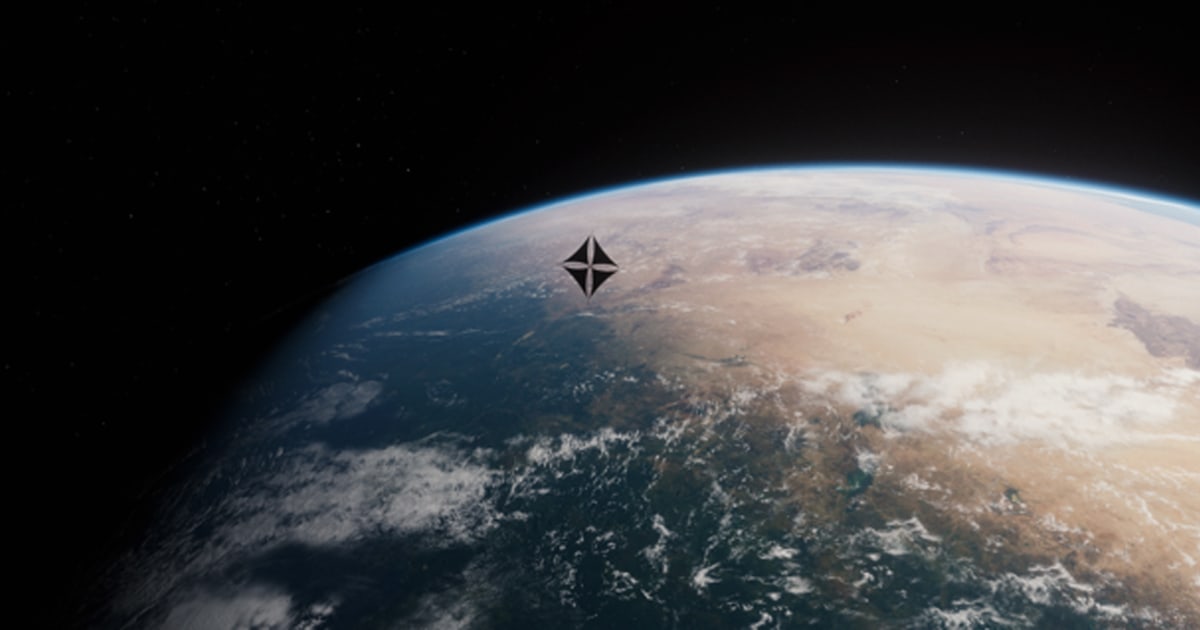
Four environmental organizations filed a petition Thursday asking the Federal Communications Commission to reverse its approval of a startup’s plan to beam on-demand sunlight from space to Earth, arguing the agency ignored the project’s potential impacts on wildlife, astronomy research and eye safety.DarkSky International, Environment America, the American Bird Conservancy and Public Employees for Environmental Responsibility called on the FCC to overturn a decision last month authorizing Reflect Orbital to launch its Earendil-1 demonstration satellite, which will carry a 59-foot-wide mirror to reflect sunlight onto a specific spot on the planet during periods of darkness. While the FCC approved only a single test mission, the groups argue it could pave the way for a much larger constellation of satellites in the future.“It is the Wild West in space right now, and corporations like Reflect Orbital are rushing to fill the gap,” said Earthjustice attorney Jan Hasselman, who described the company’s proposal as “a uniquely bad idea.”Reflect Orbital’s goal is to provide customers with sunlight whenever it’s needed, without being limited by time of day, geography or infrastructure on the ground. Reflect Orbital envisions operating a megaconstellation of more than 50,000 satellites by 2035, and it has said it would avoid lighting sensitive environments or areas designated for astronomy. The company has also said the reflected sunlight can be adjusted or turned on and off by rotating the satellite in orbit. According to the FCC’s order authorizing the mission, Earendil-1 will test whether a satellite can reflect sunlight onto a specific area on Earth at night. The in-space mirror is designed to focus a roughly 3.1-mile-wide beam of light onto the ground from an altitude of around 400 miles. NBC News reached out to the FCC for comment but did not immediately receive a response.Reflect Orbital declined to comment on the newly filed petition to the FCC.The petition argues that even a single satellite could have consequences far beyond the client requesting the light. Because the reflected beam could span several miles, thousands of people beneath it could be exposed without warning. Optical engineer and LED lighting expert Eric Bretschneider said concentrating sunlight into such a small, intensely bright point in the night sky could create glare that poses safety risks for pilots, drivers and others, comparing it to “a helicopter shining a spotlight right at you.” He also questioned the technology’s practicality, saying cloud cover would limit its usefulness for rescue missions and solar power projects.“Any time you have a solar eclipse, what do meteorologists, astronomers and eye doctors tell you? Don’t look at it without protection. Why? Sunlight is incredibly intense,” Bretschneider said. “Their business plan is predicated on artificially re-creating the lighting scenario of a near-total eclipse.”Bretschneider said a much larger constellation or more powerful satellites could pose a greater risk of permanent eye damage because people may instinctively look toward what appears to be an unfamiliar spotlight in the night sky rather than recognize it as reflected sunlight. Experts generally advise people not to look directly at the sun because its intense visible and invisible radiation can damage the retina, sometimes causing permanent vision loss. “People’s eyesight gets damaged, so it’s not a question of if it’s going to happen. It’s a question of when,” he said, warning against looking up directly at the reflected light.Reflect Orbital’s Earendil-1 demonstration satellite will carry a 59-foot-wide mirror to reflect sunlight onto a specific spot on the planet during periods of darkness.Reflect OrbitalScientists say astronomers could be particularly vulnerable because telescopes amplify incoming light, raising concerns not only about eye safety but also about the future of ground-based astronomy.Samantha Lawler, an associate professor of astronomy at the University of Regina in Saskatchewan who studies how satellites are changing the night sky, said Reflect Orbital’s satellite would affect not just one observatory, but astronomical research worldwide. Because it would be visible around much of the world during every orbit, astronomers would have to account for it when they planned observations.“Any time the satellite is above the horizon, it will wash out the night sky, so astronomers everywhere in the world will have to pay attention to where the satellite is,” she said. “They have made no indication of how they will coordinate with observatories. That could destroy a camera on a telescope. It can also damage people’s eyes.”The petition also argues the reflected light could disrupt wildlife. Artificial nighttime illumination can alter the behavior of migratory birds, insects and other nocturnal species that rely on moonlight and starlight to navigate, feed and reproduce, the coalition says. Because Earendil-1 is intended to test technology that Reflect Orbital hopes to eventually expand into a much larger network, the groups argue the FCC should have evaluated those potential ecological effects before it approved the mission.“We don’t know how a space mirror is going to disturb wildlife, because it’s never been done before, but we do know how light at night disturbs wildlife,” said Ruskin Hartley, executive director and CEO of DarkSky International. “Basically, every animal that has been studied at night, if you introduce artificial light into their environment, there is an impact from bats to birds.”Hasselman said the case is about ensuring federal regulators examine those impacts before they allow the technology to move forward. “The FCC needs to take their responsibilities under the law seriously,” he said. “So give us a full review. Listen to the public. Disclose the environmental impacts.”The coalition argues that those questions should have been studied before the FCC approved the test mission, rather than after launch. The petition asks the full commission to reverse the Space Bureau’s decision and require the agency to evaluate the project’s environmental, safety and public interest impacts before it allows the demonstration satellite to proceed.