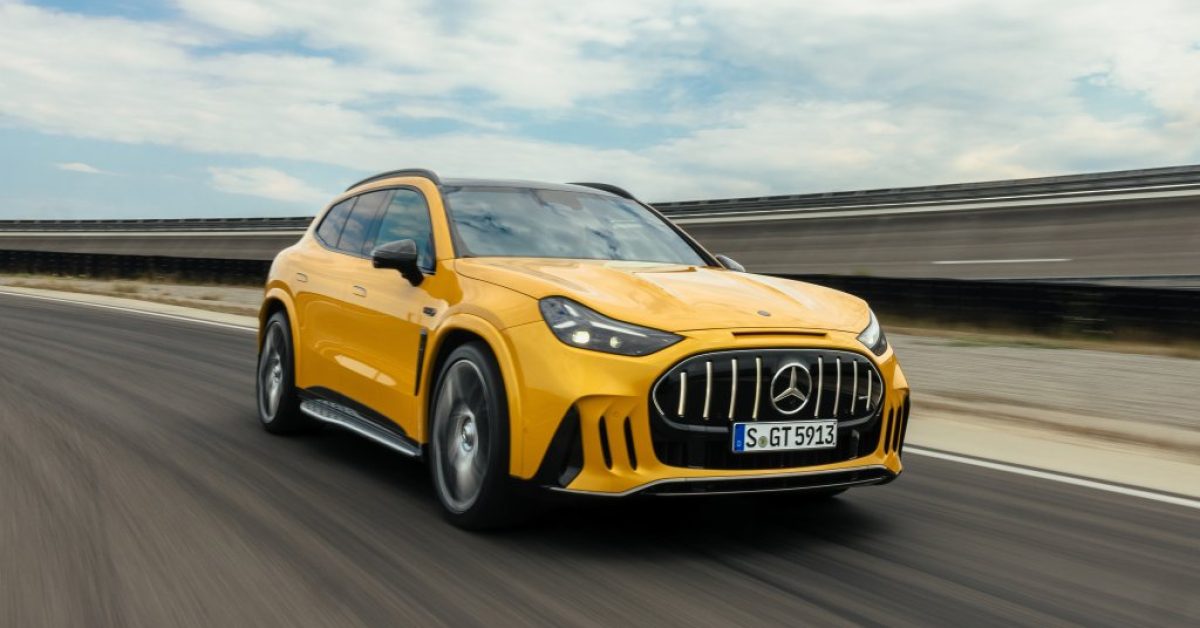
Mercedes-AMG GT SUV (Image: Mercedes-Benz) Mercedes-AMG has introduced the GT SUV, an all-electric high-performance SUV with up to 1,153 hp with three axial flux motors and DC fast charging of up to 710 kW. It’s AMG’s answer to the Porsche Cayenne Electric and, on paper, it may be more impressive. The first units will arrive in US dealerships in the summer of 2027. AMG’s first in-house SUV AMG has been perfecting Mercedes SUVs for decades, but the company says this is the first full-size SUV it has developed completely on its own. It is the second vehicle to feature AMG.EA’s exclusive electric architecture, following the GT Electric 4-Door Coupe introduced earlier this year, and borrows the motors and battery from that car. Mercedes teased the 1,000+ hp AMG electric SUV in August. Image: Mercedes-Benz Mercedes is launching three versions in the US: Announcement: Scroll for more content AMG GT 63 SUV: Three axial flux motors, 1,153 max hp, 1,475 lb-ft, 0 to 60 mph in 2.6 seconds (2.4 with one-foot deployment), 168 mph limited AMG GT 55 SUV: Three axial flux motors, 805 max hp, 1,372 lb-ft, 0-60 mph in 3.0 seconds (2.7 with deployment) AMG GT 53 SUV: Two conventional synchronous motors, 536 peak hp, 590 lb-ft, 0-60 mph in 4.1 seconds (3.7 with deployment) Those are top figures, and Mercedes’ acceleration times are still estimates. Continuous power is 711 hp in both the GT 63 and GT 55, and 362 hp in the GT 53. Image: Mercedes-Benz Axial flux motors are the interesting hardware here. They are flat, pancake-shaped motors that deliver much more power for their weight than the radial flow motors in most electric vehicles. Mercedes bought UK axial flux specialist YASA in 2021, and the technology has already arrived in the AMG CLA 45 with three axial flux engines. 128 kWh pack and 710 kW charging The GT 63 and GT 55 get a 128 kWh (usable) 800-volt battery pack, while the GT 53 makes do with 106 kWh. Mercedes uses tall, narrow cylindrical cells with an NCMA cathode and silicon on the anode, and claims more than 298 Wh/kg at the cell level. Each cell is bathed in non-conductive oil for cooling. The charging specs are the most impressive we’ve seen coming from a legacy automaker. Mercedes rates the big battery versions at up to 710 kW DC, charging from 10 to 80% in 12 minutes. That’s enough to add up to 454 km (282 miles) of WLTP range in 10 minutes. The GT 53 peaks at 600 kW and reaches 10 to 80% efficiency in 11 minutes. But there is a problem for American buyers. Most of the fastest public chargers here, like the ones IONNA is rolling out across the country, are rated at 400 kW. Mercedes includes NACS among the five charging standards the GT SUV supports, so access to the Supercharger shouldn’t be a problem. The load will be close to 710 kW. The fastest charger in the pipeline in the US is a 750 kW unit that has already moved into next year, while China already has 2,250 kW chargers in service. WLTP range is 620 to 700 km (385 to 435 miles) for the GT 63 and GT 55, and 597 to 668 km (371 to 415 miles) for the GT 53. Expect lower EPA figures. This thing is heavy: the GT 63 SUV weighs 2,695 kg (5,942 lb), even with a slippery drag coefficient of 0.27. Image: Mercedes-Benz Fake V8 sound, rear steering and a little frunk Like the 4-door GT, the SUV gets its simulated engine sound from AMG. In its AMGFORCE Sport+ configuration, it plays recorded sounds from the V8 in the GT 63 and GT 55, and from a six-cylinder in the GT 53, with virtual gear changes that you can activate with the paddles. Mercedes CEO Ola Källenius is a firm believer in the fake V8. Fortunately, there is a “Silent” setting, so fake sounds are optional. Rear axle steering of up to 6 degrees comes standard. The GT 63 also features AMG Active Ride Control+ as standard, which swaps mechanical anti-roll bars for active hydraulics and air springs. Image: Mercedes-Benz Inside, there’s a 14-inch center screen merged with a 10.2-inch driver’s screen, plus an optional 14-inch screen for the passenger. It’s a five-seater with 21.4 cubic feet of cargo space behind the rear seats and a small 2.8 cubic foot trunk. Image: Mercedes-Benz How it compares to the Porsche Cayenne Electric The obvious target is the Porsche Cayenne Turbo Electric. Here’s how the top models compare, using each automaker’s numbers: Mercedes-AMG GT 63 SUV Porsche Cayenne Turbo Electric Max power 1,153 hp 1,139 hp 0-60 mph (1-foot rollout) 2.4 s (est.) 2.4 s Top speed 168 mph 162 mph Battery 128 kWh usable 113 kWh Maximum DC charge 710 kW 400 kW10-80% charge 12 minutes under 16 minutes US price unannounced $163,000 Acceleration is a tie. The Mercedes has a larger package and, on paper, charges 310kW faster. Mercedes has not yet published prices. Electrek Take 0-60 times don’t matter much anymore. Every flagship EV now does it in the 2-second range, and the GT 63 SUV and Cayenne Turbo Electric literally tie at 2.4 seconds. No one is buying a 6,000-pound SUV right now. What matters is the battery and the charge. A usable 128 kWh pack with silicon anodes, oil-immersed cells and a peak of 710 kW is some serious engineering, and puts Mercedes clearly ahead of Porsche in the specifications that really affect the way you live with an electric vehicle. That’s not something we can say about Mercedes’ first-generation EQ cars, and AMG deserves some credit for that. But this is a halo product, and the market for $150,000-plus electric SUVs is small. Mercedes knows this: it just removed the EQE and the Maybach EQS SUV from its 2027 lineup. And in the US, there is almost nowhere to charge at 710 kW today, so buyers will mainly pay for free space in future stations. Now I’m curious to see the regeneration of those axial flux motors. I’ve heard they can recover so much power that they can completely replace the brakes, even in high-performance driving. If you buy an electric vehicle with a battery this size, charging it at home with solar power can reduce the cost per mile to almost zero. With electricity rates increasing nearly 10% last year and expected to continue rising, solar energy is one of the best ways to protect yourself against rising costs. And with leasing and PPA options, you can do it with no upfront cost and start saving right away. If you want to find the best deal, check out EnergySage. It’s a free service with hundreds of pre-vetted installers competing for your business, so you save 20-30% compared to going it alone. No sales calls until you choose an installer. Get your free quotes here. FTC: We use automatic affiliate links that generate income. Further.