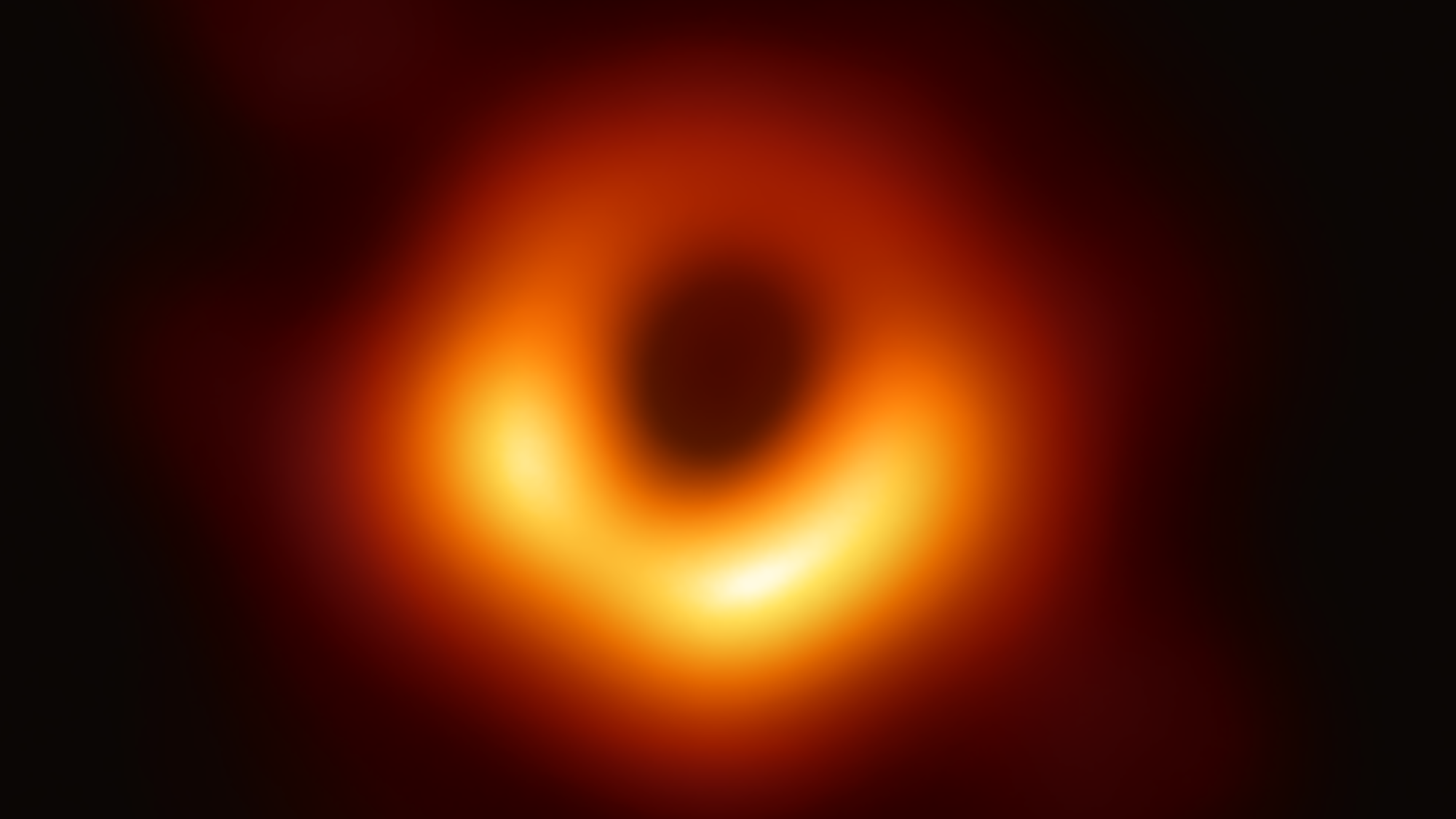
Follow us Add us as a preferred source on Google Newsletter Subscribe to our newsletter An independent team of researchers has validated the first image of a supermassive black hole captured by humanity. This, in turn, verifies Einstein’s greatest theory, general relativity, which was the first to predict the existence of black holes and what their immediate surroundings would be like. Captured by a global network of telescopes that form an interferometer called the Event Horizon Telescope (EHT) and revealed to the public in 2019, the image shows the supermassive black hole at the heart of the galaxy Messier 87 (M87), located 55 million light years away. M87*, with a mass around 6.5 billion times that of the Sun, was an immense scientific achievement. That may lead to the question: why was it necessary to verify it? Team leader and researcher at Australia’s Commonwealth Scientific and Industrial Research Organization (CSIRO), Samuel Lai, explained why capturing the image of a distant black hole is so complicated. “It’s like standing in your backyard and trying to take a photo of a donut on the moon,” Lai said in a statement emailed to Space.com. You may like Simulated M87* Video – YouTube Watch On Lai and his small Australian team developed advanced machine learning and artificial intelligence techniques to capture information about the structure of the black hole and filter out interference resulting from the fact that the EHT was observing M87* from within our planet’s atmosphere. The machine learning technique called GenDIReCT also took into account the biases introduced by combining telescopes to create an Earth-sized interferometer. “When we applied it to the original EHT data set, we found a black hole almost identical in size and shape to the historical EHT image. Importantly, our model had no idea what a black hole looked like when we applied it to the M87 data,” Lai continued. “This is the first truly independent validation of the EHT image, an important step in the scientific process.” This could resolve the question of how the final image of M87* was influenced by both atmospheric effects and the processing methods needed to reconstruct images from telescope data. That’s not just good news for the EHT; This is good news for Einstein. Take it away EinsteinEinstein published his theory of general relativity in 1915, completely reshaping the way we think about gravity. General relativity suggested that objects with mass curve the very fabric of space and time, united as a single entity called spacetime. Gravity arises from that curvature. The greater the mass, the more extreme the curvature and, therefore, the greater the gravitational influence of that object. Taking this to the extreme, scientist Karl Schwarzschild devised a solution to the equations of general relativity that suggested an infinitesimal region with infinite mass, resulting in wild curvature, a singularity. Around this there would be a spherical limit in which not even light has the necessary speed to escape from this region. Known as the Schwarzschild radius, that limit became known as the event horizon of a black hole. The singularity, its heart. Black holes were born in 1915, decades before their discovery and more than a century before the EHT saw one. What to read next An illustration of Einstein and a supermassive black hole (Image credit: Robert Lea) General relativity also predicted what the region around the event horizon would look like. A ring of superheated bright plasma with the shadow of the black hole falling over it. When scientists first saw the image of M87* they were surprised at how closely it mirrored the predictions made by general relativity, confirming the theory once again. This verification further solidifies that development. Verification of the EHT’s M87* image could lead to the technique developed by CSIRO being applied to some more “practical” uses, such as improving medical imaging and earthquake mapping. “Independent validation is the heart of the scientific process and is especially valuable for results as novel as those from the EHT. It is extremely gratifying to see that GenDIReCT, an elegant and completely independent method, recovers the ring structure of M87* over several years, in excellent agreement with the published results of the EHT Collaboration,” said Laurent Loinard, Director of the EHT Collaboration. “Studies like this strengthen our confidence in what we have learned about black holes and enrich the toolkit available to the entire community.”