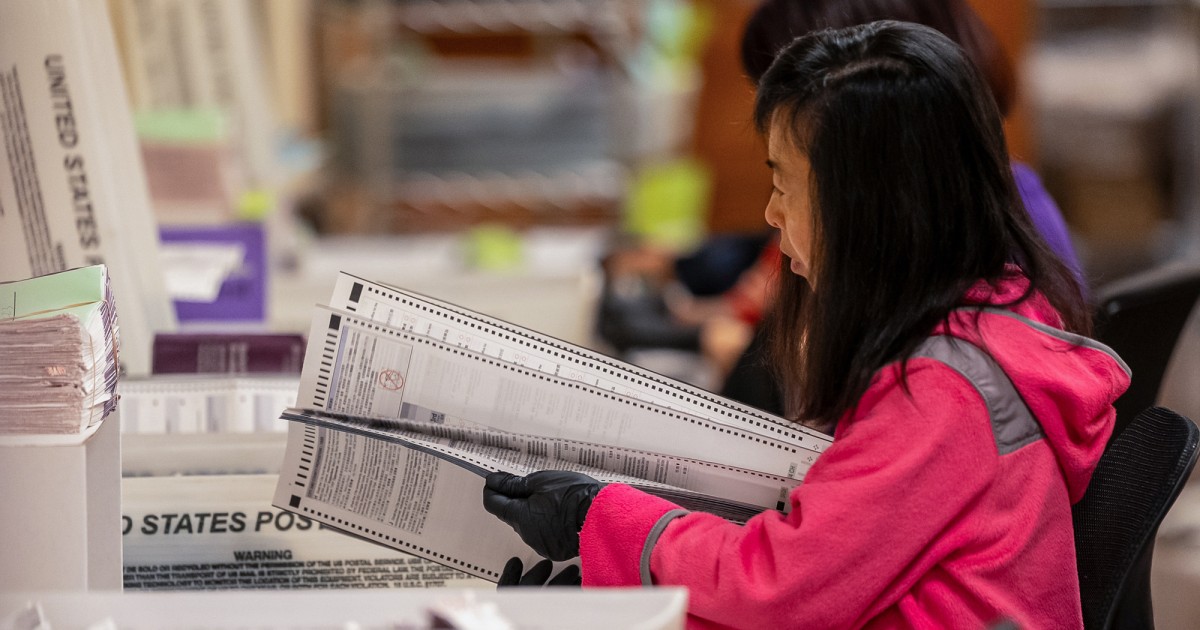
LOS ANGELES – The U.S. Department of Justice on Friday moved to dismiss its own lawsuit that sought to stop California from counting approximately 20,000 ballots that allegedly went to noncitizens until their immigration status could be verified. The request to dismiss the case comes days after significant Republican losses in the midterm elections and about a week before a scheduled hearing in which a special magistrate was scheduled to evaluate the accuracy of the list. California officials have previously said the list is outdated and includes legitimate voters, a sentiment the federal judge presiding over the case echoed in his forceful order denying the federal government’s request. The case was at the forefront of President Donald Trump’s administration’s effort to assert control over state elections across the country, which Trump says are rife with illegal voting without providing evidence. the list of what is said to be suspected of not being citizens. Another controversial lawsuit he filed in Alaska at Trump’s direction before the election to block the Democrat’s victory in that state’s Senate race was quickly dismissed by a federal judge. The administration is appealing that ruling but has not yet filed a full brief with the Ninth Circuit Court of Appeals. California had processed about 9 million ballots as of early Friday, with nearly 5 million still left to count, according to state election officials. The motion to dismiss the lawsuit said that by the time of the next hearing, the state will have “irreparably conflated the challenged ballots with the legal ones.” “The relief that the United States sought and needed is no longer available, making voluntary dismissal necessary,” the motion said. Bill Essayli, the top federal prosecutor in Los Angeles, previously argued in court that the lawsuit would be moot after Election Day because there would be no way to sequester those supposedly belonging to noncitizens. The lawsuit was filed in mid-October, when ballots had been sent to the state’s 23 million registered voters and after hundreds of thousands of ballots had already been processed. Once a ballot is processed, it is completely anonymous. Essayli said at the time the lawsuit was filed that its goal was to “safeguard the integrity of the election so that it does not have an effect on the next election.” “We want to stop illegal voting. We don’t want to pursue it later,” he said outside court the week before the election. The U.S. Attorney’s Office for the Central District of California referred all questions to the Department of Justice in Washington, D.C., which did not respond to an emailed request. for comments Friday night. California prosecutors have arrested more than 30 noncitizens in recent weeks on charges of illegally registering to vote. Some of those detained were also accused of voting in previous elections. The week before the election, California election officials received subpoenas to testify before grand juries scheduled to meet in November. It is unclear who is being criminally charged in those cases, but the department does not typically subpoena people it considers targets of a criminal investigation to appear before a grand jury. U.S. District Judge David O. Carter appointed the special judge in late October, shortly after allowing California to proceed with the election as planned. Carter, who was appointed by former President Bill Clinton, argued in his forceful order that separating ballots at that late stage would risk disenfranchising citizens and warned it would “wreak havoc” on the midterm elections. The special master also would have considered whether or not California election officials had a mechanism to separate ballots.