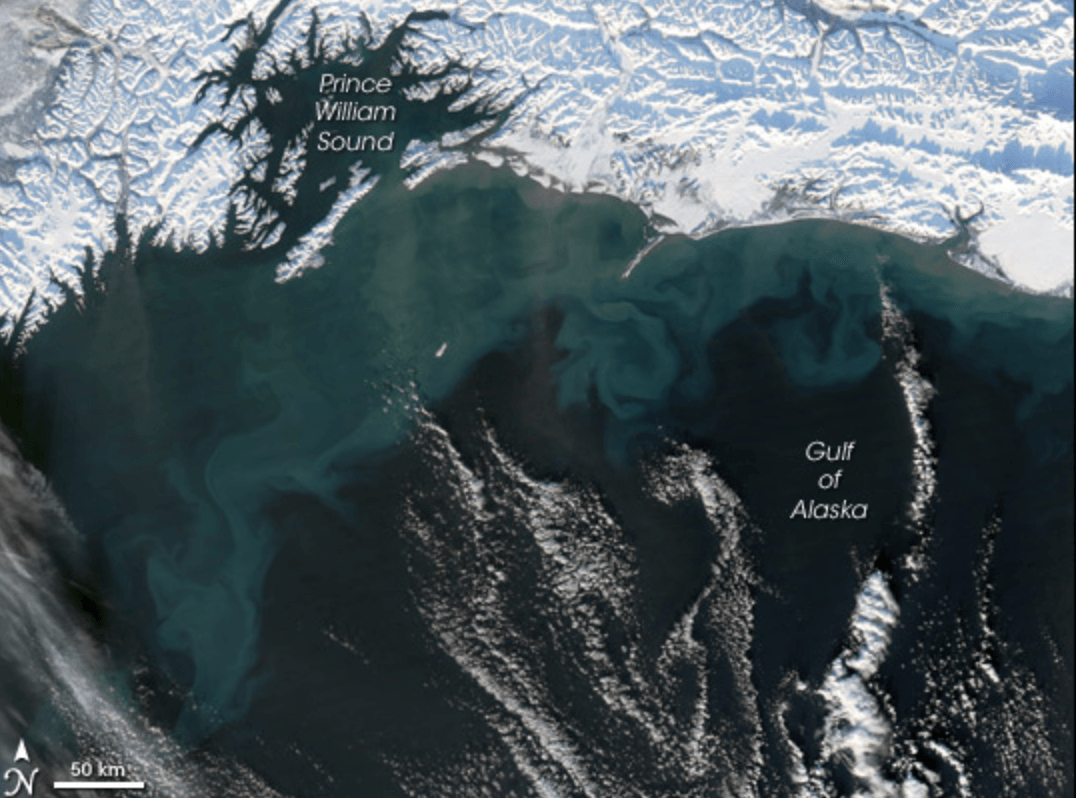
Even in the 21st century, mysteries abound about wildlife, especially in the depths of the oceans. A recent and interesting example was the discovery of what became known as the “golden orb.” Found in a deep-sea exploration in 2023, the strange object baffled scientists for three painstaking years until they discovered its secrets. The story begins with a routine operation carried out by the National Oceanic and Atmospheric Administration (NOAA) of the United States government. NOAA studies and conserves coastal and marine ecosystems and sent its ship Okeanos Explorer on a deep-sea mapping expedition to the Gulf of Alaska in the Pacific Ocean in the fall of 2023. The expedition was called Seascape Alaska 5 and the team launched a remotely operated vehicle (ROV) called Deep Discoverer on 19 dives in waters ranging from 252 m to 4,262 m deep, mapping more than 28,000 square kilometers of seafloor. BROKER/Rolf von Riedmatten/ Getty Images On one of the dives, Deep Discoverer investigated an underwater volcano known as Walker Seamount, 3,200 m below the surface. At such depths, the cold and pressure are extreme and, as light does not penetrate, discovering anything of any color is very unusual. So the team watching the video transmitted to the ship was amazed when the ROV came across a mass with a reflective gold surface stuck to a rock. They even joked that this is how horror movies start. Using the ROV’s robotic arm and suction cup, they carefully picked up the mass and brought it to the ship for inspection. It was still golden and shiny when they examined it and had a fibrous, skin-like texture. It was about 10cm wide and there was a big hole in one part. But they were bewildered. It had no obvious animal features: no mouth, no guts, no muscles. Was it an egg case, a dead sponge, or a completely new organism? The ‘golden orb’ was sent to NOAA’s National Fisheries Systematics Laboratory at the Smithsonian Institution’s National Museum of Natural History in Washington DC. Experts used an “integrative taxonomic approach” to examine the orb, essentially combining a study of its physical appearance with genetic analysis to identify the mysterious object. An electron microscope revealed that the orb’s tissue was made of chitin (a substance that also forms the hard parts of other invertebrates, such as beetle wings). It was also covered in stinging spirocyst cells, linking it to the phylum Cnidaria, which comprises more than 11,000 species of aquatic invertebrates, including jellyfish, corals and sea anemones. DNA analysis proved more challenging. The sphere was covered in exotic microorganisms, making initial examinations quite confusing. But deeper whole-genome sequencing produced a more definitive result: It confirmed the animal DNA and that there was a large amount of genetic material from a giant deep-sea anemone called Relicanthus daphneae. A Relicanthus attached to a dead sponge stem. Credit: National Oceanic and Atmospheric Administration, public domain, via Wikimedia Commons R daphneae had been seen on other deep-sea expeditions around hydrothermal vents in the Pacific, Indian, and Southern Oceans and is known to have 2 m long tentacles. This new find suggests that the strange creature is more widespread than previously thought. The scientists eventually concluded that the mass or orb was the cuticle (a type of slimy excretion) that the anemone uses to adhere to a rock. They even hypothesized that since the spot appeared to have been deliberately abandoned, it suggests that the anemone is mobile to some extent. Additionally, as in other anemone species, it is possible that a new anemone could grow from the abandoned anchor cuticle, part of a strange reproductive cycle. Experts could not yet determine whether the hole in the mass was due to decomposition or was an integral part of the object’s structure. They are also not sure why it is gold in color. However, they were fascinated by the communities of organisms they had found living there. These tiny microbes are key parts of the ocean’s nitrogen cycle, so the anemone’s cuticles could provide them with a previously unknown but crucial home. Clearly there is much more to discover. Cover image: Sunset cup coral (Leptopsammia pruvoti), Spain. This image is not of the ‘golden orb’. Credit: imageBROKER/Rolf von Riedmatten/Getty Images Discover more wildlife stories from around the world: