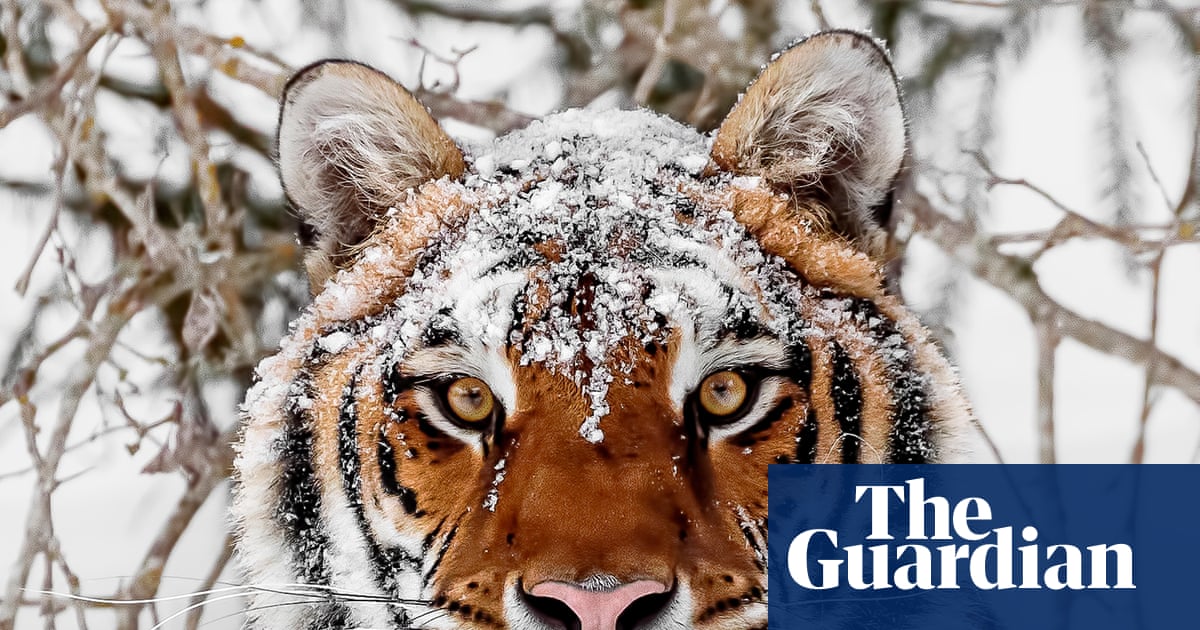
The return of wild tigers, tunas and green sea turtles to conservation shows that global nature loss can be reversed, scientists have said. But a report warns that food production must be the next “positive tipping point” if the world is to avoid biodiversity collapse. The World Wildlife Fund (WWF) analyzed nearly 36,000 animal populations and more than 5,000 species, producing the largest database ever created on vertebrate wildlife. Scientists found that populations had declined by an average of 73% since 1970, showing that “nature continues to degrade on an alarming scale,” with “no sign that losses are slowing.” Nature loss is no longer just an environmental challenge but a direct threat to the global economy, the report says, noting that around half of global GDP – approximately $58 trillion (£44 trillion) in 2023 – depends on nature and its ecosystem services. The authors write that species collapse now represents an “existential threat to economic stability, geopolitical security, and human well-being.” Animal populations were found to be falling most sharply in biodiversity-rich tropical regions, while trends in northern temperate parts of the world appeared much gentler. In Latin America and the Caribbean, terrestrial and freshwater wildlife populations fell by an average of 95% between 1970 and 2022, while equivalent declines were 80% in Africa and 23% in Europe and Central Asia. Living Planet Index chart, globally and in different regions. Freshwater wildlife suffered the greatest losses in all ecosystems in the world, with monitored populations in rivers and lakes decreased by an average of 85%, compared to 69% for terrestrial species and 59% for marine species. Tanya Steele, chief executive of WWF UK, said: “Nature loss is not just a crisis for wildlife. It is already taking its toll on us through increasing risks to our food. “We are at a fork in the road: either we continue to pay the increasing price of nature loss, or we invest in nature’s recovery. and in a future where people and wildlife can thrive together.” But despite the pattern of decline in global biodiversity, wild tigers, green sea turtles and bluefin tuna are recovering, the report says, showing that “it is still possible to reverse global nature loss when action is taken.” There are 3,200 wild tigers left worldwide and the species is heading towards extinction. After sustained and targeted conservation interventions, the population has grown to approximately 5,700, an increase of more than 70%. WWF UK tiger leader Becci Day said the remarkable return of wild tigers demonstrated the “science of hope” and showed that when climate and ecological action was taken, change was possible. Photograph: Anadolu/Getty. Images Last year, the green sea turtle became the first sea turtle to be downgraded from the IUCN red list from endangered to “least concern”, reflecting 50 years of coordinated conservation work in some 80 countries. It is also very clear that conservation alone cannot address the magnitude of the threats facing nature.” He said nature would have no chance of recovering if “negative tipping points” (irreversible, self-reinforcing ecological changes that accelerate the climate crisis) were overcome. “The systems driving nature loss have to transform. And that is energy, food and finance,” he said. “Our report shows that we have already passed the tipping point in the energy sector with the adoption of renewable energy. That transition is now unstoppable. It’s not happening fast enough, but it’s unstoppable.” Humanity must also adapt the way it produces food, he said. “Agriculture is the leading cause of habitat loss and degradation, and therefore biodiversity loss. It is also a major source of greenhouse gas emissions and therefore helps drive climate change, so you have that feedback.” Dr Steve Smith, a researcher at the University of Exeter and co-author of the report, said: “The biggest prize for nature’s recovery would be a healthy, sustainable food system, but it is currently the furthest from tilting positively. For example, agricultural expansion drives almost 90% of deforestation worldwide.”Positive tipping points are thresholds beyond which a sustainable technology or practice becomes increasingly cheaper, widespread, or politically popular, allowing progress to become self-propelled.