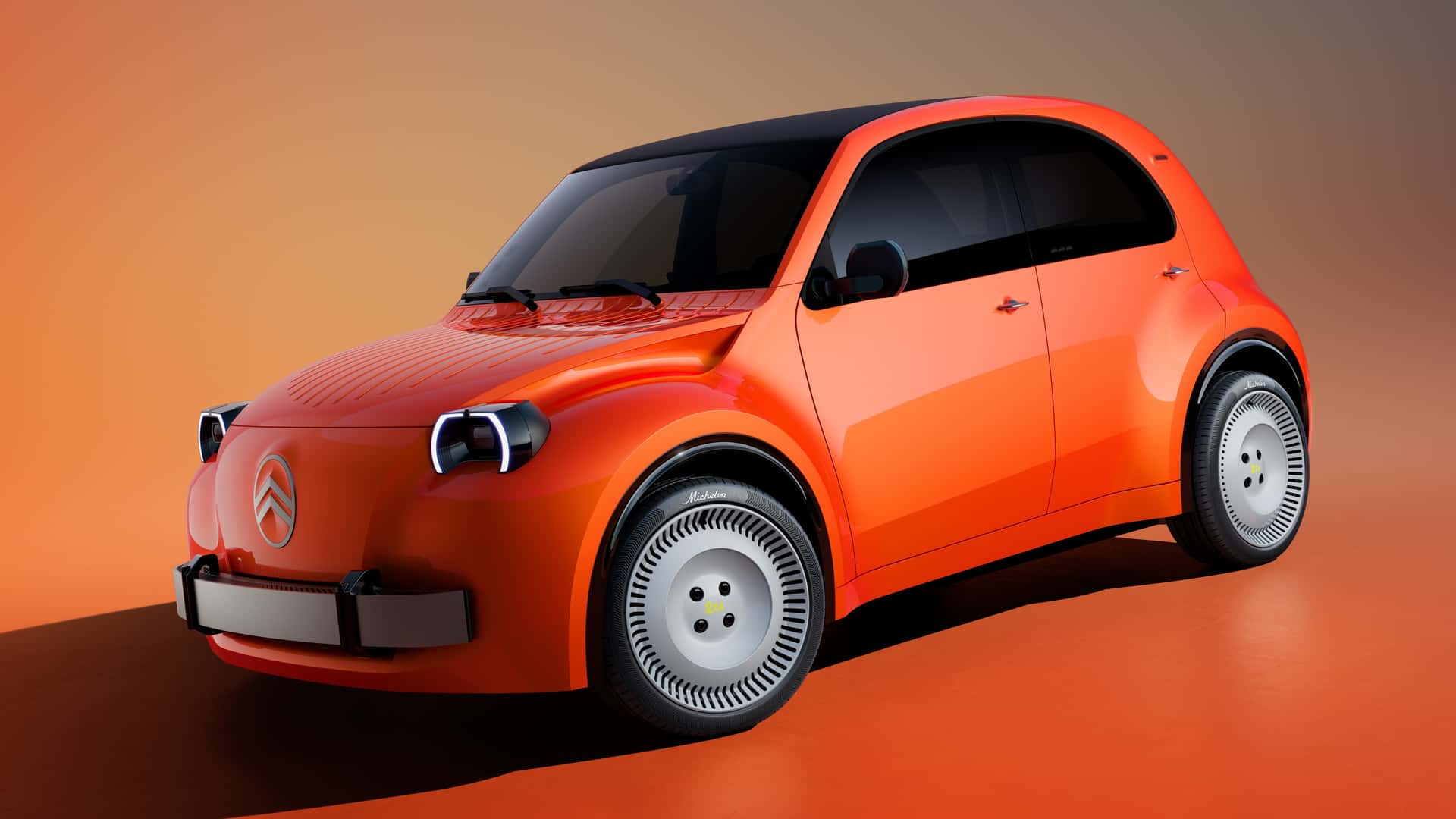
Fiat set the tone with the 500, and Renault followed with the latest Twingo. Now, Citroën wants to join the resurgence of retro city cars with a modern version of one of France’s most recognizable cars: the 2CV. Affectionately known as the “Duck” or “La Deuche” in France, the 2CV returns to the 2026 Paris Motor Show. And judging by the concept, Citroën is not trying to simply copy the original. Citroën’s goal was to create a small electric vehicle that was practical and economical, but at the same time felt special to drive. The production car would sit between the small Ami and the C3 in the Citroën range. Smaller than the original 2CV Photo by: Citroën Despite its modern technology, the 2CV Concept is actually smaller than the original. It measures approximately 147.6 inches (3.7 meters) long, compared to approximately 151.2 inches (3.8 meters) for the original 2CV. Citroën says keeping the dimensions compact was intentional. The idea was to recover the light and playful character of small cars and at the same time make the vehicle easy to drive and park in crowded cities. The target weight is also around 2200 pounds. Keeping the car light means Citroën doesn’t need a huge battery to provide usable range on a day-to-day basis. That should also help keep the purchase price and running costs down. Despite its modern technology, the 2CV Concept is actually smaller than the original. The concept adopts the same minimalist approach in its construction. Wide, flat body panels, simple air intakes under the windshield and separate bumpers that can be replaced individually are designed to make the car easier and cheaper to build and repair. Citroën is also working with Michelin on a “universal digital tire twin”, which is designed to monitor the condition of tires and continuously adapt the vehicle’s behavior based on environmental and road conditions. Retro style without exaggeration Photo by: Citroën The design is where the connection with the original 2CV is most obvious. The concept has the same basic proportions and rounded silhouette, but Citroën has improved the details for the modern era. There is a steep windshield, a gently curved roof, prominent fenders and a relatively simple body surface. At the front there are independent round headlights combined with a modern LED light signature. The bonnet also incorporates a reference to the historic TPV project, the “Toute Petite Voiture” or “very small car”, which eventually became the 2CV. There are also some deliberately old-school touches, including exposed wipers and air vents integrated into the front. Photos by: Citroën Photos by: Citroën From the side, the concept becomes more fun. The door handles are inspired by the original 2CV, while the slim turn signals are located on the rear roof pillars. The 19-inch steel wheels are another modern interpretation of a classic design. The rear is arguably the most distinctive part of the car, with a curved roofline, a black tailgate that extends to the bumper, and horizontal LED lighting elements. Even the license plate is a little Easter egg, with the different nicknames the 2CV receives around the world. The interior is full of 2CV Easter eggs Photo by: Citroën Citroën is also not trying to turn the 2CV into another screen-filled electric vehicle. The interior is bright and open, with spacious seats that feature the company’s Advanced Comfort technology. The passenger seat can slide out, while removable storage baskets and soft-strapped door handles add some useful practicality. Instead of a conventional dashboard, the driver gets a minimalist control setup centered around a cylindrical structure. It houses the steering wheel, the control levers, the gear paddle and the Citroën Smart Vision Display, which projects important information in the driver’s field of vision. Photos by: Citroën Photos by: Citroën There’s also an 8.0-inch square touchscreen that combines digital functions with physical controls. Its graphics are inspired by comics, adding a bit of personality to what could otherwise be a very basic interface. Then there is “Radioën”, a removable radio that also doubles as a portable speaker. You can take it out of the car and take the music with you, which is great. A folding fabric roof is another obvious nod to the original 2CV, giving the cabin a more open and airy feel. However, the elaborate string of lights surrounding the interior is probably not making the transition to production. Full of quirky details The 2CV Concept is filled with tons of little references to the original. The exterior is finished in a color called “Infra Red”, which combines orange, yellow and red tones as a nod to the classic 2CV Spot. Inside, the seats feature a modern take on the old 2CV’s checkered upholstery. There are also beige Bakelite-inspired elements throughout the cabin. Bakelite was one of the first fully synthetic plastics and was used for several components of the early 2CV. Wood, textured fabrics, wicker-inspired materials, and 3D-printed storage baskets give the interior a warmer, more tactile feel than the typical modern EV cabin. Even the pedals are in on the joke; a tortoise represents the brake, while a hare marks the accelerator. Photo by: Citroën The door pockets are another clever callback. They are designed to carry eggs, referencing one of the famous requirements from the original 2CV development report. The horn and electric motor sounds nod to the original car, while the ventilation flaps under the windshield and umbrella-handle-style selector mimic familiar details from the 2CV. The numbers 48, 90 and 26 on the windshield represent the year of release of the original car, the end of its production and the year of the debut of this concept. The production 2CV could cost around 15,000 euros. Citroën says the production version will be built in Europe and is targeting a starting price of around 15,000 euros (or around $16,000 at the current conversion rate). That would make it one of the most affordable ways to buy an electric car, assuming Citroën can keep the final price close to that goal. The production model is expected to arrive in 2028 and possibly make its debut at the 2028 Paris Motor Show. If that happens, the timing would be perfect: exactly 80 years after the original 2CV first appeared. Of course, not everything about this concept will survive the journey to production, but if Citroën can preserve the basic formula – a lightweight, economical and practical electric vehicle with plenty of character – the 2CV could be one of the most interesting entries in Europe’s growing crop of affordable electric city cars. We want your opinion! What would you like to see on Motor1.com? Take our 3-minute survey. – The Motor1.com team