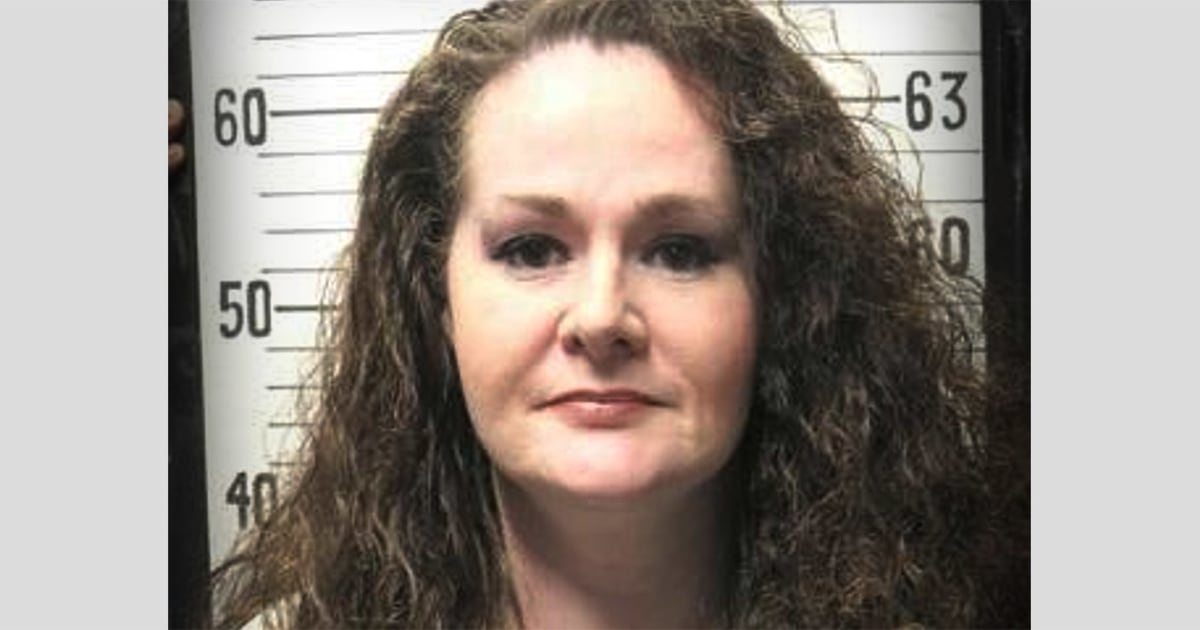
Christa Pike, the woman who survived an attempted execution in Tennessee earlier this week, is on a ventilator while receiving care at the hospital, her attorneys said in a new statement Friday. “Christa remains seriously ill and is receiving medical care for the devastating effects of Wednesday night’s events,” the attorneys’ statement said. “She is seriously ill, unconscious, intubated and receiving respiratory assistance through a ventilator.” The statement said she is being treated for “serious effects of pentobarbital administered during the attempted execution, including significant injuries to both arms.” At one point, Pike said she felt like her arm was exploding and she could be heard moaning, her attorneys said. Emergency vehicles arrive at Riverbend Maximum Security Institution on Wednesday. Denny Simmons / The Tennessean / USA TODAY Network via Reuters The state of Tennessee attempted to execute Pike on Wednesday night by lethal injection for a murder she committed. committed when he was 18 years old. He is now 50 years old and has been on death row for decades. Pike would have been the first woman executed in the state in 200 years, but she survived two lethal doses of the drug during the procedure. NBC News previously reported that there was no emergency medical oxygen in the execution room in case something went wrong. Medical professionals had to retrieve it from another location. Pike’s attorneys, Stephen Ferrell and Luke Ihnen, detailed his condition in a new emergency motion filed Friday asking the state to preserve all evidence of the failed execution attempt. “In the words of a media witness: We have many questions and the Department of Corrections has many answers it must provide to the public about what happened here. We agree,” the motion reads. In their presentation, Ferrell and Ilhen described a painful and chaotic scene that unfolded in front of several witnesses and that they said could have been avoided with proper care and training. Medical staff did not follow basic protocol, such as ensuring the needles used were fresh, functional and inserted correctly, according to the motion. Additionally, the state failed to heed Pike’s concerns before the procedure that pre-existing medical conditions could make it difficult to carry out the lethal injection, the motion says. The motion accuses the corrections department of “inflicting cruel and unusual punishment on Ms. Pike through its deliberate indifference to her basic medical needs and its reckless disregard for basic medical practices and its own lethal injection protocol.” Christa Pike in 2023. Tennessee Department of Corrections via APThe Tennessee Attorney General did not immediately respond to a request for comment on the new filing. A spokesman for the state corrections department said the agency does not comment on pending litigation. At a news conference Thursday, Ferrell and another of Pike’s attorneys, Randall Spivey, detailed how the attempted execution went wrong. Spivey, who was in the room, recalled Pike telling him he was in pain and that his arm felt like it was about to “explode.” “It’s not supposed to be a cruel and unusual execution,” criminologist Deborah Denno told NBC News. “The goal is to kill someone, but kill them within the means or in a reasonable manner, where there is no pain or suffering.” According to Friday’s file, the execution process lasted more than two hours. Pike’s legal team filed emergency motions to stop the execution in multiple courts before the prison called an ambulance. “Even then,” he continues, “attorneys for the state of Tennessee argued that TDOC had no obligation to provide life-saving care to Ms. Pike.” Rheumatologist Dr. Natalie Azar, an NBC News contributor, said the pain Pike described could be attributed to the pentobarbital flowing into his arm instead of directly into his veins. That would be painful with any medication, Azar said, but pentobarbital’s specific properties would make the experience exceptionally uncomfortable. The scenario would also result in Pike being administered a less than lethal dose. It was enough to suppress her respiratory system, but not enough to kill her, Azar explained. The question of how long Pike’s brain was deprived of oxygen will be critical to his prognosis. “There is no reversal of pentobarbital. There is no medication or antidote,” he said. “Basically, you have to wait for the liver to metabolize the drug and get it out of the body.” Pike was convicted in the 1995 murder case. She and two other teenage accomplices worked together to torture, stab and fatally beat Colleen Slemmer, Knoxville police said at the time. Pike was sentenced to death. Several last-minute legal efforts to stop Pike’s execution were unsuccessful.