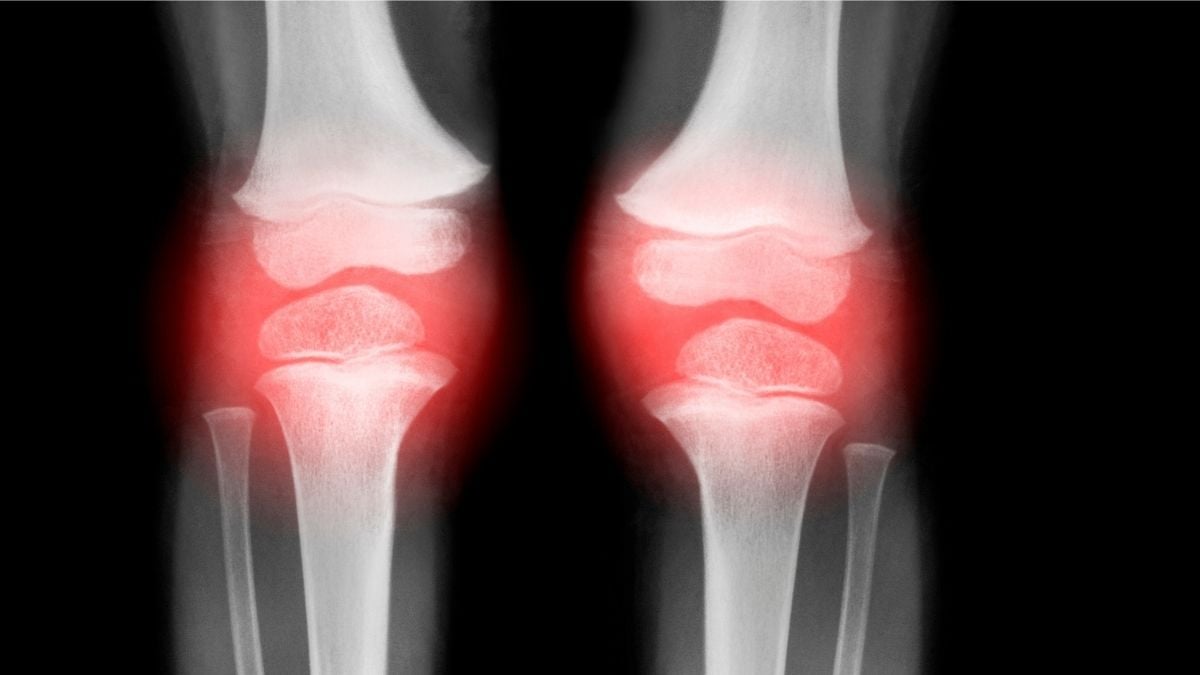
One of the most disappointing and relatable parts of aging is the experience of a joint that no longer does what it’s supposed to do: knees that hurt when you bend over, shoulders that make noise. The general assumption for decades has been that once cartilage in a joint has broken down, it cannot grow back. But now, scientists at Stanford University believe they have found the switch that has been slowing this process, after tracing age-related cartilage loss to a single protein. When they blocked it in mice, the old, worn-out cartilage began to thicken again. The protein is an enzyme called 15-PGDH, and it has already been widely linked to aging. It is known that as we age, 15-PGDH becomes more abundant and interferes with molecules that repair tissue and reduce inflammation. That link to aging is what led the Stanford team to wonder if the same protein could be causing osteoarthritis, a condition caused by degradation. of cartilage collagen, which causes pain and inflammation in the joint. In old mice, blocking 15-PGDH thickened cartilage that had already worn away. And in young mice with a recent injury, it prevented the arthritis that usually occurs. To test this, the researchers recreated the mouse equivalent of an anterior cruciate ligament (ACL) tear and then blocked 15-PGDH. The osteoarthritis that one would normally expect to see after such an injury did not occur. What’s especially interesting is that in this study, stem cells did not appear to play a role. Chondrocytes, the adult cells that already build and maintain cartilage, were actually able to become healthier once 15-PGDH was reduced. “This is a new way to regenerate adult tissue and has significant clinical promise for treating arthritis due to aging or injury,” Helen Blau, a stem cell biologist at Stanford University, said in November last year when the research was first published. “We were looking for stem cells, but they’re clearly not involved. It’s very exciting.” As you can see below, aged mice with 15-PGDH blocked cartilage (far right) had cartilage that appeared similar to young, healthy cartilage (left). The treated aged cartilage (far right, stained red) looked much more like young, healthy cartilage (far left, stained red). (Singla et al., Science, 2025) It wasn’t just the mice. The team also tested the approach on human cartilage taken from people undergoing knee replacement surgery and saw the same pattern: tissue that became stiffer and less inflamed after treatment. “The mechanism is quite surprising and really changed our perspective on how tissue regeneration can occur,” explained orthopedic scientist Nidhi Bhutani. “It’s clear that a large set of existing cells in cartilage are changing their gene expression patterns. And by targeting these cells for regeneration, we may have the opportunity to have a larger overall impact clinically.” This potential therapy is exciting enough on its own, but it’s just one contender in what is becoming a really crowded race to end osteoarthritis. The US government’s Advanced Research Projects Agency for Health (ARPA-H) has proposed more than $100 million to accelerate several separate teams pursuing the same basic goal across different biology, under a program called NITRO. Two years later, these teams have already regenerated both cartilage and bone in animals, and the next A milestone is people. One of the grant recipients, the University of Colorado Boulder, made headlines earlier this year when researchers unveiled a slow-release drug delivery system that is injected into the damaged joint and stimulates the body’s own cartilage and bone cells to repair themselves in just a few weeks. So far, all testing has been done in animal models, but they have now moved their research to a company called Renovare Therapeutics, which focuses on human clinical trials. In two years, we were able to go from an idea to the moon to developing these therapies and showing that they reverse osteoarthritis in animals,” chemical and biological engineer Stephanie Bryant of the University of Colorado Boulder said in a press release earlier this year. “Our goal is not just to treat pain and stop progression, but to put an end to this disease.” A team at Columbia University also received an ARPA-H grant, but took a quite different approach: 3D printing a living human knee scaffold with stem cells that dissolve as the body regenerates its own cartilage and bone around it. (Columbia University) “NITRO, ARPA-H’s first program, launched with the question: What if we could make our joints heal themselves?” said program director Ross Uhrich. “Two years later, it’s not only possible, it’s quickly becoming a reality.” a potential treatment that is already widely used. A 2026 study found that semaglutide appears to protect joints, and appears to do so through a mechanism that is independent of pressure relief through weight loss. The Chinese and US team found that the drug reprograms the metabolism of cells that maintain healthy cartilage, allowing them to generate more energy. In mice and humans with obesity and osteoarthritis, treatment with semaglutide reduced pain and slowed degeneration of the joints. In mice, they included a control group that ate the same amount as the semaglutide-treated animals. Even with comparable weight changes, that control group did not receive the same protection from the cartilage, suggesting an independent effect of weight loss on the joint itself. While more research is needed, the fact that many people already take semaglutide means it is something that can be studied further in the future. weeks, animal research shows For the Stanford team, the next step will involve a clinical trial. It may be a long process, but a 15-PGDH blocker to combat muscle weakness has already been tested in a previous human trial and raised no health and safety red flags, which should speed up the testing process for similar drugs. “We’re very excited about this potential breakthrough,” Blau said. “Imagine regrowing existing cartilage and avoiding joint replacement. was published in Science magazine This article was fact-checked by Clare Watson and edited by Clare Watson. While we take pride in our process, we’re human. If you spot an error, please let us know.