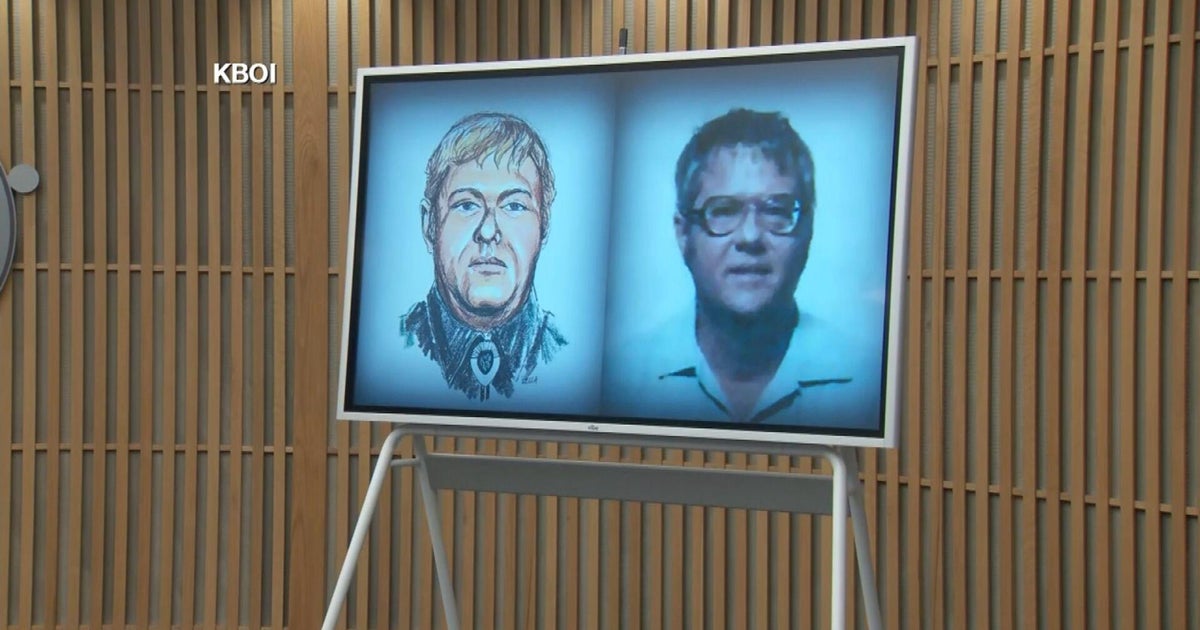
Police in Boise, Idaho, announced Wednesday that they had identified the “Unknown Vagabond,” a man found dead in a church in 1982, and revealed a surprising possible connection to the still-unsolved Chicago Tylenol murders. Investigators with the Ada County Sheriff’s Office said they cannot locate the man in the Chicago area during the last week of September 1982, when the poisonings occurred, and will not name him as a suspect. But they laid out a trail of evidence that includes a hand-drawn map of Chicago, photographs of him in the Chicago area and a bottle of homemade cyanide. They have shared that evidence with Chicago police. The Mysterious Death of a Mystery Man On December 4, 1982, a man was found dead at Sacred Heart Catholic Church in Boise. He had no name or identification. His wallet was empty, but sweat marks showed where the cards had once been placed. He had an ink marker, a lighter, a Seiko wristwatch, a leather belt with a distinctive buckle, he was wearing a bolo tie made of turquoise and silver, he had two key chains with almost 30 keys between them, and an envelope with $1,900 in $100 bills. He also had a typewritten note signed by William L. Toomey, which police determined was a false name. His nails were finely filed, his hair was dyed and combed, and his pants had either never been worn or were freshly ironed. He had a deep, even tan, the kind police say comes from living somewhere warm, and he didn’t appear to have been living on the streets. Investigators worked on the case for years. His fingerprints didn’t match anything in Idaho or FBI files. They traced his tie to a silversmith in the southwest, but no name was given. A 1990 episode of “Unsolved Mysteries” featuring the case generated thousands of leads, but no real leads. Ada County Sheriff Matt Clifford said Detective Frank Richardson worked on the case for decades until he retired. In 2019, Tim Cooper, a detective with 24 years on the job, reopened the case. He would be the one to find the break. Key evidence: How the homeless man was identified Cooper explained at a news conference Wednesday that while examining the nearly 30 keys the homeless man had with him when his body was found, he discovered one that had a mark indicating it came from a hardware store in Jacksonville, Florida. Cooper also saw an engraving on that key that had previously been misidentified and appeared to have been made with a sharp instrument. Investigation of the mark and engraving led Cooper to a street in Jacksonville called Mills. Court. He obtained property titles from the late 1970s and 1980s, and noted that one property was owned by a man who had been reported dead in 1989. Cooper found the only surviving member of his family, a brother living in Los Angeles, who confirmed that his brother had lived in Jacksonville until he disappeared in 1982, and had been declared dead in absentia years later. Investigators compared the brother’s DNA to DNA from the wallet and found a conclusive match that showed the two men shared a father. The Unknown Vagabond, Cooper said, was Dr. Mathew Francis Betkouski. A privileged man worried about poison. Betkouski came from a prominent Los Angeles family, investigators said. His grandfather had been president of the Los Angeles City Council and at times served as mayor pro tem. His father was a top official at the Los Angeles Department of Water and Power. Betkouski had a documented fascination with chemistry and explosives from an early age and struggled with mental illness throughout his life, Cooper said. A traumatic brain injury in 1974 worsened his mental illness and caused “some of his problems to manifest themselves in more troubling ways than before,” Cooper said. Betkouski moved to Jacksonville in 1975 to work at a flavor and fragrance company. His co-workers reported him to management for talking about committing the perfect poison crime and for talking about suicide, Cooper said. Betkouski’s paranoia became more pronounced during that time, and his coworkers sometimes saw him talking to himself, investigators said. In 1978, he returned to Los Angeles for two months of inpatient and outpatient mental health care. When he returned to Florida, he was laid off from his jobs in Jacksonville. After his mother’s death in 1979, Betkouski spent more than a month in psychiatric treatment at a Florida state hospital, and likely elsewhere in the state, investigators said. Betkouski’s personal writings from those years show that he was concerned about controlling schizophrenia and depression, and about the possibility of achieving euphoria through “imaginary thoughts of violence.” In late 1979, Lockheed hired Betkouski to work at its testing facility in White Sands, New Mexico. His fellow scientists remembered him talking about how poison could be introduced into capsules of over-the-counter medications. Lockheed fired Belkouski in March 1982 after an altercation at a local pharmacy, investigators said. He allegedly tried to get pills or capsules “for an experiment.” When the police were called, they discovered that he had been carrying out experiments in his garden. A link to the Chicago Tylenol murders? Police said Betkouski was fired from his job at Lockheed in March 1982 after he was involved in an altercation at a local pharmacy where he allegedly tried to obtain pills or capsules “for an experiment.” When the police were called, they discovered that he had been carrying out experiments in his garden. In 2021, after the death of Betkouski’s brother, his remaining relatives allowed Idaho police to go to Los Angeles, where they found personal items belonging to Betkouski that his brother had kept in his childhood bedroom. Among those effects were photographs, letters and a hand-drawn map of Chicago that police believe was made in the 1970s. There was also a small bottle of cyanide with a handwritten label. The bottle contained sodium cyanide, Cooper said, not the potassium cyanide used in the Chicago Tylenol poisonings. Tests found that the bottle contained peach and apricot pits, leading police to believe that the cyanide was homemade by Betkouski himself. Police also said writings from the late 1970s and early 1980s revealed that Betkouski was interested in visiting Chicago. Some of the photographs found were of him in the Chicago area, which they initially thought were taken in late 1982, but were probably taken in December 1981. Police are unsure whether he returned to Chicago for subsequent trips after the photographs were taken, and cannot place him there in the last week of September 1982, when the poisonings took place. Boise police said they will not name Betkouski as a suspect in the Chicago Tylenol murders because they cannot say for sure he was there, but they are still looking for further links between him and the Chicago area at the time. They noted that he was found dead three months after the Tylenol murders, took steps to conceal his identity, and the coroner ruled his cause of death to be cyanide poisoning. “While our office may have identified some connection to the events of 1982, we did not name him as a suspect,” Detective Cooper said. “Our goal today is to generalize new leads for this case and possibly others.” Boise police said they have shared everything they learned that could be related to the Tylenol murders in Chicago with the Chicago Police Department, which has reviewed their findings. Chicago police released a statement writing, “Chicago Police Department detectives have been in contact with the Ada County Sheriff’s Office regarding their investigation to determine if there is a connection to the Tylenol murders investigation, which remains an unsolved open case. Anyone with information that could assist in this investigation is asked to submit an anonymous tip through CPDTip.com or Cook County Crime Stoppers at 800-535-7867.” The Arlington Heights Police Department said it received and reviewed information from the Ada County Sheriff’s Office and would continue to work with other agencies to identify “the individual or individuals responsible for the 1982 Tylenol murders.” The department said it had nothing more to disclose because the investigation remains active. The FBI’s Chicago office also issued a statement, writing: “There have been repeated claims over the past 44 years of alleged links to the Tylenol murders that remain unsubstantiated. Out of respect for the legitimate and ongoing investigation, those affected by the tragedy, and the law enforcement partners who have provided genuine support from the beginning, the FBI remains the leader in investigating and releasing credible information to the public once the evidence yields a true resolution to the case.” 2023On September 29, 1982, a 12-year-old Elk Grove Village girl named Mary Kellerman took two Tylenol capsules before school because she had a cold. She collapsed and died. Later that day, postal worker Adam Janus, 27, of Arlington Heights, also died. He was followed shortly after by his brother Stanley, 25, and his sister-in-law, Theresa, after they inadvertently took Tylenol from the same bottle that killed him. New mother Mary Reiner, 27, of Winfield; Mary McFarland, Lombard call center employee, 31; and flight attendant Paula Jean Prince, 35, of Chicago’s Old Town neighborhood, also died or were found dead suddenly in the following days. Johnson & Johnson executive Wayne Nelson called it “a clear case of indiscriminate murder.” The company ordered Tylenol shelves nationwide emptied, and Chicago Mayor Jane Byrne banned the drug from being sold in Chicago. Consumers were asked to throw away any Tylenol they had. Many left their Tylenol at police stations. State and local public health departments tested thousands of vials of the drug for cyanide, and Illinois scientists even invented a new method to do it. A 15-agency task force was immediately formed to find the killer when panic ensued, including 26 FBI agents. All of the poisoning murders occurred within a few days. But on September 29, 1983, a year after the first poisoning-related death, CBS Chicago reporter IJ Hudson began a report with these words: “It was the beginning of a nightmare for Chicago, a nightmare that is not yet over for some.” In September 2026, 44 years after the murders, that phrase still rings true. For years, the main suspect in the Tylenol murders was James Lewis. Shortly after the murders, Johnson & Johnson received an extortion letter demanding one million dollars to stop the murders. The letter was traced to Lewis, who later spent more than a decade in prison for attempted extortion. He was never charged with the murders. Lewis settled in the greater Boston area. In 2004, he was accused of raping and kidnapping a woman in Cambridge, Massachusetts. The case was dismissed the day before trial when the victim suddenly refused to testify. Lewis was found dead in his home in Cambridge, Massachusetts, in July 2023. He was the only person considered a prime suspect since the day of the poisonings. Previous CBS Chicago reporting found that some officials believed they had enough circumstantial evidence to charge him. More from CBS News at: