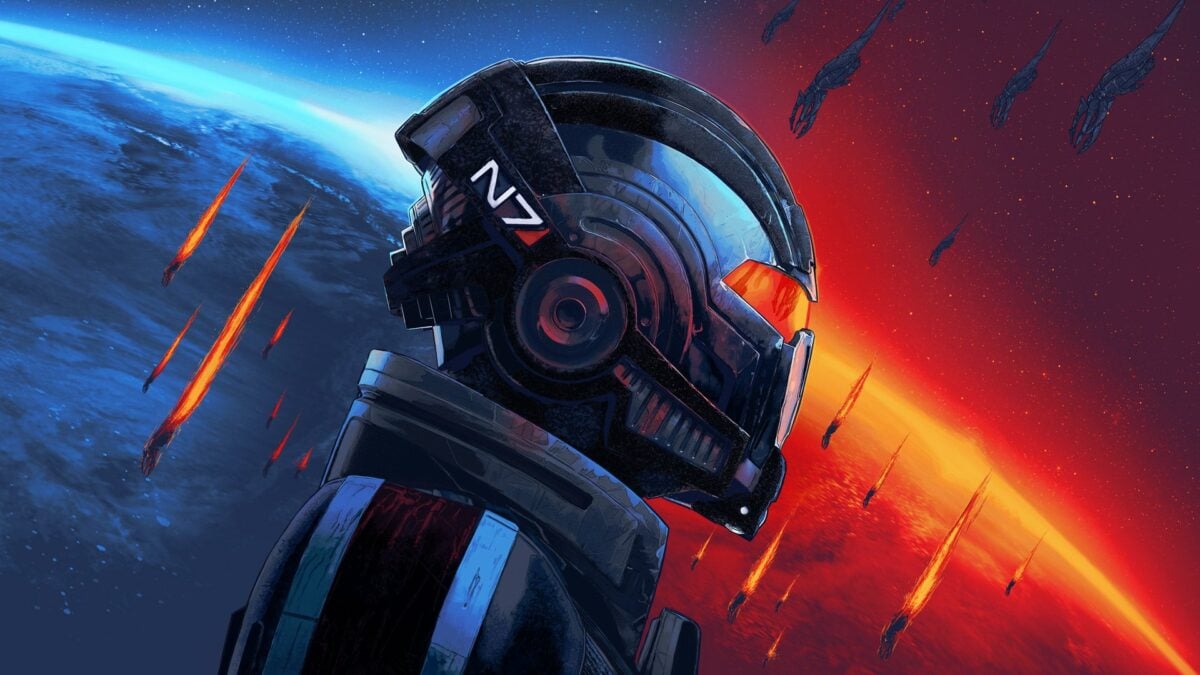
BioWare co-founders Greg Zeschuk and Ray Muzyka chose a (relatively?) quiet life when they retired from the Mass Effect studio in 2012, a few months after the release of Mass Effect 3. Although the pair hadn’t been a part of the company in over a decade, naturally, people might be interested in hearing what they had to say about the studio’s closure last week under publisher EA and its new private equity owners. Zeschuk did his first interview after the end of the company he founded in 1995, and says he had already mourned BioWare when he left the Edmonton developer 14 years ago. But I still had thoughts about how it all happened. “I’ve been through all the emotions a long, long time ago,” Zeschuk told 80.lv. “You have to break through that and say, ‘Okay, I’ve had my emotional moment.'” While he may have felt more estranged after years away, he was still concerned about the people still at BioWare and lamented that his former colleagues and people on the team he never worked with were being thrust into a hostile job market. You can read the full interview to learn more from Zeschuk about how BioWare’s ability to release games, even those that weren’t as revered as its pre-Andromeda output, was still “a success” in the sense that the studio was able to work within EA’s “framework.” But some of the most interesting parts of the interview are where Zeschuk reflects on the original acquisition of BioWare in 2007 and whether or not he regrets it. Although there has been some speculation that BioWare was in danger of going under if not for the EA acquisition, Zeschuk denies this, saying that the studio was “in good shape” and that the company was looking for a means to secure more funding for the Star Wars The Old Republic MMO that was in development at BioWare’s Austin office. “Actually, we had options,” he said. We thought we chose the best option we had available at the time. The company had good prospects going forward, but in the end we felt we could be better as part of something bigger.” Now, almost 20 years later, the studio is no longer around, and Zeschuk says he believes EA’s acquisition by Saudi Arabia’s Public Investment Fund, Silver Lake Partners and Affinity Partners in August was the “final nail in the coffin,” and that EA is a “completely different company” than when BioWare was initially acquired. Zeschuk hopes that everything but sports or Battlefield to be “strange” in the eyes of the new owners, and he has had to create an “emotional rupture” to not spend too much time “questioning” his decisions from 20 years ago. Despite this, he leaves the interview defending the people who create games and saying that something like Mass Effect cannot be recreated with “random people and AI.” 80.lv “Because none of these people have ever made a game, never sat down to make one, from start to finish, not even a small thing, they just don’t know how it works.” Despite those feelings, Zeschuk has no plans to return to the games industry or try to reclaim the BioWare name or the rights to Mass Effect. “I’m happy to be a consumer and play. I have my opinions on how to do things, but as attractive as it is, it just isn’t. [worth] the personal struggle, cost and effort required to make a great game. Having been through the crucible of game development, I won’t be going back there.” Even if Zeschuk were interested, many assume that EA has no intention of parting with any BioWare intellectual property. tktktk, who was working on Mass Effect: Universe before its cancellation, said in a broadcast that the publisher “never actually sells anything” and simply “[shuts] drop things and sit on their licenses.” Even now, a Mass Effect TV show is in development at Amazon and won’t be affected by BioWare’s closure, so EA is making money off of BioWare’s work even if its developers are no longer on the payroll. That hasn’t stopped fans from holding out hope that the series can be saved and paying for billboards on the spot that EA can’t avoid.