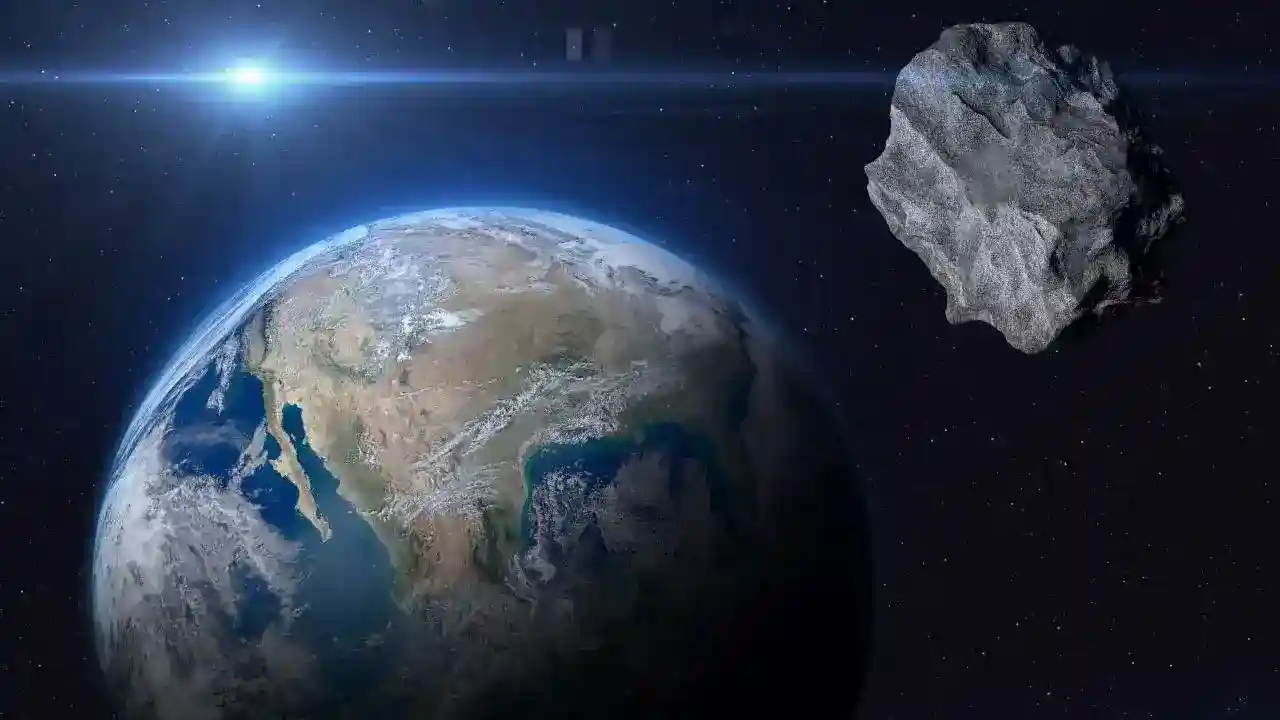
NEWYou can now listen to Fox News articles! A Harvard astrophysicist who claims a mysterious object passing through our solar system is actually a lost Soviet spacecraft says scientists may never be able to see it clearly after Japan abruptly scrapped a planned mission to land on the target. Avi Loeb told Fox News Digital that the Japan Aerospace Exploration Agency’s decision to cancel its Hayabusa2 encounter in 2031 with the object known as 1998 KY26 eliminates the only opportunity to capture high-resolution images of its surface and decide whether it is a natural space rock or the defunct Soviet Phobos 1 probe from 1988. “There is no way we can resolve the object, or get a high-resolution image of its surface, without getting close to it, without a flyby, because even with the Webb telescope or the larger telescopes that we have on Earth, the object is not close enough to be able to resolve it into multiple pixels in one image,” Loeb said. SOVIET PROBE LOST AS NASA OPERATES ON THEORY The cancellation came just days after NASA Administrator Jared Isaacman dismissed speculation about the roughly 36-foot-wide object during an appearance on “Fox & Friends,” saying, “I haven’t seen any evidence to suggest this is… anything other than an asteroid.” A conceptual image of an asteroid passing by Earth. (iStock) Loeb rejected that assessment, arguing that KY26 “is not an asteroid” because it accelerates in a way that gravity alone cannot explain, and predicted that when Japan’s spacecraft lands on it in July 2031, scientists will find a label that says “Made in the USSR” instead of ice or rock. Japan’s space agency informed the Cabinet Office’s Space Policy Committee on Nov. 16 that it was abandoning the 2031 appointment after the last normally operating main ion engine on Hayabusa2 failed in mid-August, according to Japanese newspaper Yomiuri Shimbun. “I was surprised that the cancellation by JAXA came just a day or two after I spoke about it publicly, because the engine malfunction had been known for several months,” Loeb said. “The probability that we are looking at a coincidence where, one day after my public speech, JAXA decides to cancel this mission is one day divided by the duration for which the fourth engine was known to be malfunctioning, and that was roughly 100 days. 1988. Harvard astrophysicist Avi Loeb and his colleagues have examined whether the mysterious object 1998 KY26 could be the missing probe (Credit: NASA). “So, I would say that the probability of a chance coincidence is less than 1%, but it could still be a coincidence,” he added. Loeb noted that Hayabusa2 was designed over several years and questioned why Japanese engineers did not try an Earth-gravity-assisted maneuver to compensate for the loss of engine thrust. Instead of turning toward another target. JAXA officials said in their report that reaching KY26 in 2031 already required an Earth-gravity assist, and that combining functional parts from two damaged engines left to the 12-year-old spacecraft without enough thrust to make the necessary orbital changes, prompting a redirection to a 2028 flyby of asteroid 2015 BM510, the newspaper added. “So far, we have detected a reflection of sunlight from this object, but the Webb telescope can potentially detect the heat emitted by the object, and that will offer the opportunity to learn both about the size, the surface temperature of the object, as well as the composition of the object,” Loeb said. While top scientists have suggested that KY26 is a rock or an ordinary comet, Loeb noted that the object rotates about once every five minutes and is much brighter than expected. THE TOWER-SIZED ASTEROID APOPHIS WILL PASS CLOSER TO EARTH THAN MANY SATELLITES IN 2029, NASA SAYS Avi Loeb speaks during the SALT conference in Manhattan, New York, on September 14, 2022. (David ‘Dee’ Delgado)SIGN UP FOR THE LATEST TRUE CRIME NEWS “This object reflects about half of the sunlight that falls on it, while a typical rock or iceberg reflects about 5% of the sunlight that falls on it,” he said Loeb, adding that the object’s brightness is “striking.” “shape” – rather than hidden comet-like activity. SEND US A TIP However, Loeb and his colleagues found that KY26’s trajectory closely resembles that of Phobos 1 – a Soviet spacecraft launched toward Mars in July 1988 that shut down after a faulty command – and calculated that sunlight reflected from its solar panels could produce the observed thrust without any sign of a “dark comet” tail. forward, but in that case we should have seen the gas,” Loeb said. “We should have seen the dust because in comets we see a tail and the dust particles are pushed away from the sun by solar radiation.” ‘Starman’ heads toward Mars (Photo by SpaceX via Getty Images)LISTEN TO THE NEW PODCAST ‘CRIME AND JUSTICE WITH DONNA ROTUNNO’ Loeb added that KY26 orbits the sun at a distance of a fraction to a few Astronomers briefly classified an object near Earth as an asteroid before realizing that it was actually the Tesla Roadster launched into space by SpaceX in 2018, an error that was only detected because humans knew its flight path rocks or icebergs, because if one of them is of technological origin, that will change our view. about our place in the universe,” Loeb said. Greg Wehner is a reporter for Fox News Digital covering news and crime in the United States, with a focus on breaking events, law enforcement, public safety and the top stories shaping communities across the country.