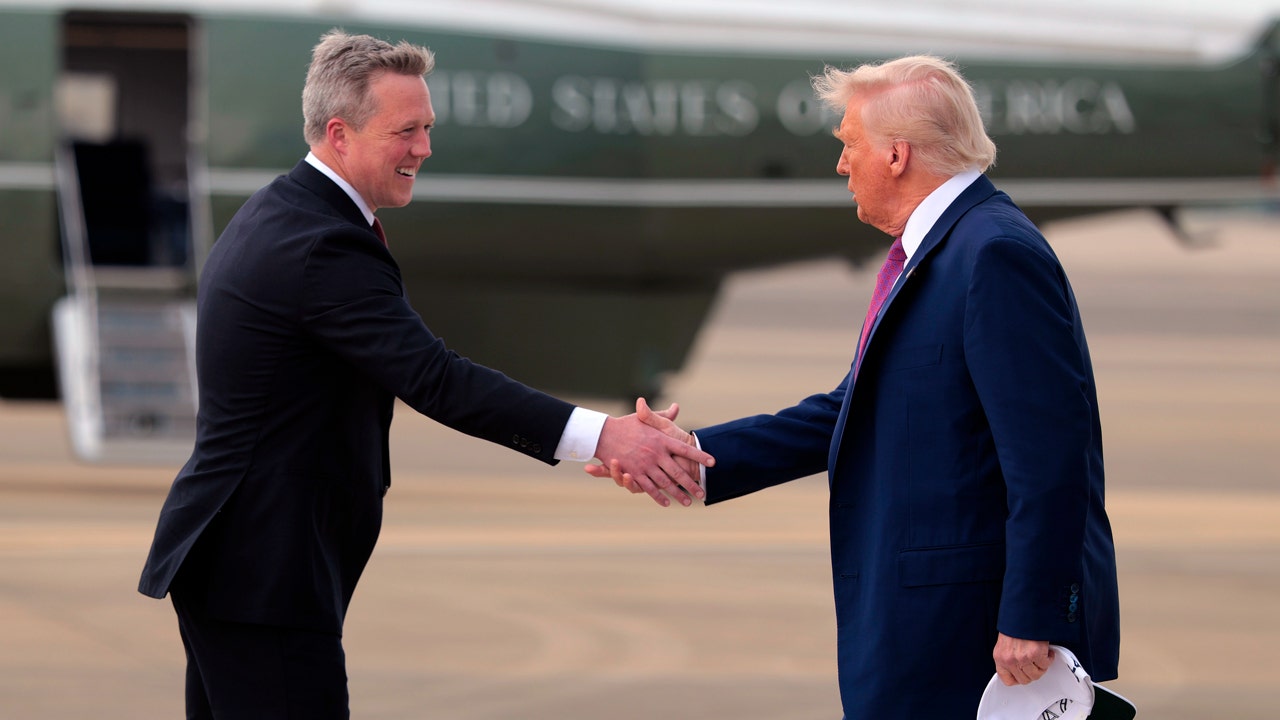
Gordon Chang, a senior researcher at the Gatestone Institute, warns that prestigious American universities such as Harvard and MIT are transferring valuable American technology directly to the Chinese military through research partnerships. The U.S. military is moving forward with plans to bring nuclear power to five military installations as part of a multibillion-dollar effort to strengthen the military’s energy security and reduce its reliance on potentially vulnerable power grids. The Army announced Wednesday that its Janus Program selected five nuclear energy companies to receive awards of up to a combined $2.2 billion to own, build and operate nuclear microreactors at bases in North Carolina, Kentucky, Texas, Georgia and New York. The announcement comes as the Army works toward a September 2028 goal outlined in an executive order signed by President Donald Trump that calls for the first Army-regulated reactor to begin operating at a military installation. Combined with expected investment from the private sector, the Army said it expects more than 20 micro nuclear reactors to eventually be built and operated at War Department facilities. CALIFORNIA HELICOPTER MANUFACTURER REACHES MAJOR ARMY TRAINING DEAL THAT COULD SUPPORT HUNDREDS OF JOBS IN THE U.S. President Donald Trump and Secretary of the Army Dan Driscoll. The Army is moving forward with plans to bring nuclear microreactors to military installations as part of an effort to strengthen energy security and reduce dependence on potentially vulnerable external sources (Anna Moneymaker/Getty Images/Getty Images). The initial reactors will be built by Antares Nuclear at Fort Bragg, North Carolina; BWXT Advanced Technologies at Fort Campbell, Kentucky; and General Atomics Electromagnetic Systems at Fort Hood, Texas. Additionally, the Army said Radiant Industries will install a reactor at Fort Benning, Georgia, while Westinghouse Government Services will install one at Fort Drum, New York. Secretary of the Army Dan Driscoll emphasized the importance of ensuring reliable power for military installations. “Since the launch of the Janus Program, our mandate from President Trump and Secretary Hegseth has been clear: secure the energy our warfighters need to train, deploy and win.” Driscoll said. PENTAGON BOOSTS THAAD INTERCEPTOR PRODUCTION WITH NORTHROP GRUMMAN AND LOCKHEED MARTIN DEAL Fort Bragg in North Carolina was selected as one of five initial military installations slated for a nuclear microreactor under the Army’s Janus Program. (Logan Mock-Bunting/Getty Images/Getty Images) “The award of these contracts accelerates our ability to deliver safe and reliable baseload power directly to our facilities,” he continued. “We are building the energy resilience necessary to project combat power globally, without relying on potentially vulnerable external networks.” The Army said the funds will be distributed from fiscal years 2027 through 2031 using a milestone-based payment model, meaning companies will receive government funds only after meeting specific technical goals. Each supplier is also expected to contribute significant private capital. The Army said it spent about a year evaluating potential installations based on factors including energy needs, seismic and hydrological considerations and security. GORDON CHANG WARNS BEIJING’S PROVOCATIONS COULD STARTER A WAR ‘NO ONE CAN CONTROL’ The US military has selected five military facilities for nuclear microreactors as part of a program providing up to a combined $2.2 billion to strengthen energy resilience. (Nathan Howard/Getty Images/Getty Images) Jeff Waksman, principal deputy assistant secretary of the Army for Installations, Energy and Environment, emphasized that the effort is not simply an experiment, but is intended to produce reactors capable of reliably providing power for years. “We are looking not just at reactors capable of being turned on for a brief demonstration, but rather at systems capable of delivering power at high capacity factors for years of operation,” Waksman said. “The Janus Program will be a complete success when and only when we have assisted multiple nuclear companies in developing truly reliable and affordable micronuclear reactors that they can sell to buyers beyond the military.” “With Janus, DIU is helping build the Army’s microreactor, accelerating military energy production to protect the nation.”