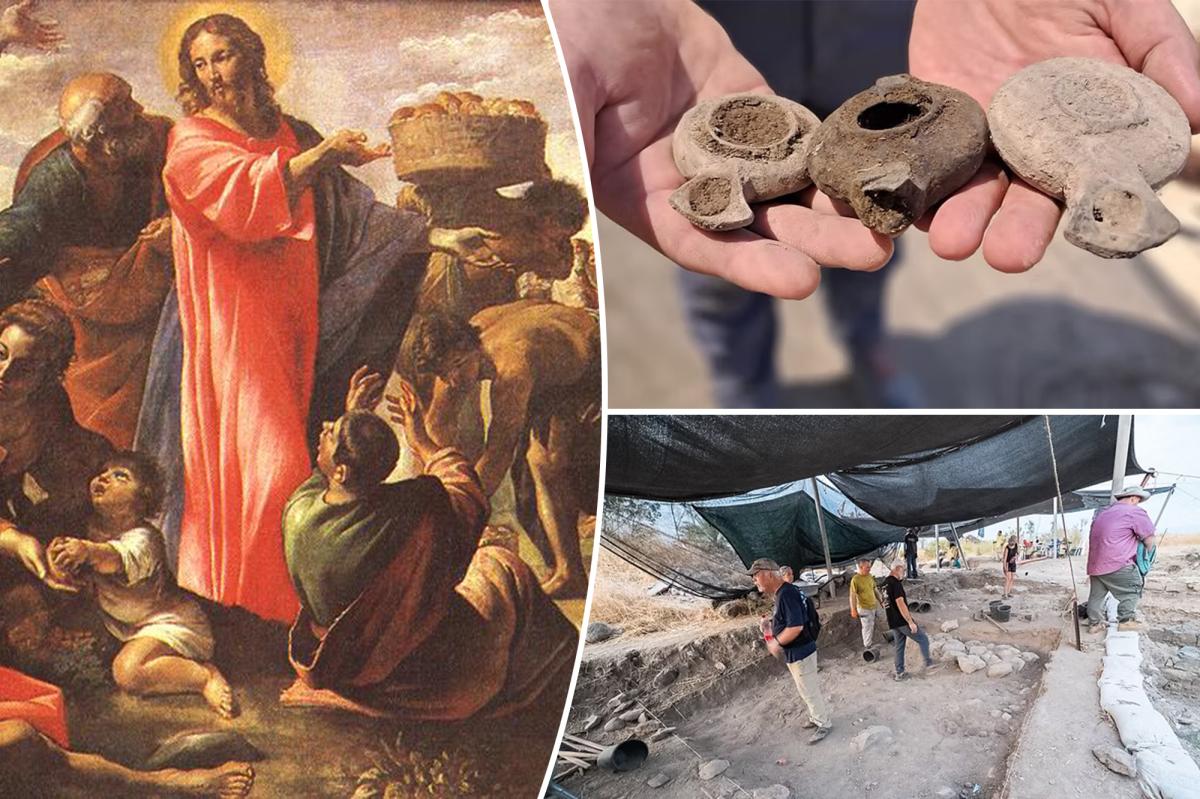
It is a testament to years of dedication. A team of archaeologists is “absolutely” sure they have discovered the lost biblical city of Bethsaida after spending the summer unearthing an incredible trove of artifacts from northern Israel. The Bethsaida-Julias excavation team recovered lamps, makeup tools, coins and dozens of other artifacts from the shores of the Sea of Galilee in their 10th season of digging, solidifying their long-standing theory that it was once the ancient city where Jesus is said to have performed a litany of miracles. The Bethsaida-Julias excavation team spent its 10th season excavating ancient ruins along the Sea of Galilee. Center for the Study of Ancient Judaism and Christian Origins “What we try to take into account is the accumulation of evidence collected from all the plazas that paints a portrait of the historical profile of the ancient site. That picture becomes clearer with each season,” wrote Dr. Steven Notley, academic director of the excavation, in a blog post earlier this month. Notley and his team have spent the last decade excavating the ruins of the historic site, today known as el-Araj. This tenth season greatly expanded your understanding of Bethsaida-Julias in the Roman period, which spanned from the 1st to the 3rd century, but artifacts from other ancient times were found scattered throughout the sprawling area. They also found “Roman period walls, a basalt mortar (grinding stone), coins, and a fascinating Half-Doric capital that probably decorated a public building,” as well as indications that an earlier Hellenistic settlement was hidden beneath the earth, Notley wrote. The team determined that the Syrian owner of Beit Habek during the Ottoman period had built his stables on earlier Roman structures without relying on foundations, an ancient decision that surprisingly did not result in the stone walls cracking or collapsing when the Bethsaida-Julias team discovered them. The team also found chalk stoneware and several intact Herodian lamps, which were only made in Jerusalem before 70 AD, definitive markers that Jews lived in the city in the first century, when it moved from Bethsaida to a Roman-period polis called Julias, according to the blog. The Gospel says that Jesus fed thousands of people in the city with five loaves and two fish. National Gallery of Ireland The extravagant finds apparently challenge notions that the inhabitants of Galilee were poor, illiterate peasants; Instead, they suggest that the cities and towns Jesus visited were prospering, even under Roman occupation. The successful season only confirms claims Notley had made years earlier that the site is the lost city of Bethsaida. “Everything we take out of the earth affirms and strengthens that identification. Nothing we have found would question it at all,” Notley told the Daily Mail. Dr Steven Notley holds half of a Doric capital used to decorate a public building. Center for the Study of Ancient Judaism and Christian Origins The team unearthed a jug from Roman times. Center for the Study of Ancient Judaism and Christian Origins The Herodian lamps, as seen here, are definitive markers that Jews were in the city in the first century. Center for the Study of Ancient Judaism and Christian Origins “I have no difficulty seeing Jesus spend considerable time there,” he said, adding that he calls it “the last lost city of the Gospels.” Jesus restored sight to a blind man in the city, according to the Bible, and fed thousands with five loaves and two fish. The apostles Peter, Andrew and Philip are also believed to have called Bethsaida home. The Bethsaida-Julias excavation team has been excavating the El-Araj site since 2016 and has uncovered masterpieces of mosaics, churches, house walls and more over the years.