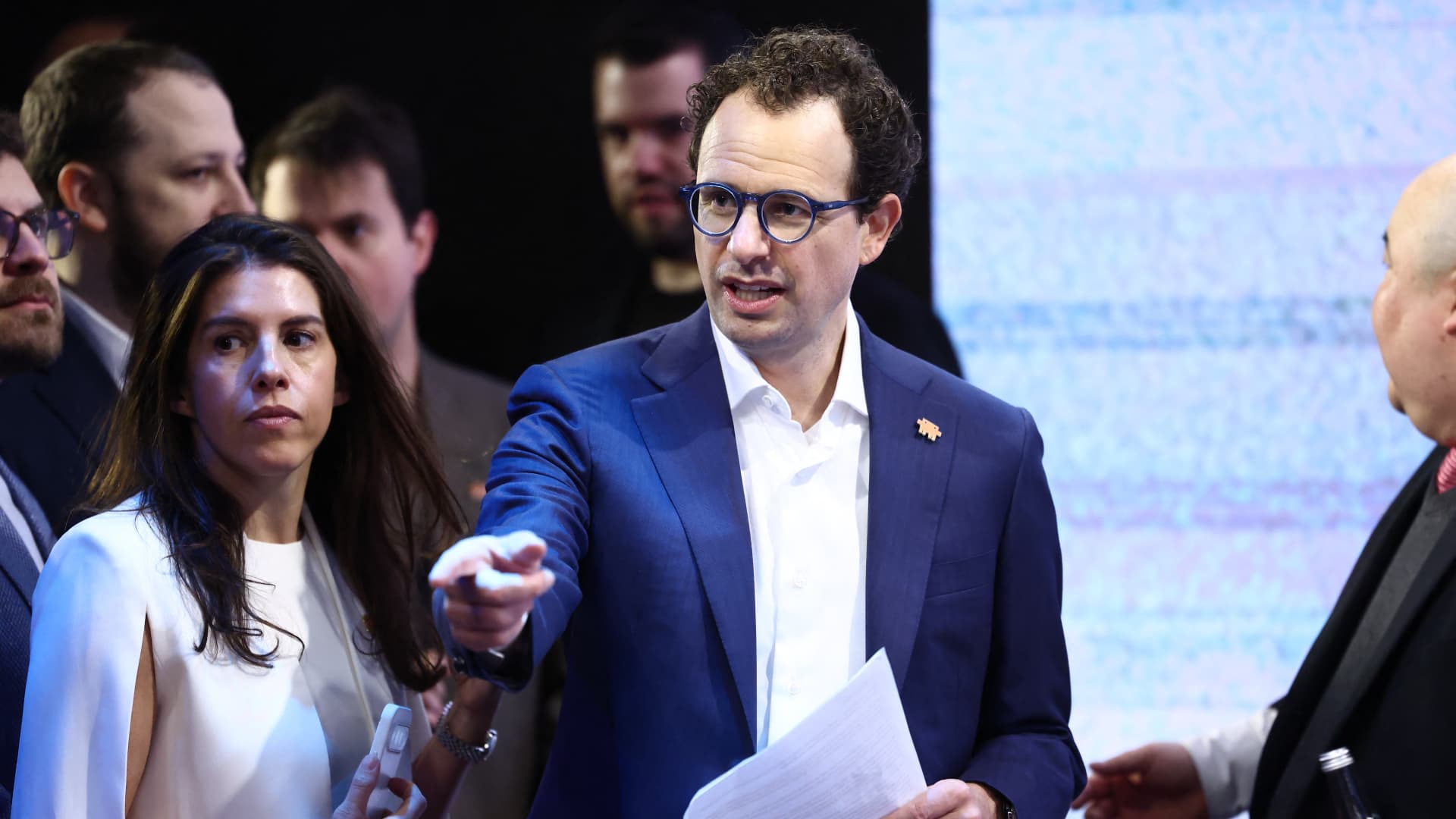
Anthropic CEO Dario Amodei appears on Nasdaq MarketSite ahead of the company’s trading debut in New York on November 19, 2026. Charly Triballeau | AFP | Getty Images Investor Ben Narasin is so excited about Anthropic’s successful initial public offering that he’s planning a party later this month at his Silicon Valley home. Sake, vodka and Krug champagne will be served. Each attendee will receive two jars of caviar. “This is a celebration of the most material, significant, mind-blowing event that has ever happened in venture capital,” Narasin, a founding partner at Tenacity Venture Capital, told CNBC in an interview, adding that he didn’t even invest in the company. Anthropic raised a record $93.5 billion in its initial public offering and an additional $26 billion from tech giants who bought at the offering price. The stock gained 17% in its debut on Thursday, raising Anthropic’s market capitalization to $1.8 trillion and providing a much-needed windfall for the Silicon Valley startup ecosystem. It was quite the split-screen moment on Wall Street, which spent the week in an AI-fueled tailspin. Led by Nvidia’s 23% drop, which marked the stock’s steepest weekly decline in 18 years, the Nasdaq fell 10% over the past five trading days in its worst week since the early days of Covid in 2020. That question is likely to linger for some time, but Friday’s market action showed that Wall Street is skeptical about Anthropic’s ability to grow to its lofty valuation. At the end of the week, Claude’s creator’s fully diluted $1.6 trillion market capitalization put it behind just six American companies: Apple, Microsoft, Alphabet, Nvidia, Amazon and SpaceX. With the tech market in turmoil due to rising interest rates, raging anti-AI sentiment and Nvidia’s top management crisis, Anthropic’s IPO was part exuberance and part relief for an industry starved for exits. After venture-backed IPOs generated $73 billion in proceeds in 2021, the amount raised over the next four years amounted to just $39 billion, according to data from University of Florida professor emeritus Jay Ritter. In 2021, 126 technology companies went public, compared to 34 in 2025. When going public “wasn’t worth it.” Meanwhile, the private market has continued to grow, with companies raising ever-larger sums at sky-high valuations without the pressures of quarterly earnings. Many startups that were hoping to go public at the beginning of the decade fell out of favor with the rise of AI. They experienced deep job cuts, downgrades and acquisitions for pennies on the dollar. “There was a time in Silicon Valley, not long ago, when the prevailing wisdom was that the default path should be to avoid going public for as long as possible,” said Somesh Dash, general partner at venture firm IVP. The opinion was: “it’s too long, it’s too difficult, it’s not worth it,” he said. Anthropic is very young compared to some of those companies, but it was a great private capital raiser. Investors poured $141 billion into the AI lab through September, according to Anthropic’s prospectus. For some Silicon Valley companies that contributed to those funding rounds, the returns are like nothing they’ve ever seen. At the IPO price, Menlo Ventures and Lightspeed Venture Partners each owned about $25 billion in Anthropic stock. Bessemer Venture Partners owned a stake worth about $10 billion, partner Byron Deeter said. Matt Murphy, a partner at Menlo, told CNBC’s David Faber on Thursday that his firm has more than five limited partners “to whom we deliver over a billion dollars in returns.” “At the end of the day, that’s really our job: giving back dollars to foundations and endowments,” Murphy said. “There’s a lot of pride in being able to do that.” Bessemer’s Deeter was also jubilant Thursday, posting on That’s a big change from a few years earlier, when Anthropic was barely generating any revenue and success was far from guaranteed. In 2023, Anthropic’s Claude 2 was struggling to keep pace with Google and OpenAI models. In April 2024, Bessemer investors wrote in a memo that if Anthropic did not meet its own goals, there was “a good chance we would lose all or some of our money.” Lightspeed’s Guru Chahal told CNBC that Anthropic was clearly the team taking a more measured approach to AI. The company looked beyond Nvidia’s dominant AI chips and opted to also use alternatives from Amazon and Google. Anthropic said it generated $1.72 in revenue per dollar spent on computing power in the third quarter, up from 68 cents a year earlier. “It’s true that it required a lot of capital, but when you dig deeper and realize that capital is going into computing, and this is the team that is positioned to use that computing most effectively, then we could connect those dots,” Chahal said. He added that those metrics showed that “it was going to be a very high-quality business.” IPO project? Anthropic isn’t the only big win for venture capitalists this year. Five months before Anthropic’s Nasdaq debut, SpaceX hit the market in what, until this week, was by far the largest IPO in history. SpaceX, which Elon Musk founded in 2002, has produced outsized returns for companies like Sequoia and Andreessen Horowitz. SpaceX and Anthropic alone will make 2026 a monster year for the venture industry, easily surpassing any other year in IPO revenue. And investors in OpenAI expect appetite to remain strong for trillion-dollar companies next year, as the maker of ChatGPT looks forward to a potential offering as late as 2027. IVP’s Dash said that in his AI portfolio, “many companies are starting to prepare for IPO,” even if it’s only “year four, year five, year six since inception.” He expects at least half a dozen companies to go public with valuations above $10 billion each in the second half of 2027. However, the macroeconomic outlook is ominous. Jensen Huang’s sudden departure from Nvidia has left the chip giant without a clear leader at a time when the company was already facing heightened concerns about a slowdown in spending. Nvidia is a key investor in Anthropic and OpenAI and a critical supplier and financial partner to the entire AI industry, which is taking a hit across the board. In January, Democrats will take control of the House and Senate after this month’s midterm elections, which included the passage of numerous ballot measures that could hinder data center development. Anthropic investor Brad Gerstner predicted after the election that market dynamics would push Anthropic to price toward the lower end of its range. Narasin said he wasn’t even sure the company would go that far. “I was worried they would be delayed,” Narasin said. That makes the result that much more impressive, he said, after Anthropic set a price above its expected range and increased the size of the offer. “These will be bedtime stories for years to come for future venture capitalists,” Narasin said. “There was a company that was created, backed by angels and then by a company” that in a few years “became the largest initial public offering in all of history.” CNBC’s Ari Levy contributed to this report. WATCH: I like owning Anthropic long term, says John Belton of Gabelli Funds