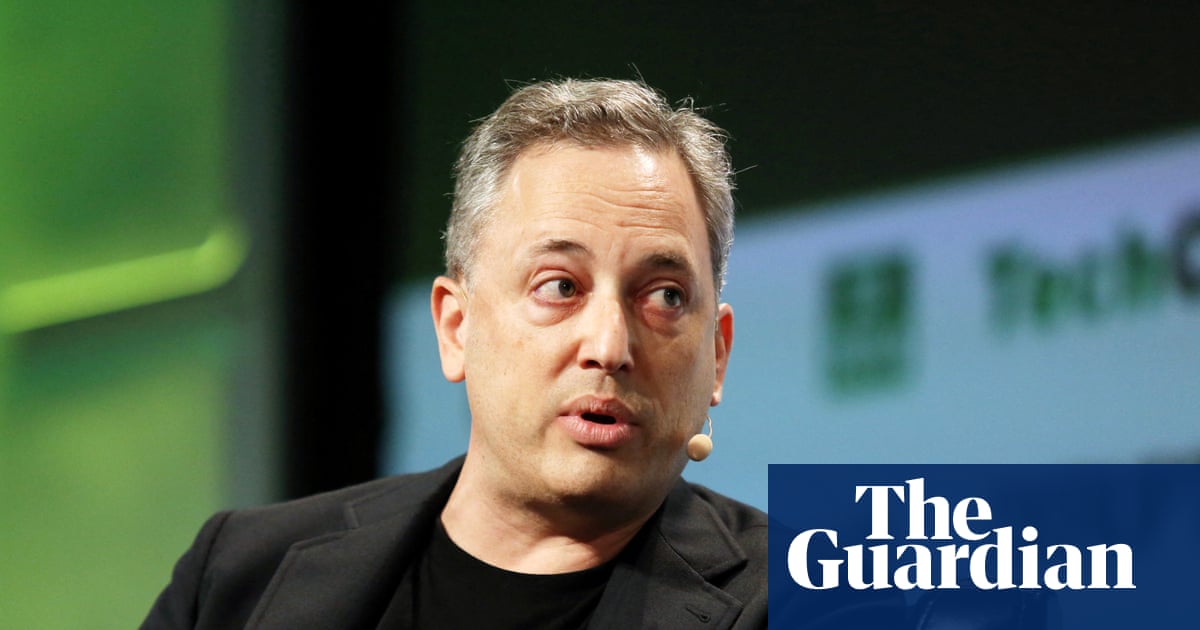
While lawmakers on both sides of the aisle in the US have come together to call for regulation of powerful artificial intelligence models, one of the few detractors has been Donald Trump. He has called the perceived dangers of the technology a “hoax” and a “scam,” arguing that the government already has “tremendous CRIMINAL and REGULATORY power over these companies.” It’s a starkly different stance from his former adviser Steve Bannon, Texas Republican Senator Ted Cruz and even the heads of the world’s leading artificial intelligence companies. But it is directly in line with the view of David Sacks, a prominent billionaire venture capitalist and former Trump AI and cryptocurrency czar, who has publicly and forcefully rejected recent claims of an imminent AI apocalypse. Sacks, who believes the regulation will erase the United States’ lead in the global AI race, is seen as Trump’s AI whisperer — the most influential adviser in the White House on the issue. Time and time again, he has advised the president to put a soft touch on AI regulation, helping push executive orders and other measures aimed at loosening restrictions on the technology. It also maintains direct financial stakes in several AI companies. On Friday, more than 100 AI researchers, professors and technologists signed a public letter urging third-party evaluations of AI models and outlining how it should be done. Among the signatories were some of the most notable experts in the field, such as Geoffrey Hinton, the “godfather of AI,” and Stuart Russell, a renowned AI computer scientist. Sacks characteristically dismissed the letter on social media, calling third-party assessments “pseudoscience” and “censorship and control.” Sacks wrote. “These groups have not earned our trust and their agenda is not our security.” Derailing AI Safety Efforts Last December, Trump signed an executive order to stop state laws that limited AI. It was one of the first of several actions by the president that revealed his alignment with Sacks. The proclamation assigned a federal task force “exclusive responsibility” for challenging states that try to pass laws restricting the technology. The order detailed an influential role for Sacks in leading the task force’s litigation against the states. Then, just four months later, in March, the White House unveiled an AI policy to Congress that encouraged lawmakers to get ahead of state rules. Once again, Sacks was seen working behind the scenes to make this happen. This pattern has continued throughout the year. In July, Trump and Sacks hosted a fanfare-filled AI summit in Washington. And just this week, Trump called Nvidia CEO Jensen Huang to discuss AI regulation. In a live demonstration of Sacks’ proximity to the most powerful people in America, the call came while Sacks was interviewing Huang at an onstage event. Next week, Trump will host China’s leader Xi Jinping at the White House and is expected to invite several AI CEOs to be present. Sacks is also scheduled to be one of the guests in attendance, according to NBC News. Isabel Sunderland, policy lead for technology reform at the nonprofit Issue One, said Sacks’s relationship with the president shows what happens when money can buy a direct line to power. “David Sacks’ advice to President Trump on artificial intelligence shows exactly how our political system serves the rich and well-connected rather than ordinary Americans,” Sunderland said. “This is about more than just regulating AI: it’s about who gets to write the rules.” Trump’s latest outright opposition to AI regulation comes after an Anthropic employee, Jacob Coxon, announced on social media last week that he was resigning from the company, saying that AI would soon evolve into “superhuman systems” that could cause human extinction by 2030. After Coxon’s post, other Anthropic employees backed up these predictions, with one saying, “I really seriously believe that AI could kill all humans!” The doomsday predictions sparked a frenzy of attention from media and lawmakers over the past two weeks, with American politicians, heads of state and international bodies calling for the technology to be reined in. Dario Amodei, CEO of Anthropic, issued a proposal to slow the advancement of technology and ensure public safety by regulating the industry. In a rare public show of unity, OpenAI CEO Sam Altman, Google DeepMind head Demis Hassabis, and xAI owner Elon Musk agreed. However, Sacks rejected any regulatory action, instead stating that the proposal was an “election season psychological operation” and a bid for “regulatory capture.” “Sacks’ political evolutionSacks, like his technological contemporaries Elon Musk and Peter Thiel, hail from South Africa. He was born in Cape Town in 1972 and then immigrated with his family to the United States in the late 1970s. Sacks spent his undergraduate career majoring in economics at Stanford, where he met Thiel and worked with him at the student-run conservative newspaper Stanford Review. The two men also collaborated after graduation, co-authoring 1995 book The Diversity Myth: Multiculturalism and the Politics of Intolerance at Stanford, an early look at Sacks’s political ideology The book criticizes “multiculturalism,” “diversity,” and the “politically correct” decline of higher education In the late 1990s and early 2000s, Sacks, Thiel, Musk, and others worked together at PayPal, becoming members of what is now known as the PayPal Mafia, an elite group of investors. and influential and wealthy tech founders. After founding and working at several startups over the years, Sacks co-founded Craft Ventures in 2017. The fund has raised hundreds of millions for technology companies and has investments in a variety of businesses, including SpaceX, Anduril, Palantir, Meta, Airbnb, Lyft and dozens of artificial intelligence startups. As of 2023, Sacks said the company’s assets under management were $3.3 billion. of dollars. Around the same time he founded Craft Ventures, Sacks began getting more involved in politics. While he donated to Hillary Clinton’s presidential bid in 2016, he quickly transitioned to supporting primarily Republican causes and candidates. In March 2020, Sacks launched the popular and influential tech podcast All-In with three other Silicon Valley investors who lean toward conservative and capitalist values. Vanity Fair described their annual All-In summit in 2025. “fever-dream capitalist bacchanal where the faithful can stop feeling ‘guilted by this virus of the awakened mind’ and enter ‘founder mode.’” Since then, Sacks’ right-wing stances and political donations have deepened, according to a profile in the Atlantic. He donated to JD Vance, Blake Masters, Ron DeSantis and Robert F Kennedy Jr, campaign finance documents show. In June 2024, Sacks hosted a fundraiser. for Trump at his $45 million French limestone mansion in San Francisco’s Pacific Heights. Tickets sold for $500,000 per couple. a newly created role, as a “special government employee,” only allowed Sacks to work for the administration for a maximum of 130 days a year, but exempted him from confirmation hearings or financial disclosure requirements. However, the government ethics office required Craft Ventures to divest some of its artificial intelligence holdings. In March, Sacks said he would leave the position, but he has since maintained close ties to the president. executive order that would have subjected AI models to government review. And in July, the two men hosted the AI summit in Washington. At the event, the president presented an “AI action plan,” once again aimed at loosening restrictions on the development and deployment of the technology. Sacks’ influence over Trump has irritated other senior administration officials, according to the Wall Street Journal. greater oversight of the technology. But the president has consistently sided with Sacks on the issue. Critics say Trump and Sacks are out of step with the American public on safeguarding AI, even among Republicans. A May poll by Bryson Gillette Insights for the AI security group Future of Life Institute found that 85% of Republicans say they support Trump taking strong steps to ensure AI is developed and deployed safely. David Sacks on AI might be the biggest miscalculation the Trump administration has ever made,” said Sacha Haworth, executive director of the Tech Oversight Project. “He’s an out-of-touch Silicon Valley radical who wants to replace humans with machines. You can’t put this guy in charge and not expect to pay a political price. “Republicans are going to follow big tech executives into the abyss.”