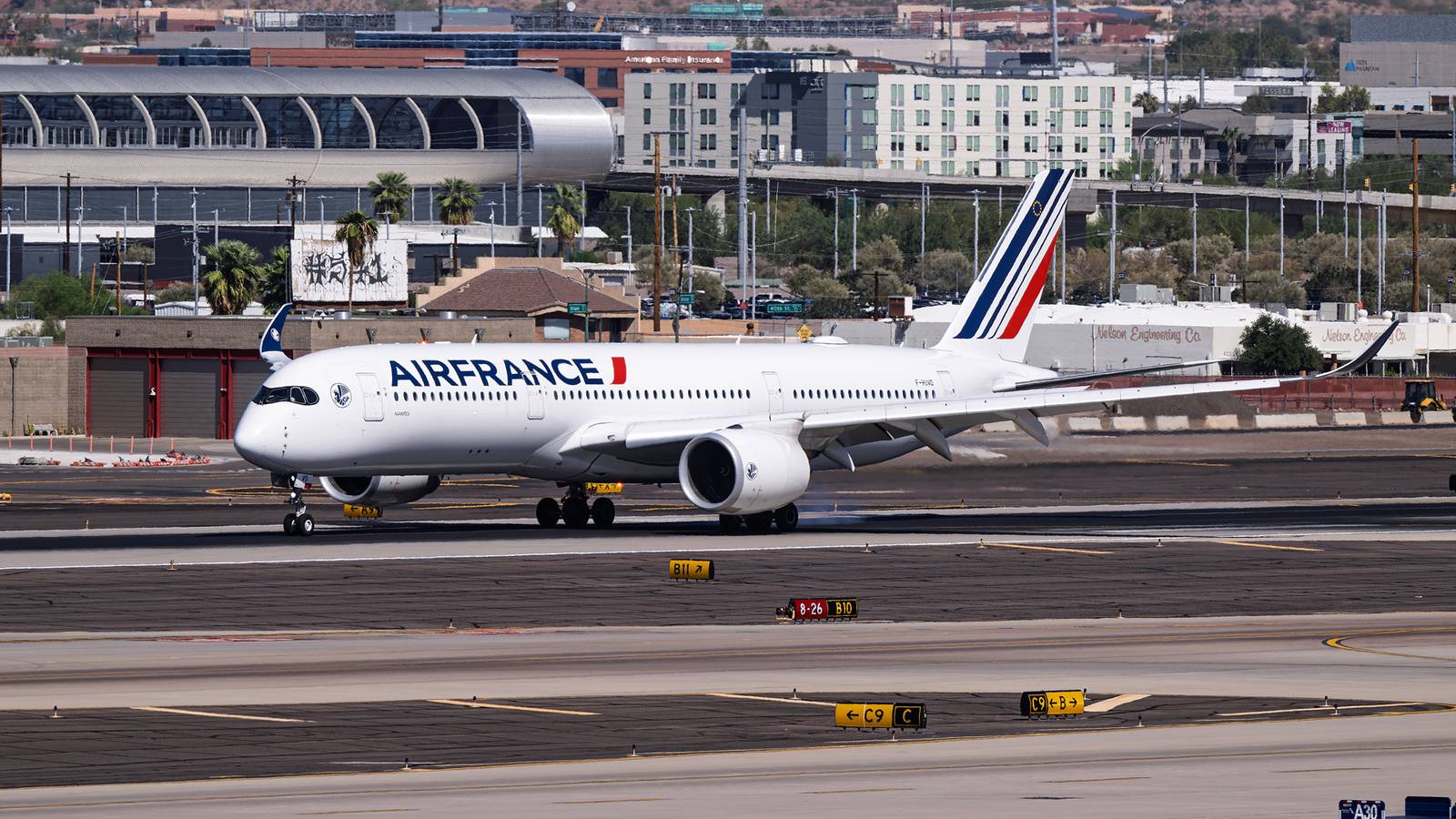
This article was updated on Monday, November 9, 2026 to include new details about the unauthorized turn and a similar incident from 2025. It was originally published on Sunday, November 8, 2026. Two planes belonging to American Airlines and Air France came within 400 feet (121 meters) of vertical separation as both planes departed Los Angeles International Airport (LAX). The quick actions of air traffic control and the pilots on board prevented an incident that could have had catastrophic consequences. The two planes departed California’s busiest airport in the early hours of Saturday morning. Air France Flight 28 was headed to Papeete (PPT), while American Flight 1660 was headed to Dallas/Fort Worth International Airport (DFW). The two planes, which together could have carried more than 500 passengers, came dangerously close to each other shortly after takeoff, before controllers intervened to prevent a possible collision. Air France and American Airlines escape the disaster in the air over Los Angeles Credit: Fabian Joy | Shutterstock Air France’s Airbus A350-900, operating as AF28, was cleared to take off from Los Angeles using the SUMMR2 procedure. SUMMR2, according to the Federal Aviation Administration (FAA), is a fixed route that tells departing aircraft which direction to fly after takeoff. In this case, airplanes taking off from runways 24L/R and 25L/R must initially climb in a straight line before following the assigned route. Credit: SF Flight Tracker At the same time, air traffic control told the American plane, bound for Texas, to hold at 2,000 feet, to allow the Air France widebody to turn and then head to FL270. However, an unauthorized turn by the Air France plane led the two planes onto conflicting flight paths. Simple Flying contacted Air France for comment on the incident; However, an airline spokesperson could not immediately be reached. Error identified shortly after takeoff Credit: Karolis Kavolelis | Shutterstock According to TurbineTraveler in X, the Air France plane made an unauthorized left turn shortly after takeoff, instead of continuing straight as instructed. This placed the A350 directly in the path of the departing US aircraft. This led to the two planes coming dangerously close to each other, known as a loss of separation event. The controller quickly detected the developing conflict and ordered both planes to move away from each other. The controller then questioned the Air France crew about the deviation from their departure route. Both aircraft involved are detailed in the following table, with flight data captured from Simple Flying Flight Tracker: Flight AF28 AA1660 Destination Papeete (PPT) Dallas/Fort Worth (DFW) Departure time 12:15 am (November 7) 12:16 am (November 7) Date Saturday, November 7 Saturday, November 7 Aircraft registration F-HUVK N191UW Type Airbus A350-900 Airbus A321-200 Both the American and Air France flights were able to continue safely to their intended destinations with no injuries reported or damage to anyone on board. A similar incident occurred in Los Angeles in 2025, when an American and ITA Airways plane nearly collided in mid-air after a pilot diverted from the busy airport. Related ‘Stop Your Altitude Climb’: American Airlines and ITA Airways Planes Nearly Collide in Mid-Air After Pilot Diversion Two planes lost separation while exiting LAX. TCAS apparently did not come into play Credit: Robin Guess | Shutterstock So far, reports indicate that no crew has received a resolution notice from the Traffic Collision Avoidance System (TCAS), an automated cockpit warning that tells pilots to climb or descend to avoid another aircraft. These alerts can prevent mid-air collisions when aircraft get too close, giving pilots immediate instructions to increase their separation. Since the incident was first reported, the media has published different figures about how close AF28 and AA1660 were to each other. According to The Aviation Herald, the A350 began turning left while climbing 1,800 feet, even though its departure procedure called for a straight climb to 5,000 feet. The incident also has striking similarities to an event involving ITA Airways in October 2025, when a Rome-bound Airbus A330-900 departing from runway 24L turned left onto a US A321 that had taken off from runway 25R. Busy skies over Los Angeles Credit: Robin Guess | Shutterstock As one of the busiest airports in the U.S. and the world, Los Angeles International Airport has carefully controlled departure routes to keep aircraft safely separated. The SUMMR2 procedure directs departures westbound over the Pacific Ocean, helping to keep them away from other departing and arriving traffic. SUMMR flights often transition to coastal or long-haul routes, including to destinations in Hawaii, Asia and the north, such as San Francisco. Instead of following this procedure, the Air France pilot made a sharp left turn shortly after departure, which crossed the path of the American plane that had departed runway 25R. Fortunately, the departure controller identified the conflict and his quick actions resulted in the two aircraft being able to quickly change course and avoid a mid-air collision.