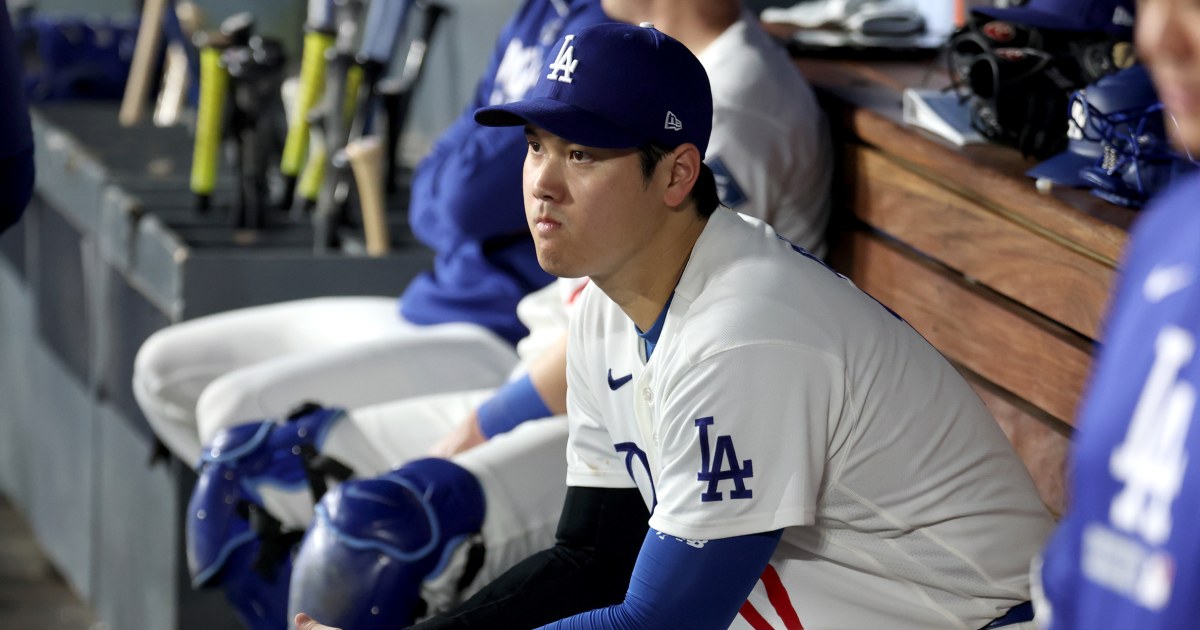
The Los Angeles Dodgers’ effort to win a third consecutive World Series officially ended Thursday, swept by the Milwaukee Brewers in the National League Championship Series. However, his chances were never the same in June. The Dodgers entered June 11 the same way they began the season: as a heavy favorite to become the first franchise since the 1998-00 New York Yankees to win three consecutive championships. Their active roster, the most expensive in the sport, included two former World Series MVPs, one Cy Young winner, and a second would be added a few weeks later at the trade deadline. The linchpin was superstar Shohei Ohtani, the four-time MVP whose pitching and hitting exploits were unparalleled in modern baseball history, and had helped the club win titles in each of his first two seasons in Los Angeles. That Ohtani version was on display June 11 in Pittsburgh. He began the day with a minuscule 1.06 ERA in 11 mound appearances. Against the Pirates, he proceeded to hit a solo home run and reach base in all four of his plate appearances. Then, in the seventh inning, Ohtani came out with what the team called knee inflammation. The wound seemed harmless. Instead, it was the first in a series of nagging knee and biceps injuries that slowed Ohtani and ultimately derailed the Dodgers juggernaut (total payroll cost: $339 million) until they couldn’t keep up with Milwaukee ($146 million), which secured its sweep with Thursday’s 6-4 victory in Los Angeles. After exiting the June 11 game at Pittsburgh, Ohtani pitched just three more times and had a 4.50 ERA before being shut down. as a pitcher on July 3. Dodgers starter Shohei Ohtani pitches in Los Angeles on June 17, 2026.Jayne Kamin-Oncea/Imagn Images via Reuters Connect The Dodgers’ postseason disappointment couldn’t be explained solely by Ohtani’s decline in the second half of the season. The Dodgers’ bullpen and vaunted starters also showed vulnerabilities all summer. However, when the rest of the team’s offense faltered for long stretches, Ohtani’s inability to rescue his team at the plate was even more pronounced. The Dodgers hit .257 during the regular season and just .188 in the postseason. His OPS, a measure of both on-base percentage and slugging percentage, ranked second-best on the season (.762). In the playoffs, that average fell to .572. “They just outpitched us, outhit us, outplayed defense, didn’t make any mistakes,” Dodgers manager Dave Roberts told Fox after Game 4. Ohtani produced just one RBI in his final 83 regular-season plate appearances, a stretch that included 11 hits and 11 walks. Entering Thursday’s NLCS finale, Ohtani had reached base eight times in 28 postseason plate appearances, with his slugging percentage a fraction of his career postseason average. Desperate for a spark, the Dodgers moved Ohtani back to his traditional leadoff spot for Game 4 and he responded by hitting his first home run since August 18 and driving in three runs. Ohtani threw his bat and raised his arms in celebration as the Dodgers took a 4-0 lead into the second inning. But just as it had been all season, as Ohtani left, so did the Dodgers. He never reached base again, and the Dodgers never scored again on Thursday, allowing Milwaukee to rally and recover. The Dodgers aren’t the only ones in baseball entering this offseason facing uncertainty. A work stoppage is considered likely when the collective bargaining agreement between MLB and its players union expires on December 1. The league intends to address the wide financial gulf between its biggest-spending and thriftiest clubs, despite the success of small-market teams this postseason. MLB Commissioner Rob Manfred has said the league wants to address “concerns that go to the core of what we do: competitive balance.” Milwaukee Brewers pitcher Jacob Misiorowski pitches against the St. Louis Cardinals on September 27, 2026. Lawrence Iles / Icon Sportswire via Getty Images Backed by MLB’s richest television deal, the Dodgers’ finances could allow them to build star-studded rosters that would allow them to withstand injuries and slumps by plugging in one promising player after another. That spending boosted their titles in 2020, 2024 and 2025 and should ensure they remain competitive as long as owner Mark Walter intends to spend lavishly on the roster. Walter sold the Los Angeles Lakers and his stake in Premier League club Chelsea to generate cash while federal investigators probe his dealings, but Dodgers leaders have maintained that Walter sees the baseball club as a crown jewel in his portfolio of sports assets. “I can’t express how important the Dodgers are to Mark,” Dodgers executive Stan Kasten told reporters in August. Playing two ways is important for Ohtani. However, if there is baseball in 2027, Ohtani will be 33 years old, and the combination of this season’s lingering injuries (to his knee and then his right bicep) and the team’s handling of them will highlight how willing the team is to use Ohtani as a pitcher and hitter in future seasons. Instead of taking Ohtani out of the lineup for an extended period until he was physically ready, the team gave in to the star’s feelings about his health, removing him from the lineup for just one or two games during June, July and August. As recently as Game 3 of the National League Championship Series this week, Roberts told reporters that he had had a “great conversation” with Ohtani and team executives in which Ohtani expressed his belief that he was close to breaking out of a prodigious slump. “There is complete conviction that he is on to something,” Roberts told reporters this week. “He feels like he can help us, and he can help us. To me, that’s all I need to hear.” Allowing a player’s input to influence his usage is not uncommon, but it has made the Dodgers dependent on Ohtani’s candor. Although his health issues began to emerge in early June, it took until early September for the team to place Ohtani on the 15-day injured list. “He’s not always the best reporter of how he feels,” Dodgers president of baseball operations Andrew Friedman said in late September. “Freddie (Freeman) is the same way, Clayton Kershaw, I’ve been around a lot of these guys who feel like their job is to be there to help the team however they can and sometimes they downplay some things that bother them.” Before the Dodgers beat the Atlanta Braves in the postseason division series, Ohtani told reporters that it had been difficult to get “a good understanding of the root cause of all of this.” Before facing Milwaukee, Ohtani began taking batting practice outdoors, something unusual for a player who prefers to prepare inside the batting cages beneath the stadium. “With swinging, it’s a daily process of trying different things,” Ohtani said last week. “Symptoms shouldn’t be the reason I can’t hit.” In last year’s World Series, Ohtani had also suffered slumps in hitting, but his teammates made up for it with timely contributions to win a second consecutive title. That was no longer the case this year. Of the 12 teams that made the postseason, the Dodgers ranked 10th in OPS, a measure of both on-base percentage and slugging percentage, while their pitchers ranked eighth in walks plus hits allowed per nine innings. After beating Atlanta to advance to the National League Championship Series, the Dodgers wore celebratory T-shirts emblazoned with “Take October.” Unfortunately for them, their chances at a third consecutive World Series could very well have been eliminated months earlier.