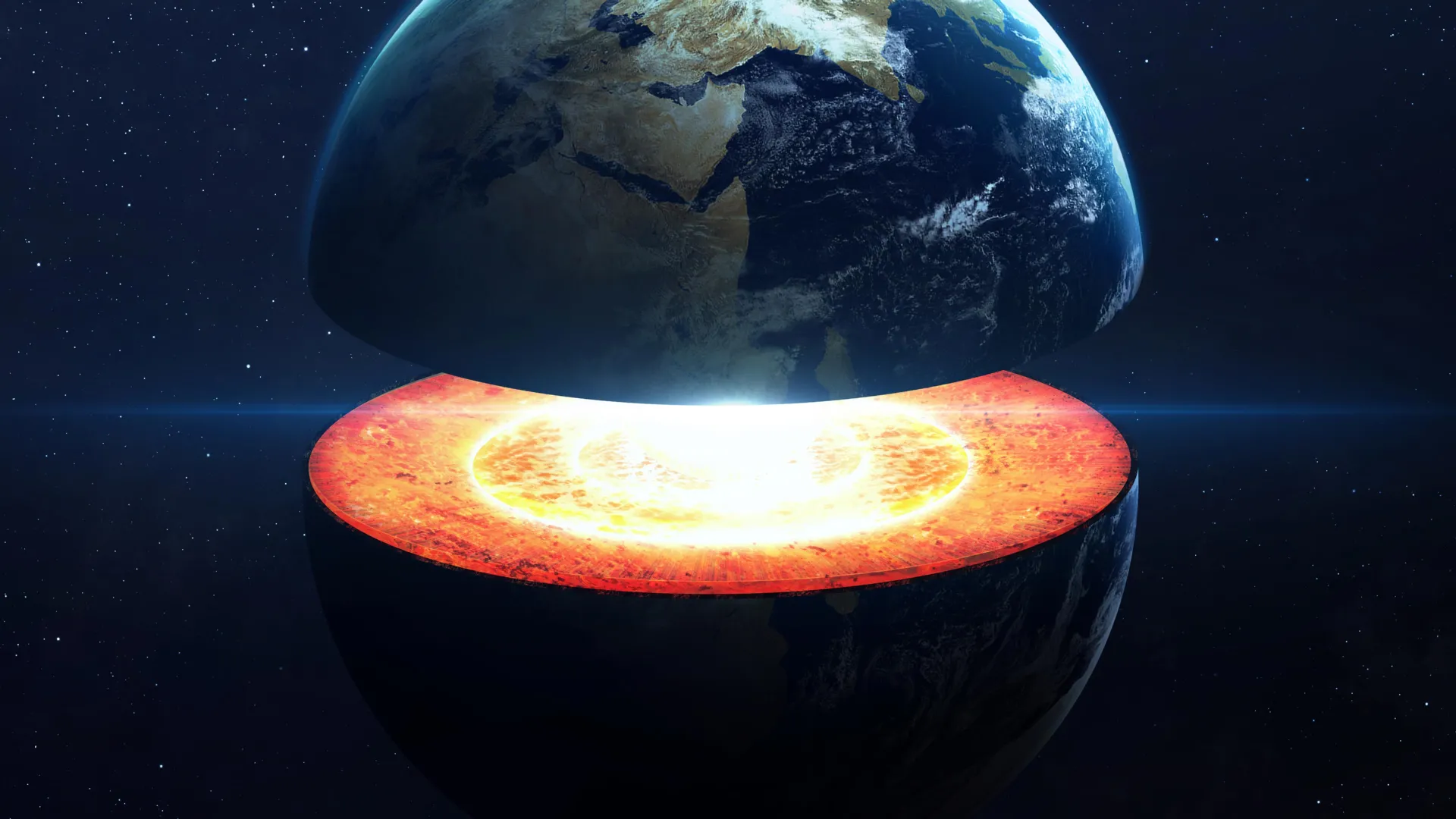
A remarkable rock discovered in Papua New Guinea has revealed an unexpected temperature pattern deep beneath the Earth’s surface, challenging scientists’ understanding of how tectonic plates move into the planet’s interior. An international research team led by the University of Göttingen discovered that the rock traveled more than 90 kilometers (56 miles) underground about four million years ago. Along the way, it experienced unusually high temperatures at shallower depths before entering conditions associated with a relatively colder type of subduction. The discovery raises new questions about how heat is distributed within the Earth and how tectonic plates behave as they descend. The findings were published in Nature Geoscience. A strange discovery deep beneath the Earth’s surface The outer layer of the Earth is divided into huge tectonic plates that move slowly across the planet. When two plates converge, one can be forced beneath the other and sink into the Earth’s interior. This process is called “subduction.” These regions play an important role in shaping our planet. They are associated with powerful earthquakes and volcanic activity, but they also help regulate Earth’s climate for millions of years by recycling materials like carbon dioxide through the planet’s interior. The immense pressure found in subduction zones can transform rocks into a distinctive red and green material known as “eclogite.” The researchers examined one of these rocks from Papua New Guinea using several advanced analytical techniques. Within the rock, they discovered small crystals of coesite, a mineral that can only form under extremely high pressure. These crystals became trapped within other mineral as the rock formed, preserving valuable evidence of the conditions it experienced deep underground. By studying these microscopic clues, scientists determined that the rock had descended at least 90 kilometers below the Earth’s surface, where temperatures reached approximately 800°C (1,472°F). Even more surprising was what they discovered about their previous trip. An unexpected shift from hot to cold subduction The researchers reconstructed the rock’s temperature history and found that at a depth of about 45 kilometers (28 miles), it had already reached temperatures of around 700°C (1,292°F). That meant the rock was only about 100°C cooler at half its maximum depth, although it still had another 45 kilometers to go. This was unexpected because existing models predict a different distribution of heat within subduction zones. The rock appears to have experienced unusually warm conditions at shallower depths before entering an environment with a relatively colder temperature pattern further down. Although its actual temperature increased with depth, the rate of warming was much slower than scientists would normally expect. Dr. Jan Schönig from the Center for Geosciences at the University of Göttingen explains: “Finding this change from hot to cold subduction was unexpected, as it contradicts our current thermal models of subduction zones.” Scientists have previously discovered rocks that contain evidence of unexpectedly high temperatures. However, this is the first time that researchers have been able to reconstruct such a clear transition between different thermal conditions when a rock descended from shallower depths to much greater depths. What could explain the hidden mystery of heat on Earth? Researchers have identified several possible explanations for the unusual temperature pattern. One possibility is that plate tectonics generate substantially more heat at relatively shallow depths than scientists previously believed. As the plates move against each other, intense shear forces could produce additional heating along their boundaries. Another explanation is that the subduction zone had not yet existed long enough to develop the colder temperatures predicted by conventional models. Both processes may also have contributed to the rock’s unusual thermal history. Understanding these temperature differences is important because subduction zones influence some of the most powerful geological processes on Earth. More accurate models could help scientists better assess conditions associated with earthquakes and volcanic activity. The findings could also improve our understanding of major geochemical cycles, particularly the long-term carbon cycle, which helps regulate Earth’s climate by moving carbon between the planet’s surface and interior. By revealing how conditions change as tectonic plates descend, the discovery offers scientists a new way to investigate how subduction has operated for millions or billions of years and how these processes continue to shape Earth today. The research received funding from the German Research Foundation (DFG).