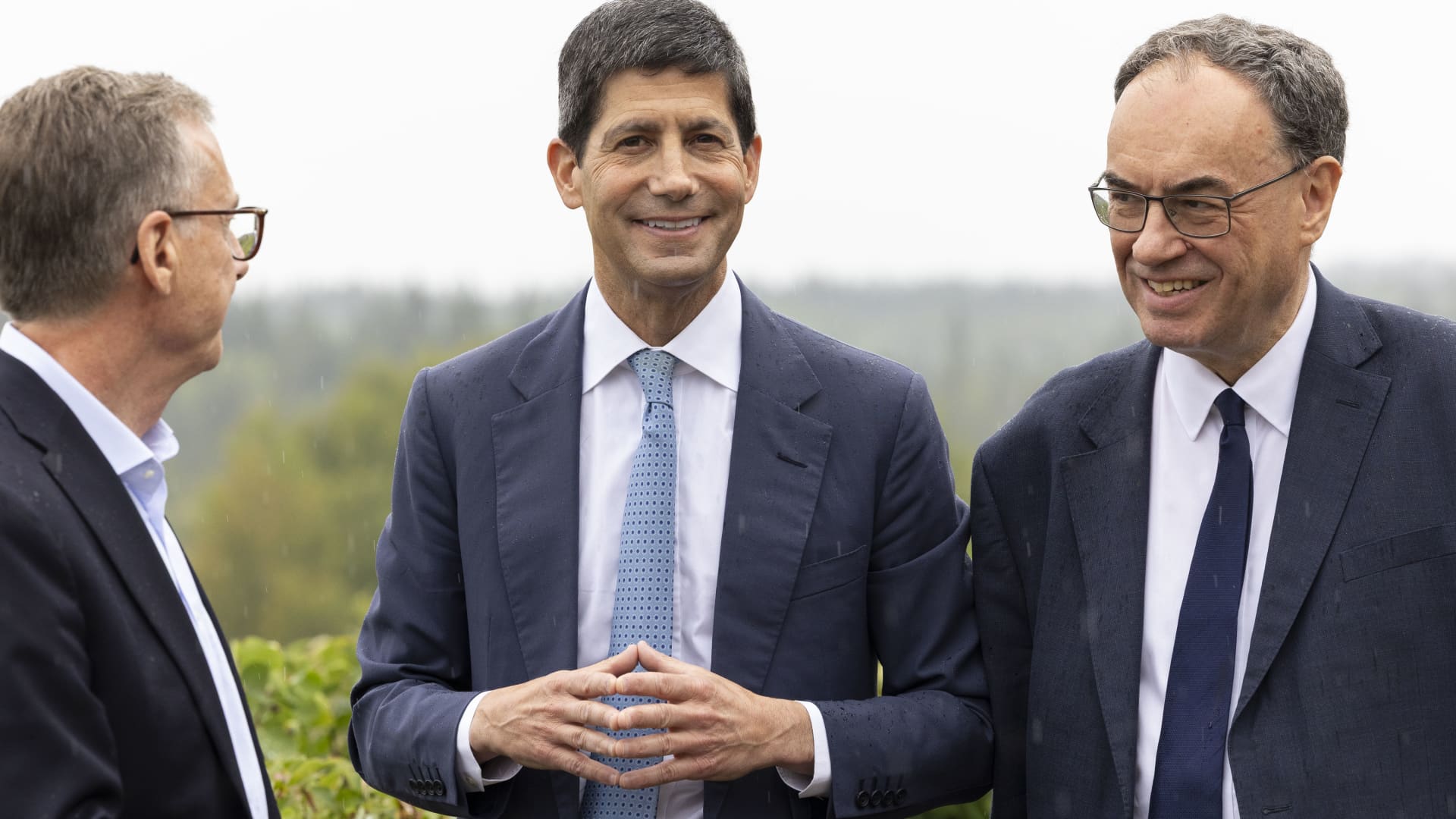
Bank of Canada Governor Tiff Macklem, left, U.S. Federal Reserve Chairman Kevin Warsh, center, and Bank of England Governor Andrew Bailey at the Jackson Hole Economic Symposium in Moran, Wyoming, on August 28, 2026.David A. Grogan | CNBC Federal Reserve Chairman Kevin Warsh’s stance in his speech at the Jackson Hole meeting was unexpectedly hawkish, boosting market expectations of a rate hike next month. Gold fell and Asian stocks fell on Monday. Fed funds futures traders see a 60.4% chance of a quarter-point rise in September, up from 56% on Friday, according to CME’s FedWatch tool. Here’s what market watchers are saying about Warsh’s speech: Hawk Surprise “Chairman Warsh’s speech at Jackson Hole surprised us by its specificity about the economy and prospects and by its tilt in a decidedly hawkish direction,” Deutsche Bank said. The firm still expects the Federal Reserve to raise 50 basis points this year, with increases at the Federal Open Market Committee meetings in September and December. “The emphasis on inflation risks, together with Warsh’s explicit commitment to price stability and his reluctance to pre-commit to future policy actions, reinforces the elevated risks of policy tightening this year, although talk without action could also be the case, UOB said in a note. Focus on short-term data “Sensitivity to short-term inflation data is high,” Nomura said in a note “Warsh delivered hawkish remarks at the Jackson Hole economic symposium, emphasizing the importance of inflation targeting and hinting that policy may need to react if disinflation does not occur quickly. “should be read as an effort to bolster the independence and credibility of the Federal Reserve, assuring markets that monetary policy will not bow to fiscal pressures.” However, Matthew J. Maley, chief market strategist at Miller Tabak + Co. believes that “there remains no empirical basis for raising rates.” While inflation data has been better than expected since the last FOMC meeting Fed vs Treasury, Warsh’s reiteration that short-term interest rates should remain the main instrument of monetary policy implies that he will continue to shorten the average duration of the Fed’s balance sheet, Gavekal Research said in a note “This appears to put the Fed at odds with the US Treasury, which in early August announced that it will step up its buybacks of long-term Treasury securities in an apparent attempt to avoid “Long term,” Gavekal added. Negative for gold: “Warsh pledged to return inflation to the 2% target and indicated rates could rise further, strengthening the dollar and reversing some of the debasement trading that had sent gold up about 14% in August, its biggest monthly gain this century,” according to Susquehanna — CNBC’s Joanna Ossinger contributed to this report. Never miss a moment from the most trusted name in business news.