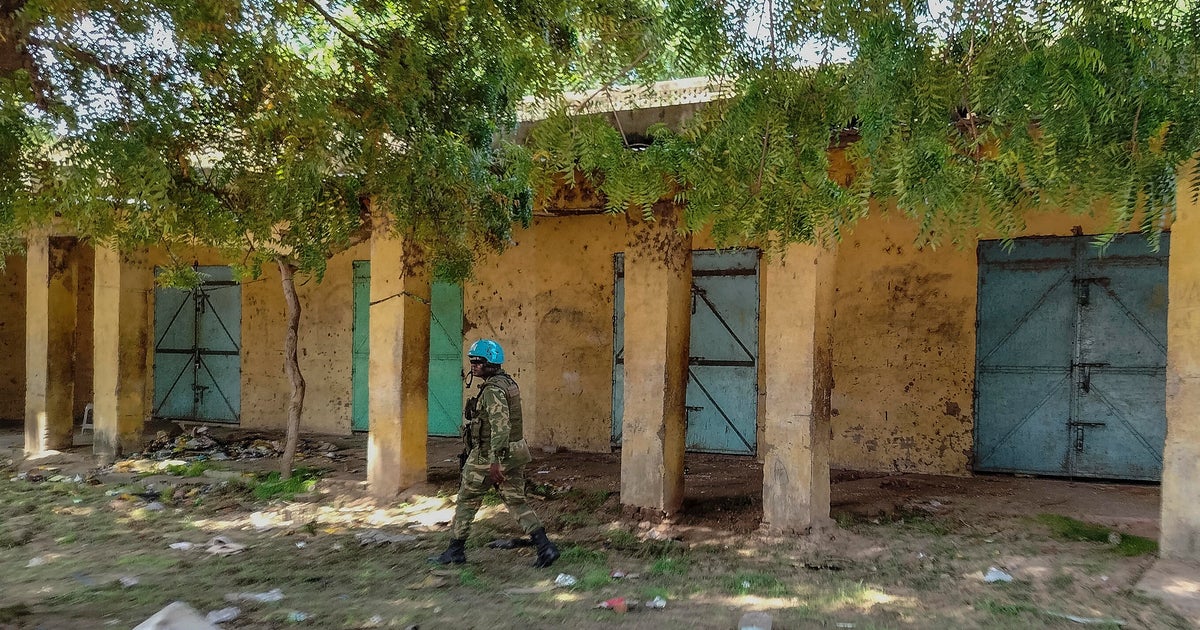
Over a 10-day period, the Trump administration sent more than 100 deportees from Afghanistan, Cuba, Nicaragua and other nations to eight countries in Africa, expanding its “third country” deportation campaign, according to internal US government documents obtained by CBS News. Three Immigration and Customs Enforcement deportation flights, government documents show, left dozens of men and women expelled from the United States in Burundi, Cameroon, the Central African Republic, Equatorial Guinea, Eswatini, Liberia, Rwanda and Sierra Leone. None of the deportees were from the countries where they were deported, according to the documents. In addition to Afghans, Cubans and Nicaraguans, ICE flights over the past week and a half included deportees from Iran, Nepal, Turkey and Venezuela, as well as African detainees who are not from the nations to which they were sent. The federal documents, which have not been previously reported, offer a window into the Trump administration’s escalating campaign to use “third country” deportation agreements to banish groups of deportees to remote countries where they have no ties. The world has accepted receiving these types of deportations from the United States, including some in Latin America such as Costa Rica, Panama and Paraguay. But a growing number of African countries have negotiated third-country deportation deals with the Trump administration, including nations such as the Central African Republic, the Democratic Republic of the Congo and South Sudan, plagued by armed conflict, political unrest and human rights abuses. The international agreements have largely been shrouded in secrecy, but it appears that some countries, such as Ghana and Sierra Leone, have only agreed to accept deportees from elsewhere in Africa. Countries such as Eswatini, the Central African Republic and Liberia have received detainees from Latin America, Europe and Asia. Some of those deported to Africa by the Trump administration have criminal records in addition to immigration violations, including detainees sent to Eswatini and South Sudan, where officials have jailed deportees convicted of violent and serious crimes in the U.S. The last of three ICE flights to Africa dropped off detainees in Sierra Leone and the Central African Republic, where a long armed conflict and Russian mercenaries have turned the landlocked country into one of the most dangerous in the world. A “Level 4″ advisory from the US State Department warns Americans to avoid traveling there for any reason, given widespread violence and insecurity. CBS News reached out to the Departments of Homeland Security and State for comment on the deportations to Africa. $3,000 check,” DHS said in a statement to CBS News on Sunday. “The choice is theirs.” A State Department spokesperson said the agency would not comment on “private diplomatic communications with other governments” or the “authenticity or veracity of allegedly leaked documents.” “Implementing the Trump Administration’s immigration policies is a top priority for the State Department,” the State Department spokesperson added. “We remain steadfast in our commitment to end mass illegal immigration and bolster U.S. border security.” Among those deported to the Central African Republic on the most recent flight was an Afghan man whose family helped U.S. forces fight the Taliban and who obtained legal protection in a U.S. immigration court, according to his lawyer and brother. Khalil, the 24-year-old Afghan deportee, illegally crossed the U.S.-Mexico border in 2024, after traveling through Latin America, according His immigration attorney said Khalil came to reunite with his brothers, one of whom was brought to the U.S. in 2014 due to his work with the U.S. military while in the Afghan military. Legal documents indicate that another of Khalil’s brothers fought against the Taliban as a pilot and was killed during the war. Khalil was granted legal protection, known as a “withholding of removal,” by U.S. Immigration, which determined he could face persecution in Afghanistan, legal documents show. He was not granted asylum, a more permanent legal protection, because of a Biden-era policy that disqualified asylum seekers who did not seek protection in other countries before arriving on U.S. soil, according to the documents. While that protection prevented ICE from returning Khalil to Afghanistan, it did not legally prevent his deportation to a third country. has increasingly sought to deport to third countries those who have obtained limited protections in immigration courts, such as withholding of removal. “The goal is to destroy the global refugee protection system, and his case should serve as a warning of the unconscionable consequences,” said Alma David, Khalil’s immigration attorney. CBS News is not revealing Khalil’s last name because of his family’s concern that he or his relatives could be targeted by the Taliban. on active duty who supervised Khalil’s brother during his deployment to Afghanistan, said he is concerned about Khalil’s safety in the conflict-torn Central African Republic and the prospect that he could be returned to his homeland. He said he has seen threats made by Taliban militants against Khalil’s family. The United States made an “agreement” with the Afghans who agreed to help the American war effort in Afghanistan “The agreement is that if you help us and help rebuild your country, we will take care of you. We will help you and your family,” Schmidt said. “We have to keep that promise.” Go deeper with The Free Press at: