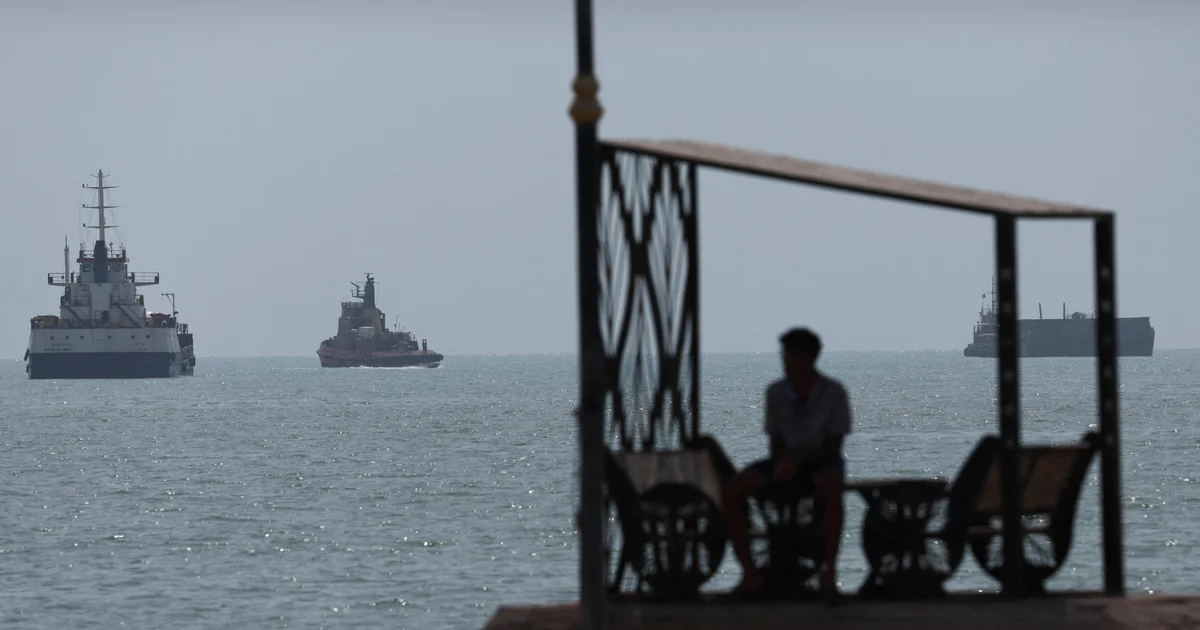
The head of the US military’s Central Command, Admiral Brad Cooper, has echoed President Trump’s insistence that the Strait of Hormuz shipping lanes are free of sea mines, saying they are “open and momentum is building.” However, he acknowledged that ships still seek direct military protection from the United States to use the vital waterway, from which Iran has driven many commercial shippers since the United States and Israel launched their joint war against Iran six months ago, sending global oil prices up about 30% compared to pre-war levels. “Internationally recognized transit routes in the strait are free of Iranian sea mines thanks to the incredible work of the US military,” he said. “Today, international shipping routes are open and momentum is gaining momentum.” Trump said Thursday that the United States helped 24 oil tankers transit the strait the night before, reiterating his insistence that the waterway was clear of mines, something he had said several times before Cooper released his statement. But two dozen ships are a far cry from the roughly 120 that would normally transit the strait daily before the United States and Israel launched their joint war against Iran, and shippers remain very cautious about using the waterway given Iran’s continued threat to ships that risk passing without coordination with Tehran. Ships are seen in the Strait of Hormuz near Bandar Abbas Beach, Iran, August 28, 2026. Majid Asgaripour/WANA/REUTERS Some U.S. allies have also said they do not believe the strait has been completely cleared, according to a Wednesday report from Bloomberg. Regardless of whether there are still mines lurking in the water, Iran’s threat to attack ships has kept traffic to a minimum. Even as he touted building momentum, Cooper acknowledged that ships still need direct U.S. assistance to cross, saying, “In recent months, U.S. forces have helped nearly 1,500 commercial vessels cross the strait by providing them with coordinated protection.” mid-July.” Iranian Oil Minister Mohsen Paknejad acknowledged Thursday that the country’s exports had “declined to some extent,” which is likely a significant understatement, but insisted that “the sale of our oil outside of our territorial waters, in distant waters, that is, the delivery of oil to our customers, has continued,” despite the U.S. blockade. Analysts note that Iran can also export its energy products by land, including to its most valuable trading partner, China.