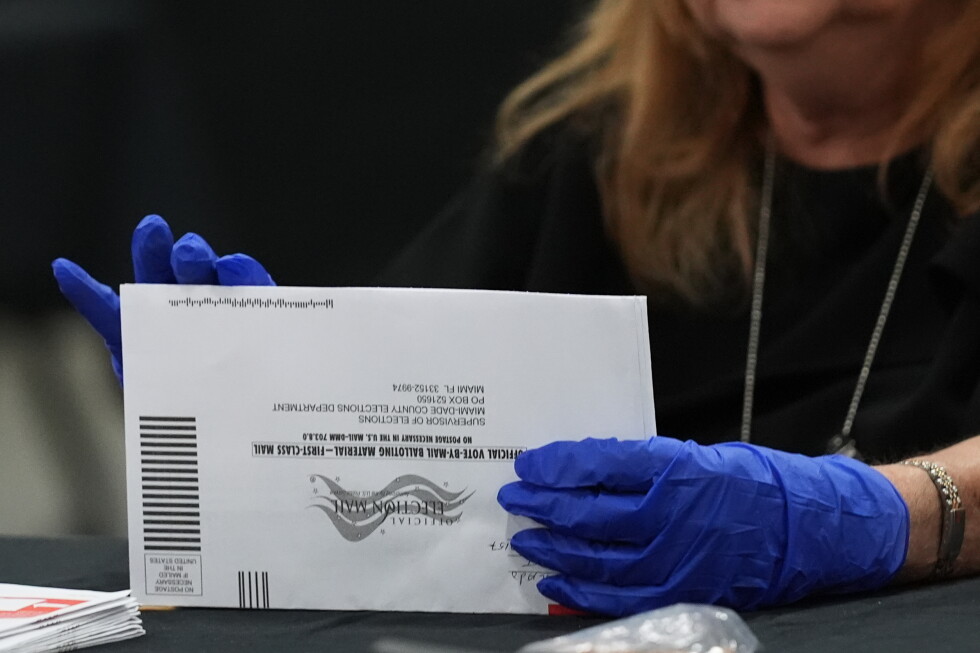
A federal judge on Thursday halted, at least for now, efforts to implement President Donald Trump’s executive order limiting mail-in voting. The move halted the directive for a second time just about a week before the first mail-in ballots are due to be sent out for the fast-approaching midterm elections. U.S. District Court Judge Indira Talwani blocked the government from implementing the order for two weeks. The case could soon be appealed again to the Supreme Court, days after the justices issued a procedural decision allowing the administration to move forward. Thursday’s ruling came after Democrats and voting rights groups refiled their lawsuits to comply with the Supreme Court’s recent decision. The high court’s conservative majority did not rule on the legality of Trump’s executive order, instead saying Talwani had acted too soon. Now the administration has issued a formal rule governing whether the U.S. Postal Service will deliver states’ mail-in ballots, effectively restarting the legal fight. The legal battle has major ramifications for the midterm elections. Nearly a third of Americans vote by mail, and election officials say there is not enough time to overhaul their systems to comply with new Postal Service directives. The Postal Service says it won’t deliver mail-in ballots unless states provide a list of voters who should receive them and format the envelopes in a certain way. “Plaintiff states do not have the time or funds to design new mail-in ballots, seek approval of the new designs, order the production of mail-in ballots, update their own election management systems, train election officials to use the USPS portal, and upload citizen data to the portal, all before the midterm elections,” Talwani wrote Thursday. The White House did not immediately respond to a message seeking comment. A hearing in the case is scheduled for September 3. Sign up for the Ground Game newsletter: your guide to the biggest stories in American politics, policy and elections. “This rule is a clear attempt by the federal government to interfere in elections that it has no power to control. Today, a federal court stopped it before this administration could wreak havoc on our elections,” New York Attorney General Letitia James, one of two dozen Democratic attorneys general who filed one of the lawsuits, said in a statement after the order. Democrats and voting rights groups contend the Postal Services lawsuit is unconstitutional. They point out that the Constitution gives the states and, in some cases, Congress the power to set election rules, not the president or the Postal Service. That reasoning led the courts to block Trump’s first executive order, issued last year, that sought to change election procedures, such as requiring documentary proof of citizenship to register. The president has long targeted mail-in voting, which he falsely blames for his 2020 election loss, even though he himself uses it to cast his ballot. A Brookings Institution report published in 2025 found that mail-in voting fraud occurred in only about four cases out of every 10 million votes cast by mail. Trump issued the executive order targeting mail-in voting in March, his second related to the election since he returned from office. The administration won an initial case in Washington, D.C., with that reasoning, but Talwani imposed injunctions against implementing the order for the November midterm elections in two separate cases he heard in Boston. The Supreme Court’s conservative majority on Monday overturned one of those decisions. Talwani, nominated for the position by President Barack Obama, reluctantly withdrew the second injunction shortly thereafter. The plaintiffs then proceeded to refile their cases, citing the Postal Service’s release of its final rule, in hopes of winning a more lasting victory.