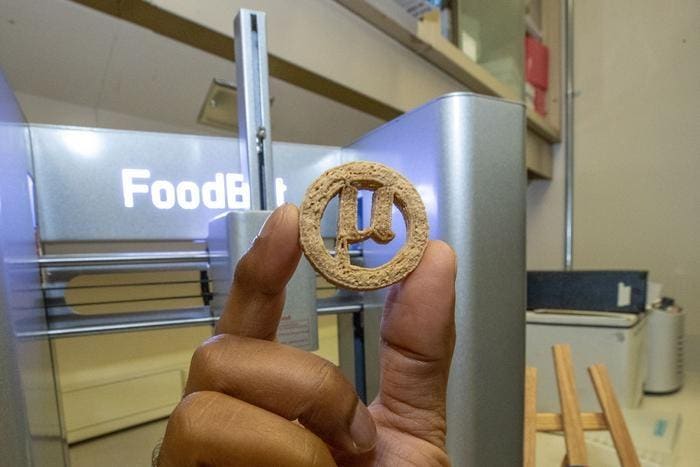
Topline Researchers at Southern Illinois University have engineered microbes that can break down discarded plastic bottles and crop waste and turn them into protein-rich cookies, a step-by-step biological transformation that could address the problems of plastic pollution, a looming global food crisis and help sustain deep space missions with humans on board. A cookie is made using waste plant materials and plastic. SIU Carbondale Communications Key Facts Southern Illinois University Carbondale researchers have created what they call “μBites,” or high-protein cookies with primary ingredients that started out as discarded PET plastic, the same material used in soda bottles, water bottles, and leftover corn stalks and leaves. The work, done as part of a NASA-led project aimed at creating food for deep space exploration, uses water and oxygen under extreme heat and pressure to break down tough plastic and biomass into bite-sized pieces that can be processed by microbes. Programmed yeasts then reassemble those fragments into proteins, fats and acids, and a 3D printer extrudes the final mixture into cookie form. The flavor is added using baker’s yeast designed to generate vanilla flavor directly from plant biomass, and a separate yeast strain converts ethylene glycol, a molecule found in PET plastic, into beta-carotene, a precursor that the body transforms into vitamin A, according to the research team. Safety testing has allowed µBites to be consumed, but the team is still waiting for institutional approval before conducting formal taste tests. Sniff tests already conducted found that most participants said they would eat the cookies in a resource-limited environment, the researchers said. Researcher Lahiru Jayakody said the team wants to add starch, fiber and sweetener to the cookies, which they hope will be ready for public consumption within a few years. Key Background Humans have relied on microbes for thousands of years through traditional fermentation to transform raw ingredients into stable foods such as bread, cheese and yogurt, but modern biotechnology allows genetic engineering of microorganisms to convert inorganic materials or waste into highly nutritious compounds. By recycling carbon waste directly into 3D-printed, nutrient-rich foods like “μBites,” researchers offer a sustainable, closed-loop alternative to traditional agriculture. In theory, the new technology can alleviate severe food shortages during humanitarian crises, supply resource-limited environments such as space missions, and dramatically reduce plastic pollution. An estimated 2.1 billion people are food insecure worldwide and 645 million are chronically hungry, according to the United Nations, and projections indicate that global food demand is on track to increase, putting nearly 30% of the world’s population at risk of hunger by 2050. CRUCIAL QUOTE “Microbes are very smart. Therefore, we are using their characteristics to solve the problems we create,” Jayakody said in a statement about the work. of the team.