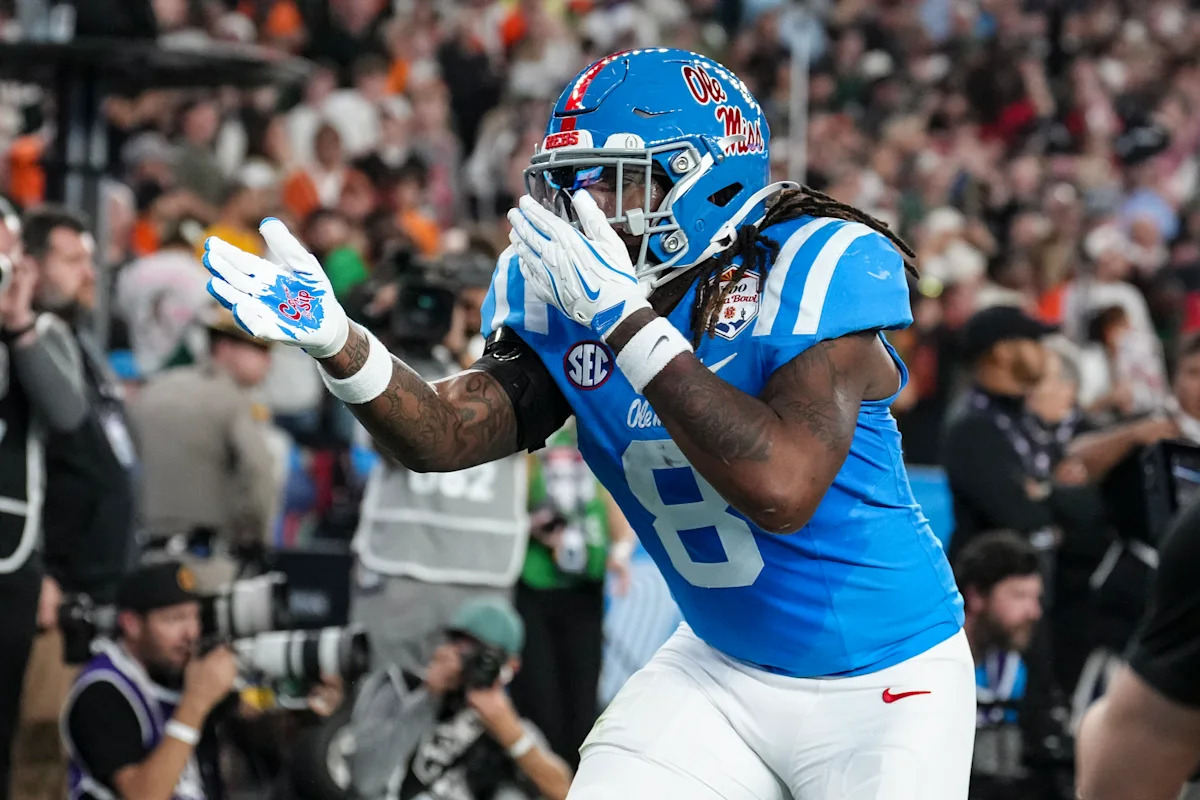
College sports had a first on Thursday. An NFL player has entered the NCAA transfer portal. That’s how it is. Former Ole Miss tight end Dae’Quan Wright, who signed a free agent contract with the Philadelphia Eagles and is in training camp with the Cleveland Browns, appeared in the portal Thursday afternoon, soon followed by other players, some of them like Wright, who signed a professional contract. new five-year age-based eligibility policy. Dozens of players across the country have filed similar lawsuits following the NCAA’s decision not to make an exception for seniors who completed their careers last spring after playing just four seasons. They are not eligible under the old rule, but are eligible under the new rule, if the association had made an exception. Those athletes believe they, too, should receive a fifth season, like all other current and future college players. Many judges believe it too. Louisiana Judge Will Jorden not only granted the players a fifth season, but also allowed them to enter a newly created, week-long transfer portal to find a new home. Additionally, the judge granted eligibility to those athletes in the group like Wright who signed professional contracts, preventing the association from enforcing its long-standing ban on professional players returning to college. The Louisiana case is one of many. In fact, thanks to the research of Sam Ehrlich, a Boise State professor who created a useful spreadsheet that tracks these cases, we know that the Louisiana case is just the tip of the proverbial iceberg. In total, more than 150 athletes have submitted 18 eligibility requests. lawsuits in 15 different states. In 11 of those cases, judges ruled in favor of the players, either with a temporary restraining order or a court order prohibiting the NCAA from enforcing its rules. Several others are awaiting a judge’s decision while several more are being appealed. NCAA victories have been few and far between. The 18 cases mentioned above were filed in state court. There’s a huge case filed in federal court, where a Colorado judge granted all players who were part of the high school class of 2022 a fifth year of eligibility in a class-action ruling that bolsters the arguments in the state cases. However, on Friday, the Colorado judge stayed the ruling pending an appeal process, meaning players are, for now, ineligible if they did not receive separate relief in state court. Many in the college sports landscape are awaiting the appeal decision with bated breath. Former Ole Miss TE Dae’quan Wright has entered the college football transfer portal even though he is in the middle of training camp with the Cleveland Browns. (CFP via Getty Images) A victory in a federal appeal keeps hope alive in the association’s appeals of state lawsuits. Presumably, the NCAA would continue to fight each individually even as players take advantage of restraining orders and injunctions by participating in preseason football practice. However, a loss of the appeal in the federal case may force the association to at least seriously explore the possibility of waiving the white flag, granting players in the 2022 class a broad exemption from eligibility. But there is more to this whole situation: much, much more. The Louisiana case did not simply and randomly appear out of the thick, muggy air of Baton Rouge. The lead plaintiff named in the lawsuit is Jack Pyburn, a former LSU starting running back who signed an undrafted free agent contract with the Buccaneers and had two sacks in a preseason game just days ago. If you’re not connecting the dots, a Louisiana state judge, in a case filed in Baton Rouge, paved the way for Pyburn to play for the Tigers again. There are also three Ole Miss players in the group, including Wright, all of whom were previously coached by former Rebels coach Lane Kiffin, who now coaches LSU. Those with knowledge of the situation in Baton Rouge and beyond have made it abundantly clear: the lawsuit was an orchestrated effort that originated on the LSU campus. But LSU isn’t alone in supporting athletes fighting for greater eligibility and to maintain roster spots. Schools across the country — the same schools that create these eligibility rules that the NCAA is tasked with enforcing — are fighting those same rules as a way to gain a competitive advantage. Economists will tell you that this is how a competitive market works: Schools, which now pay millions directly to their athletes, are under more financial pressure than ever to win in a competitive market where court rulings crippled any logical application of the rules. Advertisement Much of this is because coaches don’t trust that coaches at other schools aren’t planning to improve their roster by circumventing the rules. As one person said, “We’ll do it before them.” It’s another strange chapter in the evolution of major college sports from amateurism to professionalism, the latest indicator that perhaps congressional legislation and/or a collective bargaining agreement is necessary for regulation. another outside the NCAA transfer portal window for that particular sport (in football, that was in January). If one of Ole Miss’ players was transferred to LSU through use of the temporary restraining order, will the SEC enforce its intraconference bylaw? The move may serve as a test of a conference-only governance and enforcement model that SEC administrators have long discussed and are seriously exploring (without legislation from Congress, they want to create their own rules and enforce them in a governance break with the NCAA as a way to avoid legal challenges). However, lawyers believe that the SEC enforcing its statutes would end up back in the same Louisiana court in front of the same Louisiana judge with the same result (Louisiana). After all, one lawyer says, the language of the temporary restraining order also covers any SEC rules, since those league bylaws are just a derivation of NCAA policies. At a recent meeting, SEC administrators and football coaches openly discussed the future of the transfer policy within the league’s conference, reaffirming support for enforcing the rule. Luis is trying to gain eligibility to play at LSU despite signing a professional contract. As he did in February in a similar case involving former professional and former Alabama basketball player Charles Bediako, Sankey objects to the court granting eligibility to a professional athlete attempting to play for one of his own schools. “It’s an interesting dynamic,” said one person involved in the case. “Greg Sankey is a rule follower with compliance experience.” More such basketball lawsuits are expected in the coming weeks as several colleges attempt to gain eligibility for players seeking a fifth year or looking to play despite signing professional contracts. In fact, as many as two dozen school staff members recently held a call about the situation, clearly preparing to perhaps file a group lawsuit. But, for now, football is on everyone’s minds. Schools are in preseason camp two weeks before the first game of the season for most teams. Meanwhile, the NFL must reduce its final rosters to 53 players by Aug. 30, six days before the first Saturday of full college football. “We’re 16 days away from playing,” said one power conference general manager. “There are a lot of players from the class of 2022 that are going to be cut from the NFL. I need to figure this shit out. It’s a very wild time.”