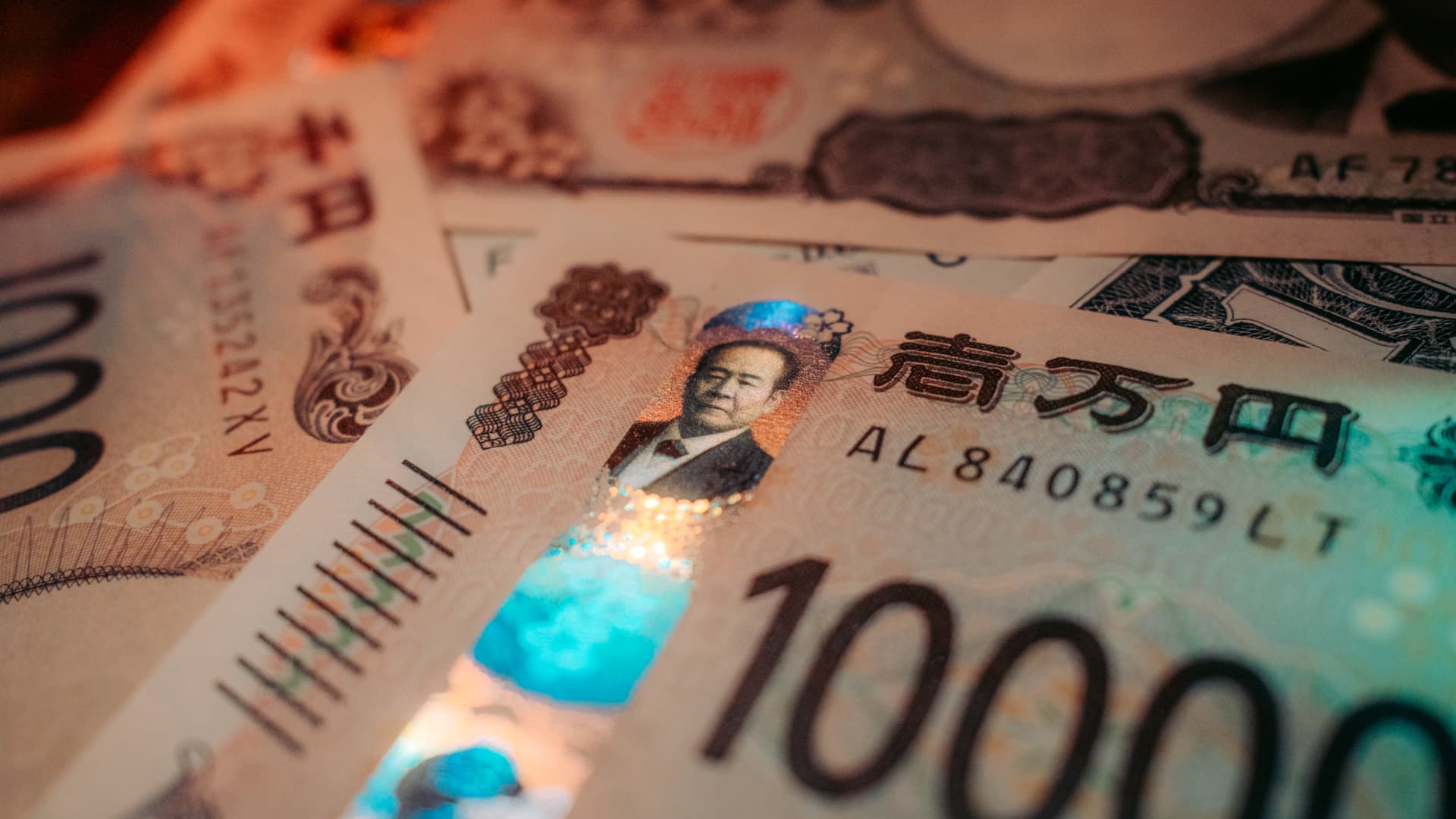
Japanese 10,000 yen banknotes arranged in Kyoto, Japan, on Tuesday, January 27, 2026. Kentaro Takahashi | Bloomberg | Getty Images Japan’s historic effort to prop up the yen may have had an unintended consequence: giving some investors a better chance to double down on the carry trade. Japanese investors net bought more than 5 trillion yen in foreign stocks and long-term bonds during the two weeks ending Aug. 15, compared with net sales of more than 300 billion yen in the previous two weeks, according to Finance Ministry data. The purchases suggest investors took advantage of the yen’s strong rally following last month’s joint U.S.-Japan monetary intervention to snap up foreign assets at more favorable exchange rates, market watchers said. “The intervention has ‘accelerated’ the carry trade for fundamental and long-term investors,” according to Jesper Koll, expert director at Monex Group. “As long as the cost of money in Japan is lower than its return abroad, the carry trade will firm up,” Koll said. While authorities managed to push the yen higher, they did little to change the incentive for investors to borrow or raise funds cheaply in Japan and put the money in higher-yielding assets abroad. The yen strengthened from around 164 per dollar before the intervention to around 155, but quickly gave up much of those gains. It has since weakened again to 159 against the dollar. This has reinforced expectations that the yen will remain under pressure unless the Bank of Japan raises rates enough to materially narrow the bond yield gap with the United States. The 10-year yield spread between the United States and Japan stood at about 1.8 percentage points as of Thursday. The yen’s brief gains indicate that investors are treating bouts of yen strength as opportunities to rebuild carry trade positions rather than abandon them. That dynamic is particularly visible among Japanese institutional investors. Long-term investors such as pension funds and asset managers continued to sell the yen, according to Masahiko Loo, fixed income strategist at State Street Global Advisors. “The intervention only addressed one ‘symptom,’ but [is] not cure the ‘disease,'” said Francis Tan, chief Asia strategist at Indosuez Wealth Management, referring to structural forces, including Japan’s low borrowing costs and wide interest rate differentials with other major economies. Koll also said Japanese retail and institutional investors have used the stronger yen to establish new positions in non-yen assets, particularly higher-yielding U.S. bills and bonds. “The market is much less one-sided than before the intervention, but the incentives to finance in “The yen remains attractive, while rate differentials between the United States and Japan remain wide,” Loo said. Other flow data points more directly to carry positions being maintained. basket of G10 currencies, led by the Australian dollar. There are also signs that some currency traders are rebuilding their bearish bets on the yen, as the impact of the intervention has faded. Binwani abandoned long dollar-yen positions after the US-backed intervention, before restoring them to just above 157, expecting the yen to weaken in the future. 157,” he said. Binwani said each intervention-driven rally could potentially offer investors a better entry point to sell the currency. While distinct from borrowing yen to invest directly in higher-yielding assets, the trade is underpinned by the same fundamental force: Japan’s relatively low interest rates that keep its currency under pressure. 138,000 contracts at the end of June to 59,526 as of Aug. 11, as authorities demonstrated their willingness to intervene. Choose CNBC as your preferred source on Google and never miss a moment from the most trusted name in business news.