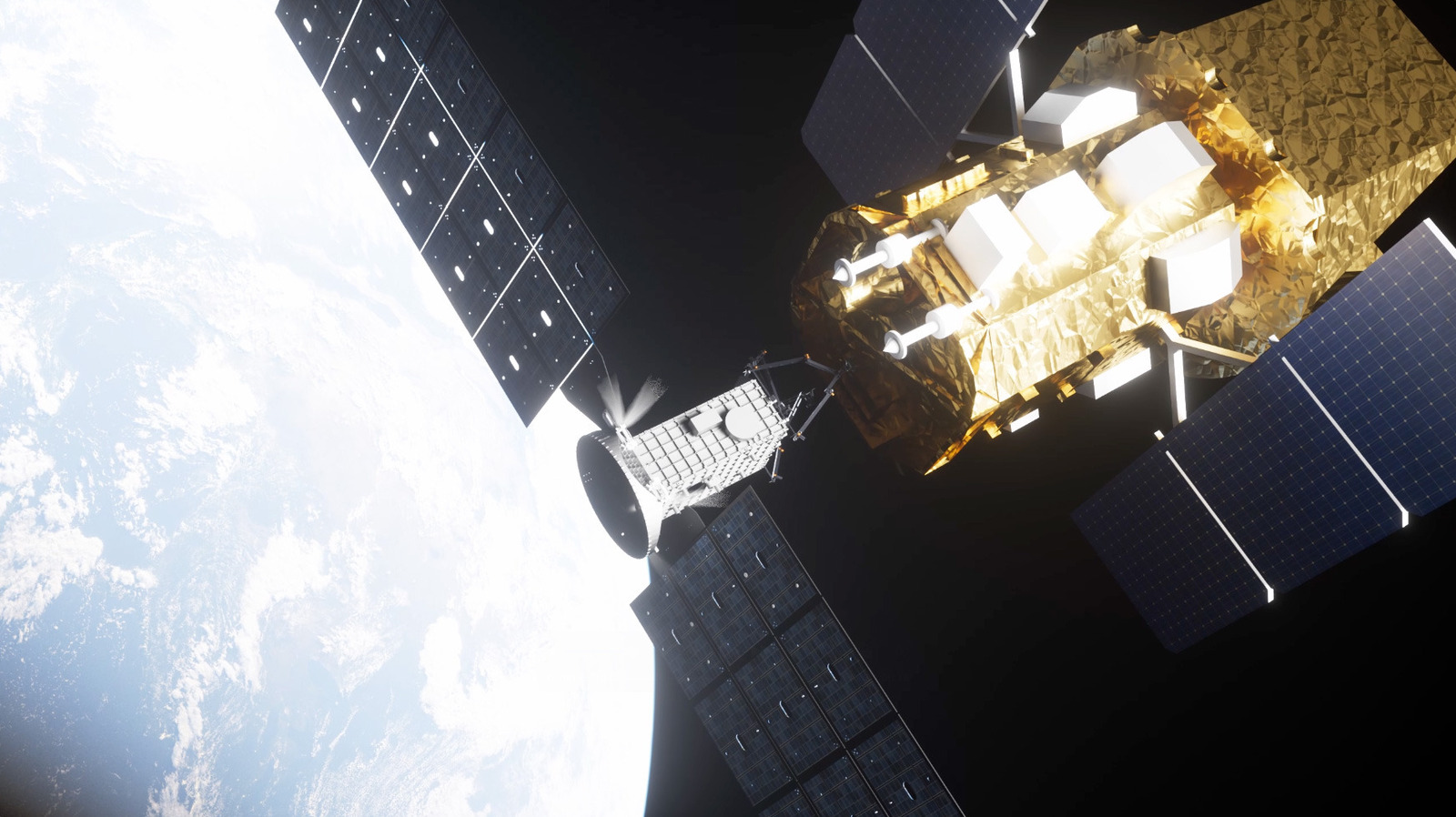
Katalyst’s LINK spacecraft will still rendezvous with the telescope, but will no longer take it to a higher orbit. NASA The Neil Gehrels Swift Observatory is expected to re-enter and burn up in Earth’s atmosphere later this year, after NASA aborted the mission intended to take it back to a higher orbit. NASA has announced that Katalyst Space’s LINK spacecraft will no longer dock with the satellite and propel it to a higher altitude as planned. The agency attributed this to LINK’s ongoing attitude control problem, which began in late July. If you recall, NASA reported at the time that the spacecraft was having trouble controlling its orientation in orbit, causing it to spin helplessly. That led to sporadic communications with the spacecraft. There was also some loss of functionality in LINK’s propulsion system. NASA and Katalyst were still optimistic last month that the spacecraft could achieve its goal, but things have clearly changed since then. Katalyst had less than a year to design a spacecraft for the Swift Boost mission, which launched in early July. Shawn Domagal-Goldman, director of the Astrophysics Division at NASA Headquarters in Washington, said it was a “high-risk, high-reward” mission from the beginning. It was the first attempt of its kind and the team had very little time to try to rescue the Swift telescope, whose orbit is rapidly decaying due to increased solar activity in recent years. NASA’s SWIFT observatory was launched in 2004 to study gamma-ray bursts, but astronomers are now using it for other purposes. The agency has relied on it to obtain critical information quickly when a sudden cosmic event occurs. This mission was supposed to add about a decade to his life. Going forward, NASA says it will prioritize finding “new options to react quickly to cosmic events,” but will use current missions to help fill the gap for now. While LINK will no longer take the Swift observatory to a higher orbit, it will still try to rendezvous with it. NASA and Katalyst plan to collect as much data as possible from rendezvous operations to inform future satellite servicing missions. “This is not the outcome we were working toward, but it doesn’t change why this mission was worth trying,” said NASA Administrator Jared Isaacman. “The team moved at extraordinary speed to give Swift the opportunity to perform more science while advancing the capabilities the United States will need for satellite service in the future. We will learn everything we can from the LINK rendezvous attempt and put those lessons to use on subsequent missions.”