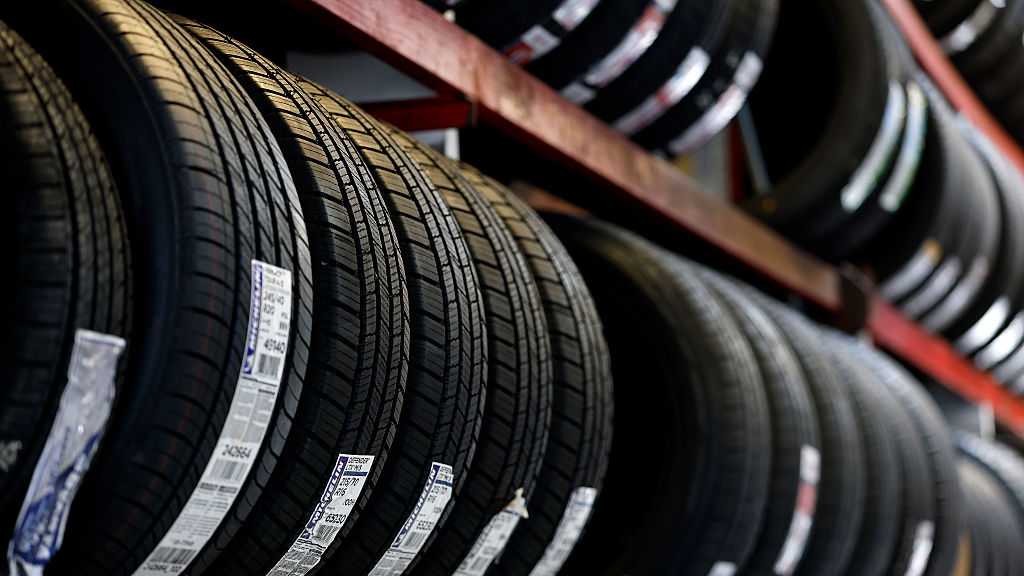
SACRAMENTO, Calif. — California regulators approved new rules Monday that will restrict which tires you can buy when it comes time to replace them on your car. In a unanimous vote, the California Energy Commission voted to adopt new rules that will phase out the sale of replacement tires that do not meet certain energy efficiency standards. “Ultimately, this is about protecting consumers,” said David Hochschild, chairman of the California Energy Commission. “I think this protects the public from higher costs in the long run.” Tire manufacturers and commission staff disagree on whether this will increase the cost of living in the state. Both parties acknowledged that this will no longer allow the sale of a significant portion of the tires currently sold in California. At the heart of this is a tire’s rolling resistance, or how much energy a tire uses as it rolls down the road. Lower resistance means a vehicle uses less gasoline or electricity. New cars come with generally efficient tires, but consumers often replace them with tires with higher rolling resistance. The first phase would begin in 2029, which would allow tires with a maximum rolling resistance level of 9.1 newton per kilonewton (N/kN) to be marketed. In phase 2, the standard is reduced to 7.2 (N/kN) starting in 2033. The commission made the standards after testing 537 types of tires. According to commission staff, the rules are intended to ensure that replacement tires sold in California are at least as energy efficient on average as the tires that came with the car or truck when it was originally sold. The CEC says Californians could save $79 over four months on gas or electricity costs in Phase 1, and about $153 in Phase 2 over seven months. “These regulations are a tool within our authority that can save all Californians money,” said Commissioner Nancy Skinner. Tire manufacturers, including Goodyear, disagree. Bret Gladfelty, on behalf of Goodyear, told the commission this will increase costs for consumers and said the commission still had to resolve technical and legal issues with the rules. In a letter to the CEC, Gladfelty questioned the data the CCA released to the public about the cost of new tires, noting that while the commission says price increases average about $6.50 per tire in Phase 2, Gladfelty warned that the cost increase could actually end up being several hundred dollars. Gladfelty told KCRA 3 that this new rule will eliminate approximately 70% of tires currently sold in California by 2033. Other tire manufacturers such as Bridgestone and Michelin were concerned about how exactly the CCA would enforce rules that could create an uneven playing field that could negatively impact larger manufacturers. Commission staff said they will use a testing laboratory to test tires to verify the information manufacturers provide them and also consult with retailers. Environmental advocates urged the commission to adopt the rules, citing better air quality and other environmental benefits. According to the CEC, there are some exclusions to the new rules: Competition tires designed for motorsports Winter snow tires Winter all-season tires High-performance tires Used and retreaded tires Tires with deep tread Tires designed for ATVs and other off-road vehicles Large off-road tires for use up to 99 mph Motorcycle tires Temporary-use spare tires Small tires with nominal rim diameter ≤13 inches Limited production tires (Tires sold for use on emergency vehicles High load index tires (122 or higher) Tires not capable of maintaining speeds above 50 mph Space-saving tires Monday’s action stems from a bill state lawmakers passed in 2003, AB 844, which directed the energy commission to explore rules on tire efficiency. Hochschild admitted she had no idea about the legislation until Skinner told her. mentioned. If I had been on the commission 20 years ago, maybe it wouldn’t have taken so long,” Skinner said. When asked why the CEC didn’t act on the legislation over the past two decades, Skinner said, “there may not have been those cost pressures.” The CEC has never regulated tires. It is now the first state to create such a rule. “This is a partnership,” said CEC vice president Siva Gunda, who said conversations with the industry would continue as the industry develops. rule goes into effect. See more coverage of top California stories here | Download our app | Subscribe to our morning newsletter | Find us on YouTube here and subscribe to our channel Make KCRA a preferred news source on Google