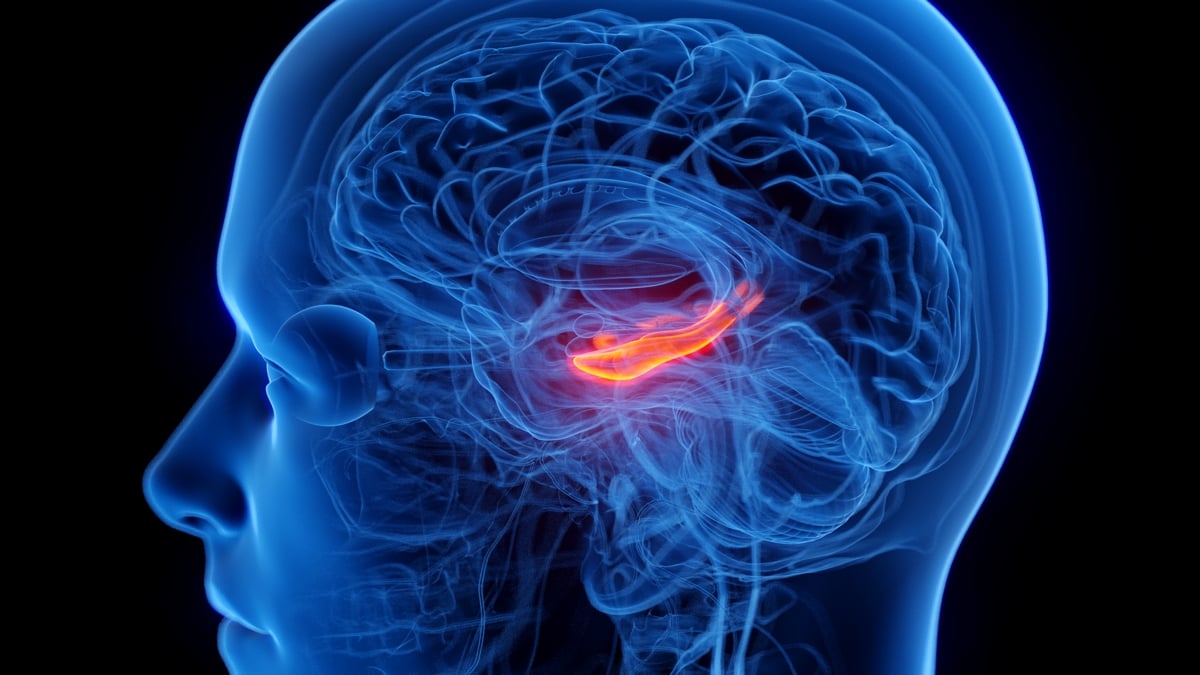
It’s long been known that depression has links to dementia and also specifically to Alzheimer’s disease, but exactly how depression and cognitive decline may interact with one another remains unexplained.Now, scientists appear to have discovered a new piece of the puzzle – even if it’s a piece that opens up plenty of new questions.In a study published in Translational Psychiatry, researchers found people with depression showed reduced volume in a part of the brain that’s essential for memory processes – the hippocampus.”Depression has long been associated with an increased risk of developing Alzheimer’s disease, but we still do not fully understand the biological connection between the two,” says neuroscientist and first author Danielle Luu from the University of Southern California (USC).”By looking closely at the individual parts of the hippocampus, we identified a specific area that may be particularly sensitive to depression in older adults.”The hippocampus is often thought of as the brain’s memory center, but it actually encompasses several structural subregions that perform different kinds of memory, learning, and navigation functions.People with depression show reduced volume inside a part of the brain that’s essential for memory – the hippocampus. (BitsAndSplits/iStock/Getty Images Plus)In the new study – which was based on MRI and PET scans of more than 2,000 cognitively unimpaired adults aged 50 to 90, about one-third of whom experienced depression – the researchers found one area in the hippocampus appeared to be different in the participants with depression.This area, a composite region called CA23DG, combines the hippocampal subfields CA2 and CA3, along with a subregion called the dentate gyrus.After accounting for factors such as age, sex, body mass index, and physical activity levels, CA23DG was found to be smaller in people with depression when compared to the participants without depression.Comparison image showing what hippocampal atrophy can look like. (Stevens INI/Keck School of Medicine of USC)When Alzheimer’s risk factors were included in the analysis – with the researchers taking note of levels of amyloid and tau proteins in the brain, or the presence of the APOE ε4 gene variant – the CA23DG association was largely unchanged, suggesting these known Alzheimer’s risk factors weren’t involved in the reduced CA23DG volume.What that means will need to be unpacked further in additional studies, but one interpretation is that we’re looking at two different mechanisms that can impact memory. The hippocampal alterations seen in CA23DG may be a distinct phenomenon, unrelated to other biological hallmarks of Alzheimer’s disease.In a base-level analysis, other regions assessed in the hippocampus – CA1 and the subiculum – did not appear to have reduced volume in people with depression.But when the researchers took antidepressant usage into consideration as a factor, they found that people in the study who used antidepressants showed reduced volume in both CA23DG and CA1.”This appears counterintuitive, since medications should work to alleviate the harmful physiological effects of depression in the long term, therefore acting as a protective factor against further hippocampal damage,” the researchers write in their paper.”Perhaps those with more severe depression are more likely to be prescribed depression medications than those who have milder depressive symptoms.”On a similar note, the researchers found people who had experienced depression for longer (even if their symptoms were controlled and milder) showed a stronger association with reduced CA23DG volume than people who had worse depression but were also more likely to be newly diagnosed.This suggests that the duration of depression may be a factor that could potentially impact hippocampal changes, not just the level of severity of recent symptoms.But even then, the researchers acknowledge, based on the data here, we just don’t know for sure.”It is possible that medications themselves are driving the association with hippocampal structure,” the study authors explain. “Perhaps the effects we see are related more to medication use than longer duration of depression.”People who experienced depression for longer showed a stronger association with the reduced CA23DG volume. (ArtistGNDphotography/Getty Images)We’ll need a lot more research to understand what’s driving these changes in the hippocampus in people with depression, and right now, these findings only show a correlation – they do not demonstrate that depression or antidepressants are what’s causing CA23DG to shrink.For that reason, the research team urges people with depression not to make any sudden changes based on the findings.Related: There Are Actually 2 Biologically Distinct Forms of Major Depression, Says New Study”In this study, we cannot separate potential effects of medication from the effects of the more severe depression that medications are prescribed to treat,” Luu says.”Long-term studies that follow people before and after treatment will be essential for understanding these relationships. Our results should not be interpreted as a reason for anyone to change or discontinue prescribed medication.”The findings are reported in Translational Psychiatry.
This article was fact-checked by Fiona MacDonald and edited by Rebecca Dyer. While we pride ourselves on our process, we are only human. If you spot a mistake, please let us know.