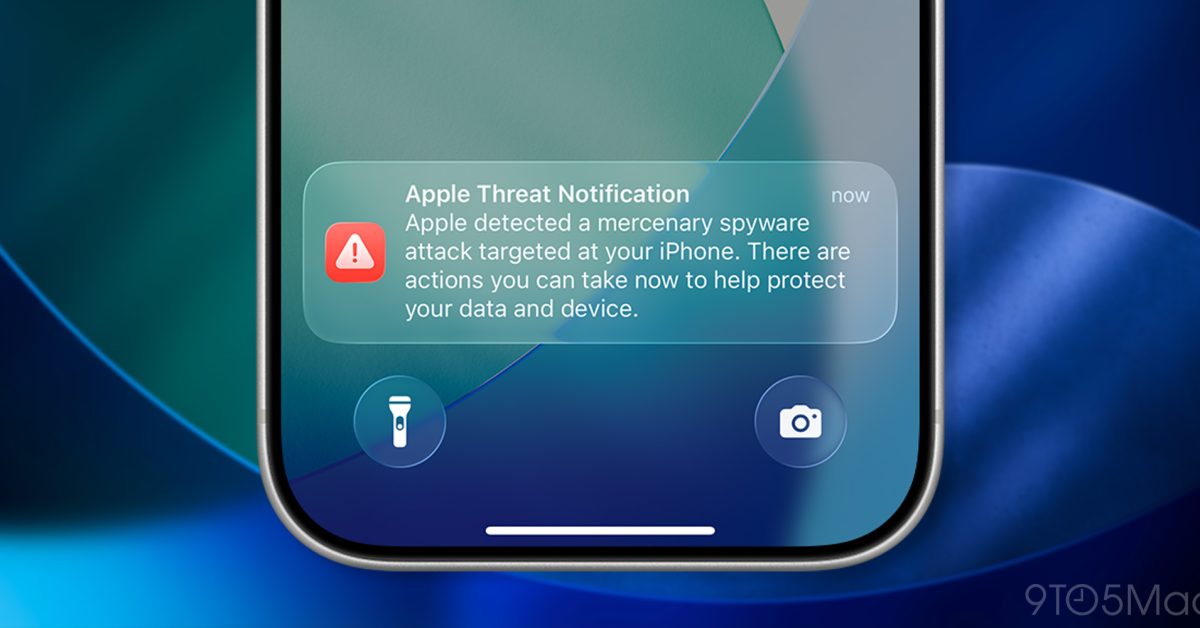
Apple has notified users in 110 countries that it suspects they may have been targeted by spyware attacks. Here are the details. Apple warns users in 110 countries Apple has confirmed to TechCrunch that it has sent a new wave of notifications alerting an unspecified number of users in 110 countries that they may have been targeted by “a mercenary spyware attack.” According to TechCrunch, the latest round brings to more than 150 the total number of countries where Apple has alerted users about these types of attacks in recent years. A little over a year ago, for example, Apple sent warnings to users in 100 countries that their iPhones had been attacked. The company later confirmed that it had also alerted more than a dozen victims of Iranian cyberattacks in the run-up to the war with Israel. TechCrunch noted that Apple today also published a new support article titled “About Apple Threat Notifications and Protection from Mercenary Spyware,” which explains what threat notifications are, how they are delivered, and what to do if a user receives one. From Apple: Apple Threat Notifications provide additional information and recommend steps users can take to help protect their accounts and devices, including enabling Lock Mode. We strongly encourage notified users to seek expert help, such as the rapid response emergency security assistance provided by the nonprofit Access Now’s Digital Security Helpline. Recipients of Apple threat notifications can contact the digital security helpline 24 hours a day, seven days a week through its website. Third-party organizations don’t have any information about what caused Apple to send a threat notification, but they can help specific users with personalized security tips. The company also offers guidance for all users, most of whom, according to Apple, “will never be attacked by mercenary spyware.” The guide includes the following security best practices: Update your devices with the latest software, including the latest security fixes. Protect your devices with a password, Touch ID or Face ID. Use two-factor authentication and a strong password for your Apple account. Turn on stolen device protection. Install apps from the App Store. Use strong, unique online passwords and access keys when available. Do not open links or attachments from unknown senders. You can read the full TechCrunch report here and Apple’s new support page here. Worth checking out on Amazon FTC – We use automatic affiliate links to generate income. Further.