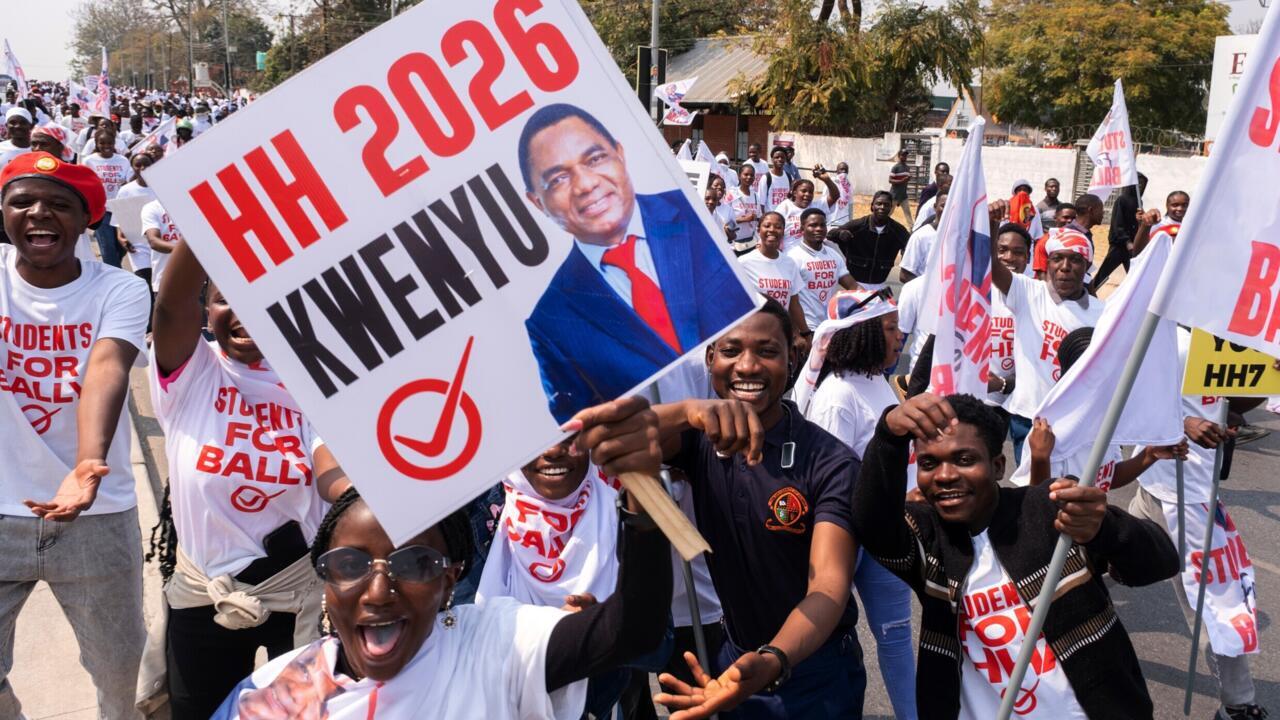

Zambia goes to the polls on Thursday in a general election that is expected to give President Hakainde Hichilema a second term, although frustration over the cost of living may dent his support. Hichilema has led the southern African copper producer since 2021 and is building on his economic record, having led Zambia through a debt restructuring and economic rebound since it defaulted on its sovereign debt in 2020. His main rival is Brian Mundubile, a seasoned parliamentarian but first-time presidential candidate who leads an opposition alliance backed by supporters of Hichilema’s predecessor, the late former president Edgar Lungu. Opposition weakened by divisions Presidential, parliamentary and local government elections will be held simultaneously. A presidential candidate must receive more than 50% of the votes cast to win in the first round, or face a runoff between the two main contenders. “I am tempted to think that the ruling party will triumph despite the huge crowds we are seeing at the (pro-Mundubile) demonstrations,” said historian and analyst Euston Chiputa. “One of the serious weaknesses of the opposition camp is that it is divided,” he said, with parliamentary and local government candidates from Mundubile’s party and those from his running mate’s party competing against each other in some places. To display this YouTube content, you must enable ad tracking and audience measurement. OK Manage my options One of your browser extensions appears to be blocking the video player from loading. To view this content, you may need to disable it on this site. Try again Cover image: France24 © France24 Investors said they generally expect Hichilema to win, with the bigger question being whether he can turn post-default macroeconomic change into job-creating growth if he is given a second term. Many Zambians say that although economic indicators have improved and inflation has fallen to its lowest level in years, they have yet to feel the benefits in their daily lives. Some concerns about the fairness of the vote The run-up to the vote has been marred by some accusations of political repression in the country of 22 million people, although the government denies this. Zambia is rated “partly free” by the US non-profit group Freedom House, which says that although there are regular multi-party elections, opposition parties face “onerous legal and practical obstacles to fair competition”. “The competition is still there because the opposition has support in Lusaka and the Copperbelt province, which have a large number of registered voters,” said Lee Habasonda, a political science professor at the University of Zambia. “If the opposition had supported a candidate earlier, this would have been one of the most difficult elections for the ruling party,” he said. Polls are open from 6:00 a.m. (04:00 GMT) to 6:00 p.m. and results are scheduled for Monday, according to the Electoral Commission. If the presidential vote goes to a second round, the second round must be held within 37 days of the first vote. (FRANCE 24 with Reuters)