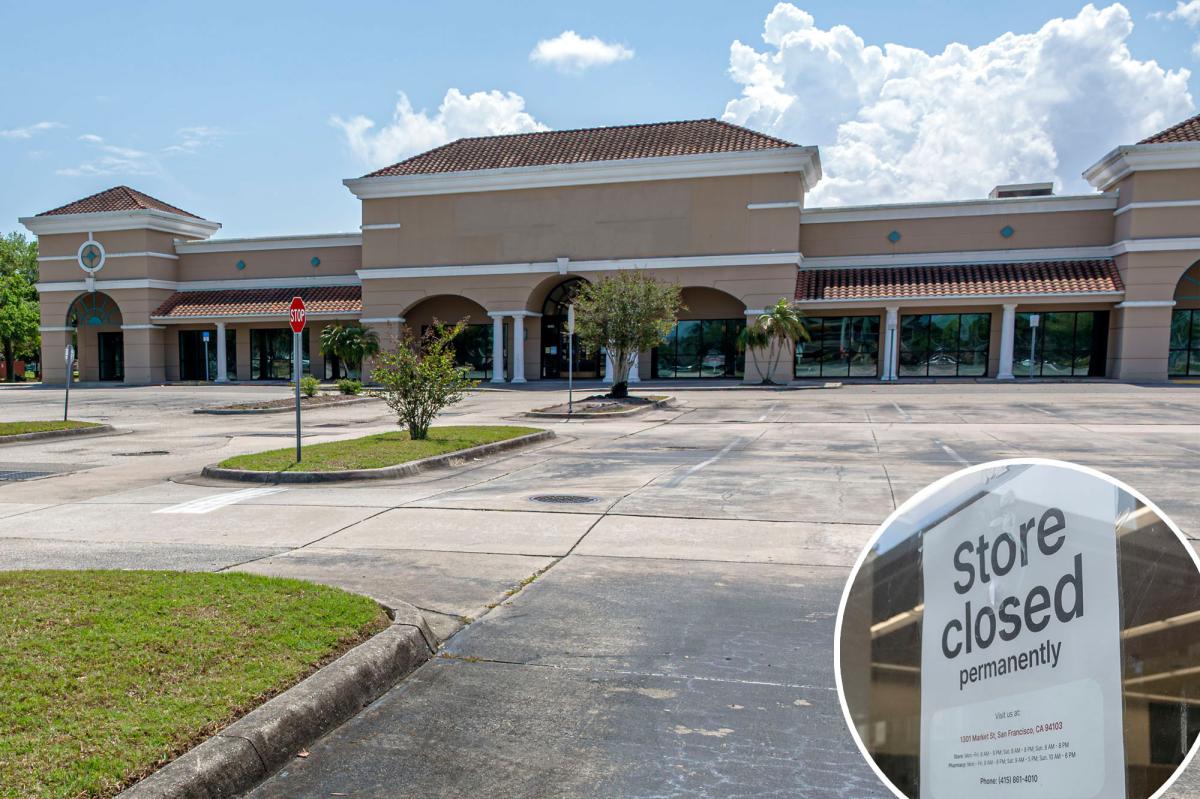
A quick trip to your local supermarket may be about to end. Supermarkets, both small and large, are closing across the country as chains eliminate underperforming stores. In an earnings call last year, grocery giant Kroger said it would reduce its store count by 60 locations over the next 18 months, citing slow sales. The Cincinnati-based brand owns a large number of local locations and the company said the closures would primarily affect Fred Meyer, Fry’s Food and Drug, Harris Teeter, Foods Co, Food 4 Less, King Soopers, Mariano’s, Pick ‘n Save and QFC. Walgreens recently closed more than a dozen underperforming stores. Gado via Getty Images The shutters could damage some areas and create what experts call a food desert, where communities have little or no access to stores with affordable, healthy or fresh food. Amid the closures, Kroger recently acquired Giant Eagle in a $1.65 billion deal and is expected to close sometime next year. Kroger’s acquisition of the Pennsylvania-based chain will add 197 supermarkets and 11 independent pharmacies to its existing network, according to Cleveland.com. Discount supermarkets are also being affected. Grocery Outlet has been a trusted place for shoppers as people can rely on it for great discounts, including private label products that have discounts ranging from 40% to 70% off. But customers will soon see fewer of them. Based in California, the company said in a March earnings conference call that 36 stores will be eliminated, including six in New Jersey, citing poor performance as the main reason for the closures. Jason Potter, president and CEO of Grocery Outlet, said on the call that the East Coast would be hardest hit, with 30% closures. While the store did not offer a timeline, the locations were made available by investment and restructuring firm Gordon Brothers. Shortly after the closure announcement, Gordon Brothers put together a list of leases that was made public. Despite 36 closures, it only represents about 6% of Grocery Outlet’s supply, according to Grocery Dive. A large number of grocery stores such as Safeway, Walgreens, Kroger and more have closed. Jeffrey Greenberg/Universal Images Group via Getty Images Safeway will also close a fleet of stores after its parent company, Albertsons, announced plans to reduce its footprint. Albertsons operates more than 20 other brands, including Vons, Jewel-Osco, Acme Markets and Shaw’s, with more than 900 locations nationwide. In 2025, a fleet of Albertsons-owned stores closed at least 30 locations, with another 12 planned for 2026, according to The Street. So far, Safeway has closed only three locations, which are tied to expiring leases. “We are nearing the end of our lease at this location and have made the decision to reinvest our resources in other existing stores,” Safeway said in a statement. The Post recently reported that Walgreens, which has about 8,500 stores nationwide, has closed locations in a dozen states, including New York and New Jersey. The move is part of a multi-year plan to reduce costs and close less profitable stores. In 2024, the Chicago-based retailer announced it would close approximately 1,200 underperforming stores over the next three years in an effort to cut $1 billion in costs. But last year, Walgreens went private and reduced its shutters. The Post has reached out to Kroger, Grocery Outlet and Albertsons for comment and a list of locations that will close.