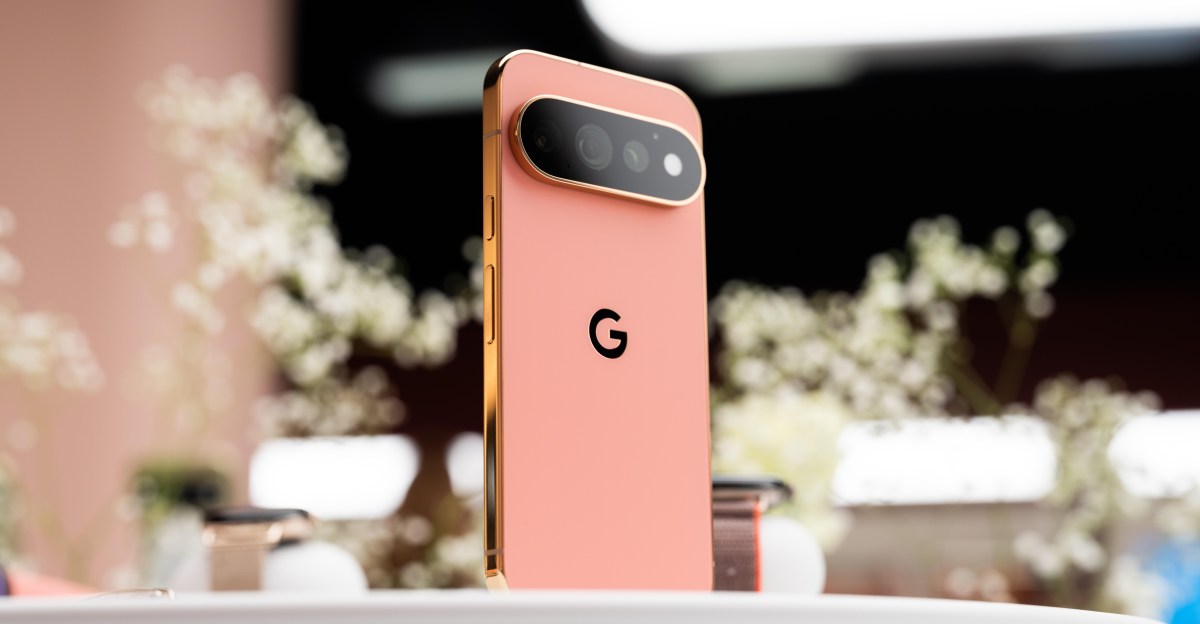
When I first bought the Pixel 11 Pro this week, it was clear to me that this was one of those years of refinement, at least when it came to hardware. Aesthetically, the phones are as beautiful as ever, with Google’s signature camera bar and a bright, colorful back glass. There are small updates, like a single piece of glass covering the camera bar and the new HiLight ambient LED on the Pros. But this year, Pixel is all about quality of life and software improvements. After weeks of teasers, Google finally formally announced the Pixel 11, Pixel 11 Pro, Pixel 11 Pro XL, and Pixel 11 Pro Fold. All phones will ship next week on August 20, and Google will hold a splashy event on the evening of August 12 to show off the devices. Before that, we had the chance to take a first look at everything that’s to come. The standard Pixel 11 gets some eye-catching colors this year. Let’s start with the bad news: All of these phones are $100 more expensive than last year. Google removed the base 128GB storage option this year, meaning the Pixel 11 now starts at $899 for a 256GB model. All storage tiers still come with 12GB of RAM, but the higher entry price is no doubt due to RAMgeddon, which has increased costs across the industry. If you can look past the price, you’ll find a refined version of last year’s phone that looks and feels a little more premium. The camera bar is now made from a single piece of glass and is more than 40 percent thinner. If you use it with one of the Google cases, the bar will be completely flush. (This gives you three different camera bar thickness options on the Pixel line now, which only get thicker the more premium you go.) The difference between the camera relief between Pixel 11 and Pixel 11 Pro. The cameras have also been updated. On the Pixel 11, the 48MP wide has 56 percent more light-gathering capacity thanks to its new 1/1.56-inch sensor, and the 5x telephoto lens can now digitally zoom up to 30x, which Google says is enabled by the new image signal processor in the Tensor G6 chipset. And considering the new Tensor G6 chip is said to be up to 20 percent more efficient, Google quotes up to more than 30 hours of battery life across the lineup. Perhaps the most interesting update for me is the new Camera Looks feature. You can think of this similarly to Fujifilm camera film recipes, which present users with stylized presets that can be customized to their liking. Editorial camera look. Minimal camera look. What makes the camera aspect so interesting, however, is that instead of just being a filter on top of the Pixel’s pre-processed photo, the phone will process the photo completely differently at the sensor level depending on the settings you choose, potentially using less frame stacking and sharpening to deliver the photo you really want. At least during my briefing, this actually worked. Natural mode does an incredible job of reducing sharpness and contrast and making photos look much more real, and I’m excited to try it properly later. If you want to learn more about this, check out my dedicated article where I spoke with Pixel camera leader Isaac Reynolds. Another new feature within the camera is Magic Capture. This is a camera mode along with photo and video modes that creates a sort of hybrid combination of the two, where the phone will automatically select short clips and images that you can share. During my hands-on time, this feature didn’t work very well, only giving me a small clip and photo of a recording that was about 15 seconds long, but I think it’s intended for longer clips at things like children’s birthday parties. We’ll have to test this in the field once we have more time with the device. Magic Capture. Creator Suite. Google is also adding a new Creator Suite inside the camera, giving you access to tools like social media framing guides, speech enhancement, a teleprompter, and automatic folder structures for videos. I was surprised to see this so deeply integrated into the camera itself, and it’s clear that Google is looking for a new audience and hopes to make the Pixel the best phone for small creators. All phones also feature Qi2.2, an upgrade from last year’s Qi2. Google says this offers 25 percent faster wireless charging at up to 25W, an improvement from the maximum 15W that the Pixel 10 offered. However, many users reported seeing a maximum wireless charging rate of just 5W with the Pixel 10 when using older chargers, so we’re hoping the issue will be fixed this year. The Pixel 11 will come in purple, green, black, and an extremely deep magenta. The Pixel 11 Pro in blue. The 11 Pro and Pro XL are where things get a little more interesting this year. Like the standard Pixel 11, they start with 256GB of storage and 12GB of RAM (up from 16GB last year), which start at $1,099. If you’re a power user, you can still get 16GB of RAM if you buy the 512GB or 1TB models. However, you’ll definitely get more with the Pro models this year. The Pixel 11 Pro’s display reaches up to a super-bright 3,600 nits, which Google says is the brightest display ever on a smartphone. This isn’t a huge difference from last year’s 3,300 nits peak brightness, but it’s some bang for your buck. The Pixel 11 Pro next to a Pixel Watch 5. The new camera bar is completely glass. The Pixel 11 Pro’s main camera sensor has been improved, with a new 50MP model that Google says uses less power and should perform better in the 1x to 5x zoom range. There’s also a new 48MP telephoto lens with a larger 1/1.95-inch sensor that offers a 30 percent improvement in light sensitivity. And like the standard Pixel 11, the 11 Pro has an additional zoom range, now extending up to 120x, which Google says is enabled by the ISP on the Tensor G6. On the Pro phones, Google has also substantially sped up Night Sight, offering up to 4.5x faster low-light image capture, although Google tells me it’s about 3x faster on average than last year. This is still a pretty substantial improvement and Reynolds told me the idea was to optimize Night Sight for handheld shooting. “You can still capture up to four minutes if you want all the light,” he tells me, “but it’s really optimized for those awkward moments when you have to tell someone to stay still for too long.” The HiLight LED replaces the old temperature sensor. The most striking feature (pun intended) of the new Pro phones is the HiLight function. The Pixel 11 Pro and Pro Fold phones now feature an RGB LED ring where the temperature sensor used to be on the right side of the camera bar. When you talk to Gemini, the LED will light blue while he listens and responds. Furthermore, you can set your favorite contacts to shine when they call you through the default Phone app or WhatsApp. Google is marketing the feature as a way to be more present in your daily life, but I still don’t find it particularly useful considering its use is so limited. Google says there will be more features in the future, but right now this doesn’t seem like a reason to buy the phone. The Pixel 11 Pro and Pro XL will come in olive, light blue, and a striking “cannon” orange color, all with bright side rails. There’s also a black option, which this year has matte side rails, unlike all other Pro devices. The Pixel 11 Pro Fold in olive. Finally, there is the Pixel 11 Pro Fold. Google calls it the most durable Pixel Fold yet, with a new composite material on the back that Google says is nearly impossible to break. This, along with a thicker ultra-thin inner glass display, contributes to Google’s claim of being “3x more durable” compared to last year. The internal bezels have also been reduced, making them Google’s thinnest foldable bezels to date, and the maximum brightness matches the Pixel 11 Pro at 3,600 nits. The 11 Pro Fold also inherits the Pixel 11’s new 48MP main sensor for 56 percent improved light sensitivity compared to last year, and gets Qi2.2 for up to 20 percent faster wireless charging. The 11 Pro Fold starts with 16GB of standard RAM with 256GB of storage, comes in olive and black, and starts at $1,899, also a $100 price increase from last year. Photo by David Imel / The VergeFollow this story’s topics and authors to see more like this in your personalized homepage feed and to receive email updates.David ImelCloseDavid ImelPosts from this author will be added to your daily email digest and homepage feed.FollowFollowSee all by David ImelGadgetsClose GadgetsPosts from this topic will be added to your daily email digest and homepage feed. Home.FollowFollowView all gadgetsGoogleCloseGooglePosts from this topic will be added to your daily email digest and homepage feed.FollowFollowView all GoogleGoogle PixelCloseGoogle PixelPosts from this topic will be added to your daily email digest and homepage feed.FollowFollowSee all Google PixelHow-TosCloseHow-to posts from this topic will be added to your daily digest email and your home page news.FollowFollowView all practicesMobileCloseMobilePosts in this topic will be added to your daily email digest and homepage feed.FollowFollowView all mobile phonesClosePhonesPosts in this topic will be added to your daily email digest and homepage feed.FollowFollowView all phonesReviewsCloseReviewsThe Posts in this topic will be added to your daily email digest and home page feed.FollowFollowView all reviewsTechCloseTechPosts in this topic will be added to your daily email digest and home page feed.FollowFollowView all technology