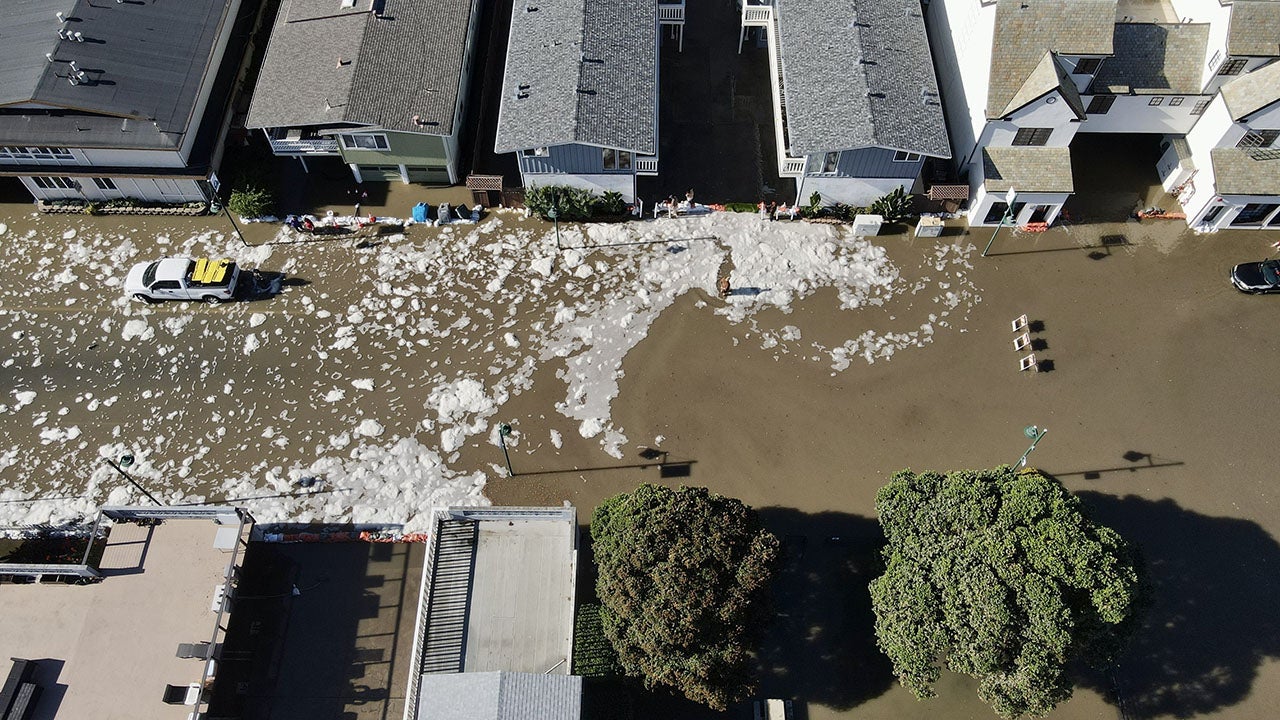
Part of the Pacifica pier collapses into the ocean amid strong king tides. The latest king tide coastal flooding driven by a series of storms in the Pacific has already surpassed all-time records in California and southern Oregon, and more flooding is possible during the remainder of Thanksgiving week. What is a king tide? King tides are the highest high tides in a year, caused by the pull of gravity when the Moon, Sun and Earth align. (WATCH: King Tides Explained) October’s king tides brought record levels of flooding to many places in Southern California, including Los Angeles and San Diego, inundating roads and buildings and devouring beachfront properties. Many of these records have already been rewritten this week. These West Coast king tides were driven by a slow splash of warm water pushed against the coast called the Kelvin wave generated by El Niño over ocean water, which was already at record temperatures near the California coast. (MORE: October King Tide Flood Impacts) Get more of our news on Google Set The Weather Company as a ‘preferred source’ for faster access to the news you value. An aerial view of streets and houses flooded during a record king tide as huge waves hit near the Pacifica Municipal Pier in Pacifica, California, United States, on November 25, 2026. (Tayfun Coskun/Anadolu via Getty Images) Record flooding, so far Wednesday, six tides Flood gauges in California equaled or set new all-time flood records, including Monterey, Santa Barbara and San Diego, some of which They surpassed the records broken during the king tides of late October. This surge of ocean water flooded city streets, damaged docks, and struck some coastal homes and buildings. Tuesday’s king tides appeared to break the all-time record at the Charleston, Oregon, tide gauge, surpassing the previous record from New Year’s Day 2006, according to the National Weather Service in Medford. This flooding closed a stretch of US Highway 101 near Coos Bay on Tuesday. While not among the 10 highest water levels according to the San Francisco tide gauge, Tuesday’s flooding inundated roads in the Bay Area, including areas near the Embarcadero and in Marin County. Floodwaters covered roads in Marin County during high tide in Sausalito and California’s Mill Valley on Nov. 24, 2026. (Tayfun Coskun/Anadolu via Getty Images) Thursday’s waves in Southern California were high enough to wash out the tracks of Amtrak’s surfliner service, causing disruptions and cancellations from Irvine to San Diego. More coastal flooding is coming. We expect this king tide to last until Friday. Unfortunately, a series of storms moving across the Pacific Ocean is adding to the severity of king tide flooding, pushing large surges toward the coast. The waves that accompany every Pacific storm could worsen damage to nearshore structures and beach erosion, as we saw in October. It will also flood coastal highways from Washington state to Southern California, including stretches of the 101 Freeway in northwestern California and southern Oregon, areas near San Francisco Bay, and some streets along the coast in the Los Angeles and San Diego Basin. Dangerous breaking waves of up to 30 feet are once again possible along parts of the Oregon and California coasts. FLIGHT? Check out our flight tracking tool. Web | iOS | AndroidMore king tides next month If that weren’t enough, more king tide flooding is likely along the West Coast during Christmas week, and then again in late January, physical oceanographer Greg Dusek told Weather.com. The highest king tides of the year along the west coast generally occur around the winter and summer solstices. This chart shows the predicted highest tide for king tides in late November, December and January 2026-27 in inches above the average high tide level. This October 30, 2026 forecast assumes water levels remain as above average as they were at that time. (Hohonu.io/Greg Dusek) What to do If you live near the West Coast or have vacation plans there, here are some simple safety tips: Stay away from the beach and ocean. Some normally dry areas will be flooded at high tide. If you must watch the crashing waves, do so from a safe distance from the beach, not from rocks or jetties. Never turn your back on the ocean. The waves from the shoes can surprise you, knock you over, and could contain debris such as large logs or driftwood that could cause injury or death. Never drive on flooded roads. Your vehicle could stall or float in higher water. Never drive over barriers that mark a section of road as closed. If authorities close a road, flooding is dangerous and life-threatening, or a section of the road may be washed away. Jonathan Erdman is a senior meteorologist at Weather.com and has been covering domestic and international weather since 1996. Extreme and strange weather are his favorite topics. Reach him on Bluesky, X (formerly Twitter), and Facebook.