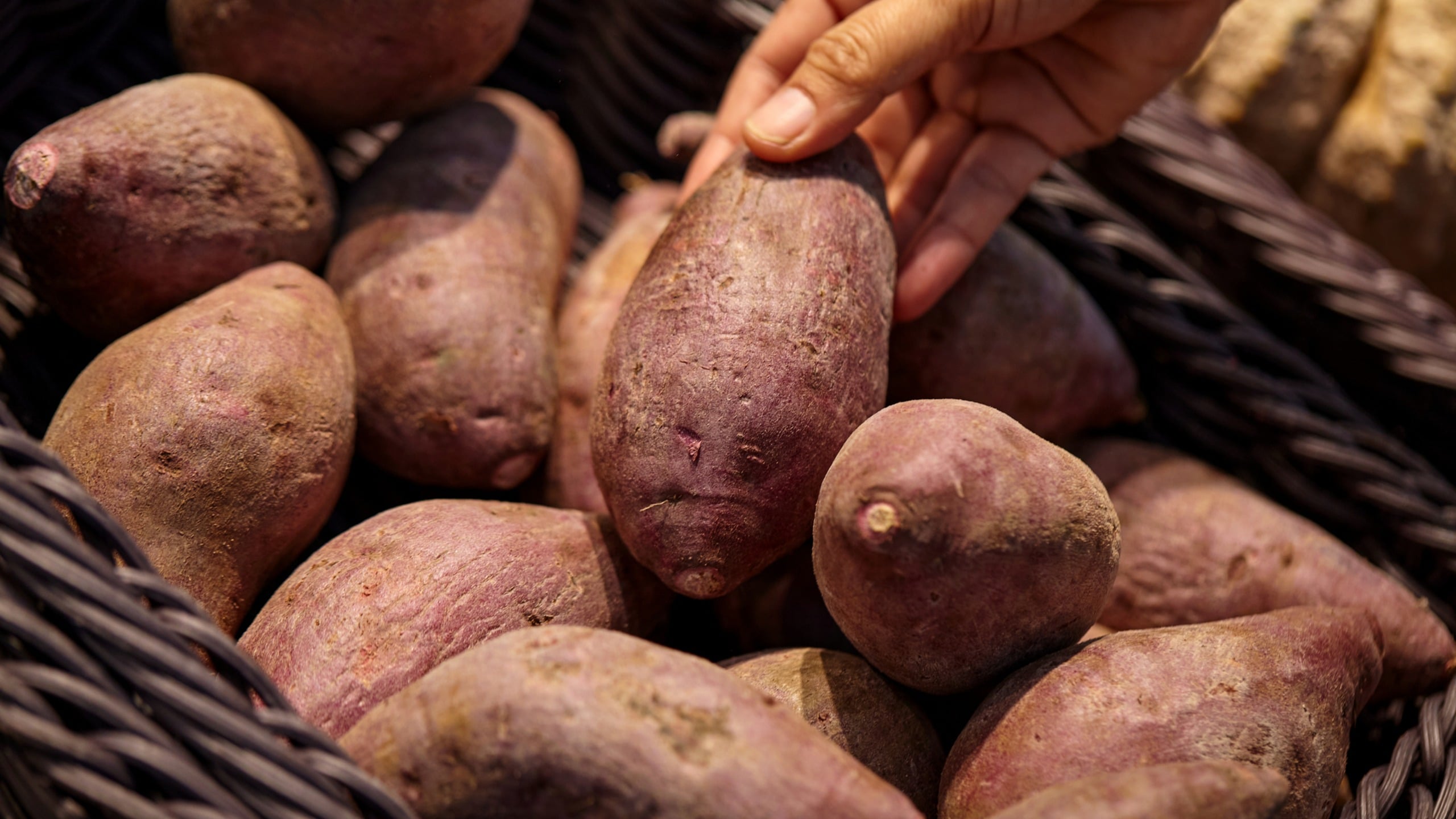
Humans were not the first genetic engineers. Other organisms were creating transgenic plants millions of years before we started splicing foreign DNA into crops. A Thanksgiving table staple is a perfect example of this. The sweet potato was cultivated thousands of years ago by people in Central and South America, but another organism had altered its genes long before our species arrived and ripped them out of the ground. In 2015, researchers discovered that cultivated sweet potatoes from around the world contained foreign DNA, some of which was actively expressed by the plant. This “quite notable” genetic insertion was observed in all the crops analyzed, but not in any wild relative. But where did it come from? The genetic engineer in question is a small soil microbe called Agrobacterium. This special bacteria is quite clever. When it infects plant tissue, it can transfer a small segment of its own DNA to the host’s cells. This is called DNA transfer, or T-DNA, and foreign genes can enter the nucleus of a cell, permanently altering the plant’s genome. Thereafter, the plant can “read” and “express” the genes of this foreign pathogen. It can even transmit T-DNA when it reproduces. (alvarez/E+/Getty Images) Using T-DNA is a super unique skill set, primarily associated with Agrobacterium. When it was discovered in the late 1970s, it gave scientists an idea. If humans could remove disease-causing genes from T-DNA, it could theoretically allow us to genetically engineer plants to improve them. The end result is modern transgenic products. While these products are often vilified for being unnatural, they are actually based on a very natural process. They also share unexpected advantages. This seems to have happened with the sweet potato. In October of this year, scientists published new evidence in Planta showing that a foreign gene in sweet potatoes, acquired naturally from Agrobacterium, could help plants resist temperature changes, defend against disease, and reduce oxidative damage. The authors tested this gene in thale cress (Arabidopsis thaliana), which is a model plant widely used for genetic engineering. It seemed to benefit the plant in many ways. Homemade Sweet Potato Casserole for Thanksgiving. (Dragos Rusu/500px/Getty Images) These results are supported by another study conducted in 2025 that found two bacteria-derived genes in sweet potatoes that may actually help tissue growth and antioxidant production. One possibility is that over evolutionary time, harmful bacterial genes were lost from sweet potato, while more beneficial genes persisted. When ancient humans began growing these crops, they may have even unknowingly sped up the process by selecting the crops with the best bacterial genes. That’s a longer, more natural version. of how humans create genetically modified crops today. And it’s not just sweet potatoes that are a good example of naturally GMOs. There’s another key dish on the Thanksgiving table that also contains Agrobacterium genes: cranberries (Vaccinium macrocarpon). of all land plant species can carry DNA inserted by bacteria. These foreign genes are found in the cinnamon in our pumpkin pies, the pepper we crack over our turkey, and the coffee we drink after a good meal with friends and family. Maybe this is the year to thank Agrobacterium. This article was fact-checked by Peter Dockrill and edited by Peter Dockrill. While we take pride in our process, we are human. If you spot an error, please let us know.