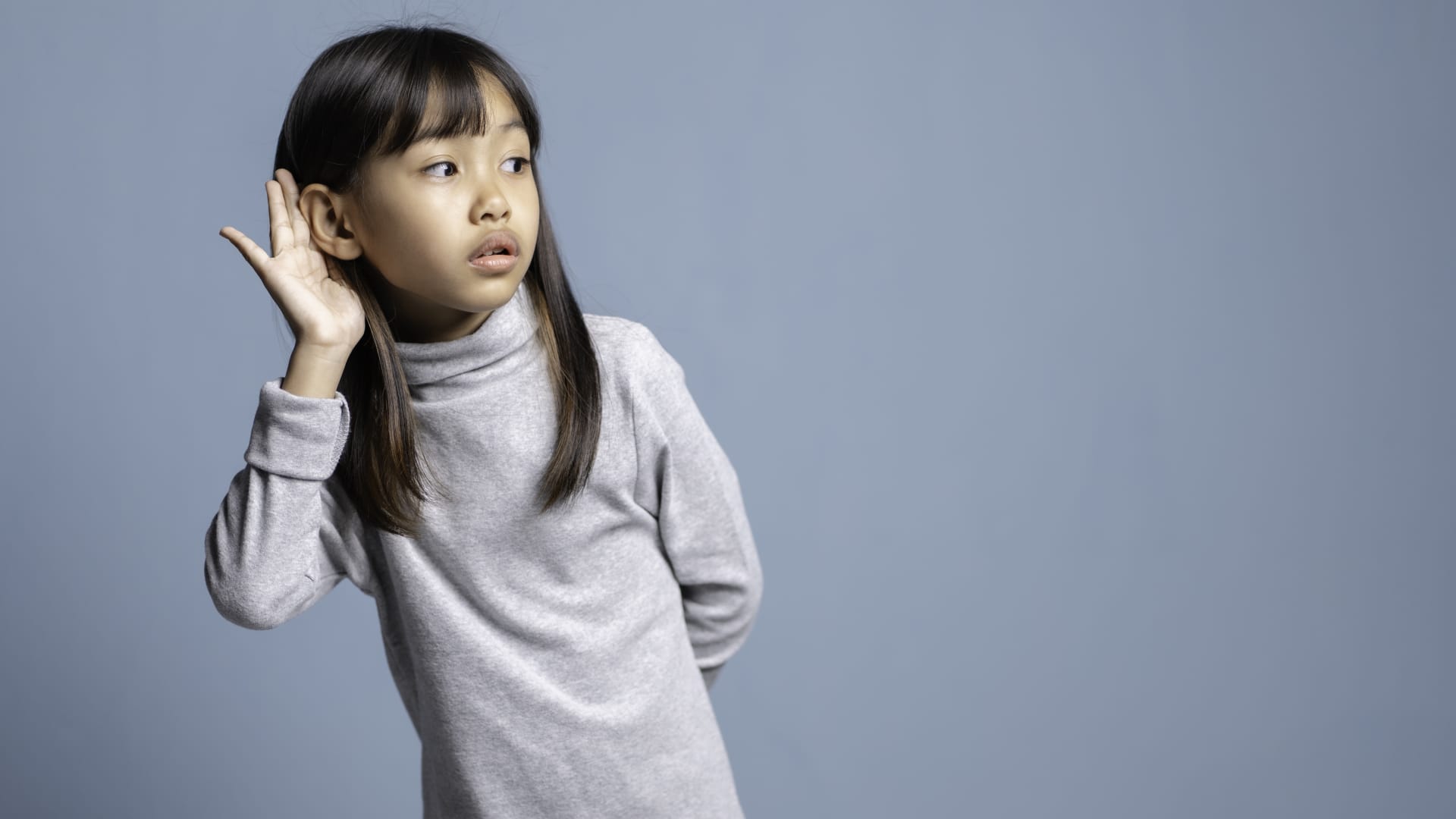
One afternoon about a month ago, my husband, Shawn, and I were in the kitchen admiring some of our 8-year-old daughter’s schoolwork. We noticed that her handwriting had improved a great deal and we were genuinely impressed. Later, I found Zoë reading in her room with a shy little smile on her face. I recognized that smile. It’s the one she gets when she’s quietly proud of herself. I had a feeling she overheard us talking about her. If we’d said it to her face, she might have filed it under things parents are supposed to say. But overhearing us seemed to give the praise a different weight.My kids, and many of their peers, are world-class eavesdroppers. It might seem like they are tuning out a lecture that’s happening right in front of them, but then they catch every word when I talk to another adult in the next room. You might be inclined to tell your kids not to eavesdrop. It’s a behavior that is commonly seen as rude or impolite. But I think it’s misunderstood. I love that my kids are so observant, and I think embracing that is one of the most important ways to build their resilience and optimism. As a positive psychology researcher, I’ve spent the last 15 years studying the power of optimism — and how fostering it is a key to raising more resilient children, with stronger problem-solving skills and better physical and mental health. I wrote my latest book, “Resilient Optimism,” because I wanted people to understand that optimism isn’t just something we are born with. It is something we can develop through our everyday actions — even when life is hard.What kids overhear can help shape what they believe about themselves and what’s possible. Optimism isn’t a fleeting feeling. It’s foundational to their future growth and success. We teach our kids how to cultivate it by example, particularly in how we talk about our own efforts, setbacks and everyday joys, especially when we don’t realize they are listening.1. I glow about my kids when they are in earshotResearch shows that children learn from conversations they aren’t part of. A 2026 study published in Child Development found that 5- and 6-year-olds who overheard an adult praise the behavior of asking questions were more likely to ask a question themselves. Another study found that children who overheard adults describe a generous child as “nice” were more likely to share.These studies examined children overhearing praise of others, not themselves. But the lesson is important: Children don’t simply learn from what adults tell them to value. They also learn from what adults value in others.When I was little, my mom noticed something at the playground. While the children played, some mothers complained about messy rooms and poor listening skills. Others talked about their children’s kindness or effort. My mom saw how children seemed to shrink or stand taller depending on what they overheard. She decided to be the second kind of mom. Years later, when she told me that story, I remember thinking, I want to be that kind of mom, too.Make your appreciation genuine and specific. “You should have seen how he stuck with that math problem after getting it wrong twice” teaches something different from “He’s so smart.” With our 12-year-old son, I recently made a point of telling Shawn how impressed I was that Leo had stuck with a challenging humanities project even when it wasn’t going as he had hoped. I wanted him to hear that what impressed me wasn’t the outcome, but his willingness to keep trying.When children hear us celebrating their effort and progress, we’re giving them evidence that their actions matter. That’s at the heart of optimism. 2. I talk openly about how I handle setbacksI think so many of us have an inclination to hide our stress to protect our kids. But if they only hear about our victories, they miss an important lesson: how to handle it when things go wrong.That doesn’t mean unloading adult worries on them. It means letting them hear how we work through manageable frustrations.If I’m nervous about a presentation, I might tell Shawn, in front of our kids, “This really matters to me, and I want to do a good job. I’m going to practice tonight so I feel more prepared.”My children have heard me name a difficult emotion, connect it to something meaningful, and identify a next step. A number of times recently they have said something empathetic like “Oh mom, I am so sorry,” and then have stayed engaged with the story to see what I was going to do about it.Resilient optimism isn’t pretending everything is wonderful. It’s saying, “Yes, this is hard, and here’s what I can do next.” When our children hear us respond this way, they learn that setbacks don’t have to leave them powerless.3. I celebrate the little joys out loudIn my family, we’re good at celebrating big milestones like birthdays, promotions and great report cards. But I want my kids to know that ordinary days are full of moments worth celebrating, too.Since 2021, I’ve sent Shawn a text before bed with three or four favorite moments from my day. I began the practice during the busy blur of the pandemic when I consciously knew there were good moments during the day, but I was so tired I probably was not recording them in my brain. Now, more than 1,500 texts later, they’re a time capsule of our family: a surprise hug from Zoë, a competitive pickleball game with our son Leo, or something funny at dinner.Now I bring some of those moments back up with Shawn when the kids are within earshot. “Remember how hard we laughed last night?” Sometimes they join in, and sometimes they just listen.Our brains are good at spotting problems, so smaller joys can get overlooked. When our children hear us celebrating them, they’re learning to notice what’s going right. That habit helps sustain optimism, even when things are hard.We spend so much time thinking about what to say to our children. But they’re also learning from what we say to everyone else. I keep thinking about Zoë’s little smile. She hadn’t asked for encouragement that afternoon, but she’d heard something important: that her hard work was paying off.That’s the optimism I want my children to carry into the world. I want them to believe that their actions matter and that good things are possible. I want them to know that ordinary days hold moments worth celebrating, and that when life is hard, there’s always something they can do next, because no challenge is ever truly insurmountable. Michelle Gielan is a positive psychology researcher, former CBS News anchor, and the bestselling author of “Resilient Optimism: The Science of Sustaining a Positive Mindset in Tough Times” and “Broadcasting Happiness.”Take control of your money with CNBC Select CNBC Select is editorially independent and may earn a commission from affiliate partners on links.