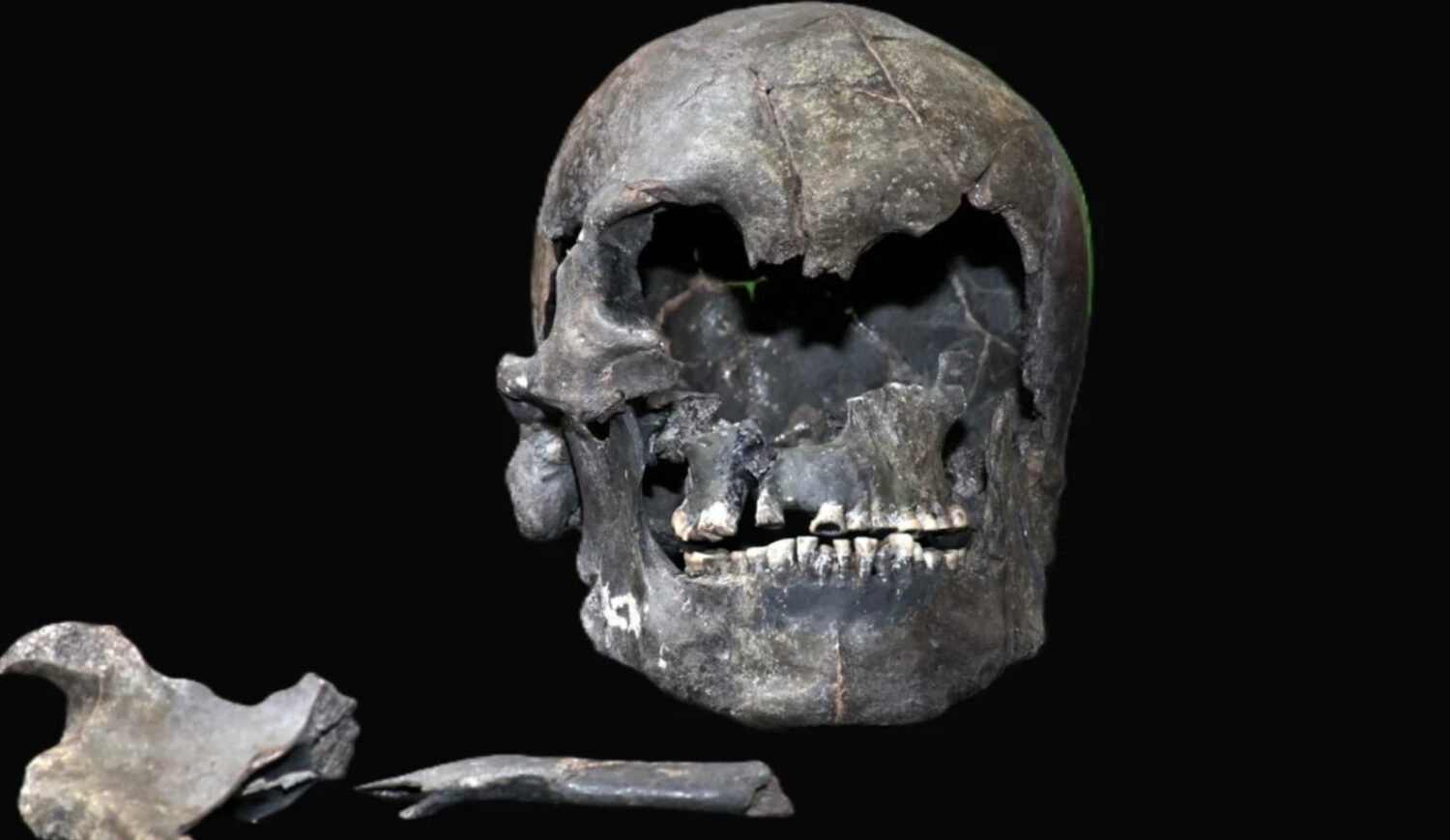
Archaeologist Israel Peña did not expect a human being when he first examined the bones at the construction site of the Felipe Ángeles International Airport in Santa Lucía, State of Mexico. Its size suggested something else entirely, possibly a camel, before full excavation revealed the remains of a person. Mexico’s National Institute of Anthropology and History (INAH) named the individual Yotzin, from the Nahuatl word meaning “unique.” The skeleton is approximately 80% complete and includes part of the skull. Who Yotzin was Osteological analysis produced a detailed physical profile of a young adult male who lived at the end of the last Ice Age. Osteological analysis identified Yotzin as an adult male, approximately 25 to 30 years old and approximately 1.75 meters tall. The ribcage did not survive and the skull has a fracture near the nose and left eye. The bones darkened over time, probably associated with preservation in the wet, swampy sediment where it was buried. His teeth show extensive wear but no cavities, which INAH researchers suggest may reflect a pre-ceramic hunter-gatherer diet based on roots, hard bark and similar materials rather than sugars, although the dental evidence is interpretive rather than direct proof of what he ate. The skeleton of the Yotzin man. Credit: Melitón Tapia, INAHWhat two laboratories foundTwo independent laboratories dated the remains with different methods, placing Yotzin on the border of the Pleistocene and Holocene epochs. A Belgian laboratory, whose name the INAH has not made public, analyzed endogenous collagen and returned a range of 13,087 to 12,987 years before the present. The University of Georgia analyzed the bioapatite and produced a range from 12,050 to 11,700 years before present. Taken together, the results place Yotzin in the transition between the Pleistocene and the Holocene. That marks the end of the last glacial period, when the ice sheets were retreating and the landscape of central Mexico looked nothing like it does today. What dating establishes and what it does not establish The results of dating are significant, but they carry an equally important limitation. According to INAH, Yotzin is among the 23 oldest human skeletons known from the Basin of Mexico and is potentially associated with the oldest recorded populations in the Americas. The dates do not establish their migratory route, precise origins or biological relationship with later populations. The INAH announcement does not provide all the technical details necessary to independently evaluate the chronology, including laboratory protocols, calibration options or contamination controls. Therefore, the results should be treated as preliminary pending further review. A site with a long archaeological history The area around Felipe Ángeles International Airport has been producing prehistoric discoveries for decades. The region around Felipe Ángeles International Airport has been producing prehistoric finds since at least the 1940s and 1960s. Rescue work related to the construction uncovered multiple osteological collections, which the INAH identifies alongside Yotzin as Tlatel 7, This observation may suggest that the area was occupied by different populations at different times. Why 2027 Might Matter More Than 2021 The genomic results expected in early 2027 may ultimately reveal more about Yotzin’s ancestry than mere dating. According to a report on INAH’s work, physical anthropologist Arturo Talavera González suggested that determining Yotzin’s lineage may ultimately be more informative than the ancient date alone. Genomic results are expected as early as the first quarter of 2027, which could allow researchers to compare Yotzin to other ancient individuals and living populations. That comparison could contribute to unresolved debates about how and when humans first moved to the Americas.