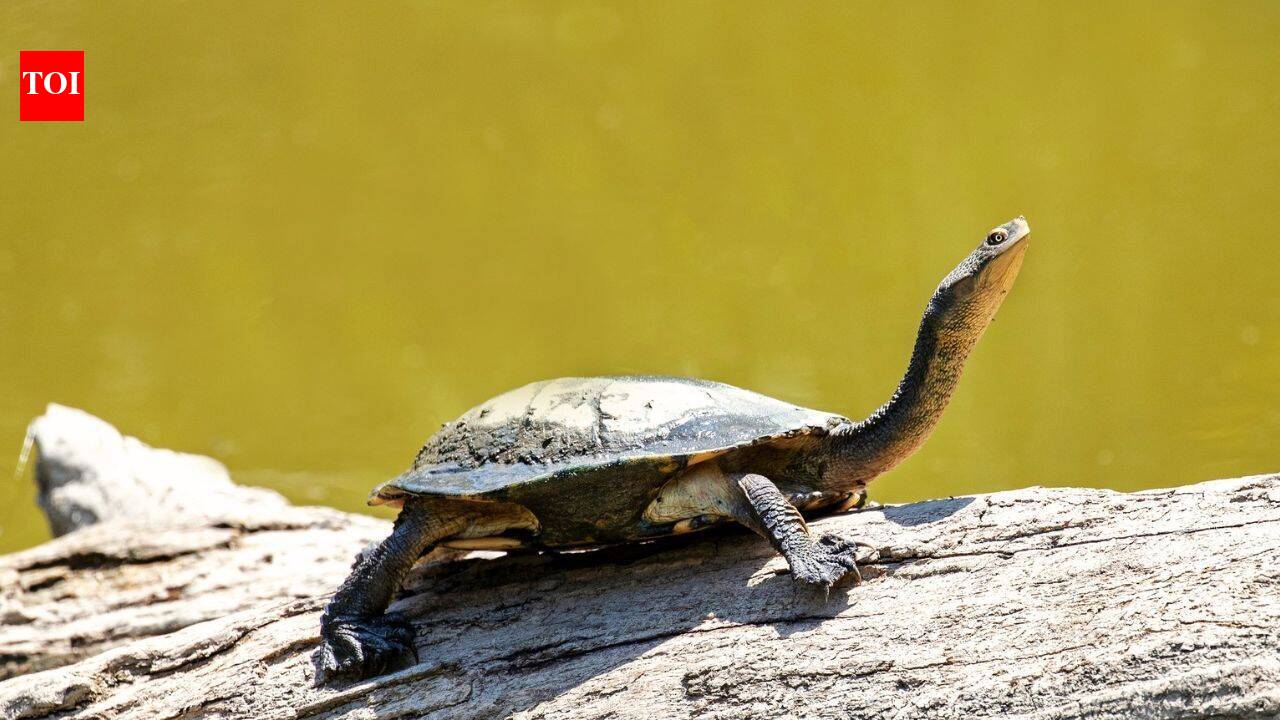
Snake-necked Turtle (Image credit: Canva) Scientists’ research projects are like their babies: celebrating victories and learning lessons from losses. Sometimes researchers involved in the business of species conservation have real babies to care for. PhD candidate April Sturm encounters a similar situation when she captures a juvenile turtle during her routine surveys of Perth’s turtle population. This year, in October, a baby turtle that had been born in a laboratory under his supervision resurfaced in the survey. The incident means more to the conservation status of turtles in the region than just a personal victory for Sturm. According to the Murdoch University press release, the small southwestern snake-necked turtle weighed just 4.77 grams when it was released into the water of Lake Manning in July 2025. Like all released hatchlings, it disappeared into the lake. Upon resurfacing, its weight was noted to have increased to 100 grams, approximately 21 times its release weight. Murdoch University announced the find in its press release on November 20, calling it the first confirmation that a laboratory-incubated hatchling of this species has survived long-term in the wild. PhD candidate April Sturm and Dr Anthony Santoro, both from the Murdoch Center for Sustainable Aquatic Ecosystems, were conducting their annual population surveys when they recaptured the young turtle. They knew what they had because it was one of their own: a turtle that started as an egg hatched in college. Why Perth’s turtles need help The southwestern snake-necked turtle (Chelodina oblonga) is not currently listed as threatened. Still, studies show their populations are declining, particularly around Perth, according to Western Australia’s Department of Biodiversity, Conservation and Attractions (DBCA). The report adds that if Perth’s populations are not managed, they appear to be at significant risk of local extinction. The biggest concern is the disappearance of a generation. Dr. Anthony Santoro, who has studied the species for years, found that most populations lack juveniles and skew toward males. A Murdoch study of 35 Perth wetlands found very few young turtles. The WA DBCA report lists the destruction of egg-filled nests by predators such as foxes and crows, and the loss of native vegetation around urban wetlands. The WA Department of Biodiversity, Conservation and Attractions notes that Western Australia’s changing climate is also a factor in the declining turtle population. The researchers’ proposed solution Santoro’s response was the Save Our Snake-necked Turtle project, one of the largest citizen science efforts attempted in southwestern Australia. Volunteers called Turtle Trackers walk through their local wetland at least once a week during peak breeding season, from mid-September to mid-November, and record what they see, including dead turtles and destroyed nests, through the TurtleSAT app. If the nests are the weak point, the idea is to remove the eggs from the danger zone. Murdoch began its incubation program in 2021-22 with the City of Cockburn. The aim was to increase turtle numbers in Perth’s southern suburbs through repopulation. Sturm welcomed 61 offspring over five months. Each one was between 2 and 3 cm long and weighed between 3 and 6 grams. After eight months of care by Sturm and fellow honors student Liz Whatmore, the turtles were released into Lake Bibra. The site was protected from birds and had plenty to eat, including macroinvertebrates, tadpoles and fish. According to the Department’s report, when a volunteer detects a nesting turtle, he follows it at a distance of at least 15 meters so as not to scare it. If they lay, they cover the nest with mesh to keep predators away. In the 2022 season, Turtle Trackers protected nearly 280 nests in 12 wetlands. The program has since expanded to more councils and more wetlands. Raising hatchlings only counts as conservation if they live after release day, and until now the team had no evidence of this. Now they have a turtle. The researchers themselves affirm it. In the statement, Sturm said the next step is to capture and identify more artificially incubated hatchlings in future studies.