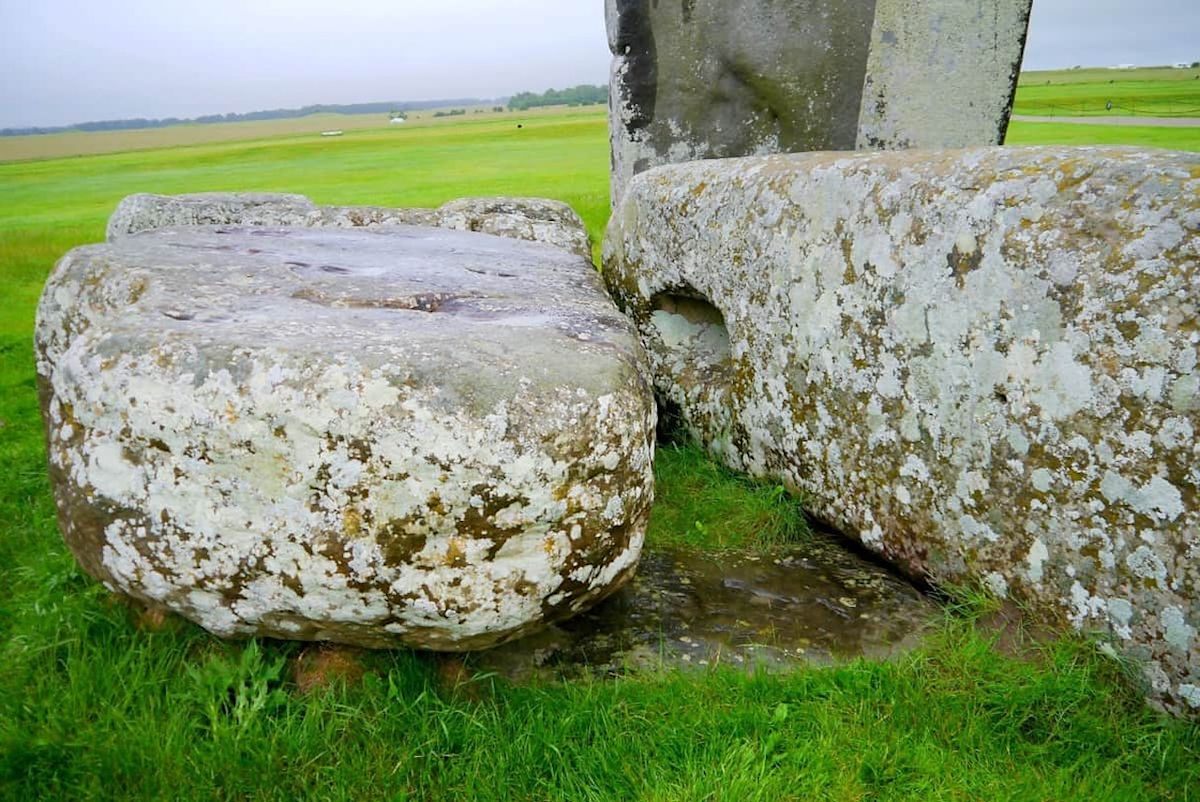
Researchers trying to discover where Stonehenge’s six-ton altar stone came from, after recent tests revealed the megalith was transported from Scotland, not Wales, have checked a number of likely locations in northeast Scotland and found nothing. The sandstone slab lies in the middle of Stonehenge, the prominent prehistoric stone circle in southwestern England, partially buried under the collapsed stones of the Great Trilithon. For a century, following a landmark 1923 paper by geologist H.H. Thomas, scientists thought it had been transported from west Wales along with the monument’s smaller bluestones. That changed in August 2024, when a landmark study in the journal Nature analyzed the slab’s unique mineral imprint and traced it to northeastern Scotland. This time in the investigation, a team led by geology professor Duncan Pirrie of the University of South Wales sought to locate the specific source. They studied the stone at the site and pieces of it kept in museums, then compared it with rock from the Orcadian Basin in northeastern Scotland, the area that seemed most promising. “This is the most comprehensive geological investigation of the Altar Stone ever undertaken. By combining a wide range of analytical techniques, we have built the clearest picture yet of the stone’s composition and tested leading theories about its origins,” Pirrie said in a statement. “So far, none of the sites examined have the same set of characteristics as the Altar.” Stone. “That tells us the search is not over, but we are now much better equipped to focus on the areas most likely to provide an answer,” the professor added. The work, published in the Journal of the Geological Society, gives researchers a clearer list of what a match should look like. That should make it easier to know where not to look. “In a geological detective story like this, ruling out potential areas of origin is as important as identifying new ones,” Nick Pearce of Aberystwyth University said in a statement. Ultimately, the answer matters because the stone’s true origin reveals the advanced capabilities of the people who built Stonehenge between about 3000 and 1600 BC. The bluestones traveled about 140 miles from Wales. A stone from northeastern Scotland would have had to travel much further (at least more than 460 miles) to reach the site, probably by sea. a statement that the team is gaining ground with each test: “With each new piece of evidence, we get closer to solving one of Stonehenge’s most enduring mysteries.” Aberystwyth University, ScienceDailyRead the original article on GEEKSPIN Affiliate links on GEEKSPIN may earn us and our partners a commission.