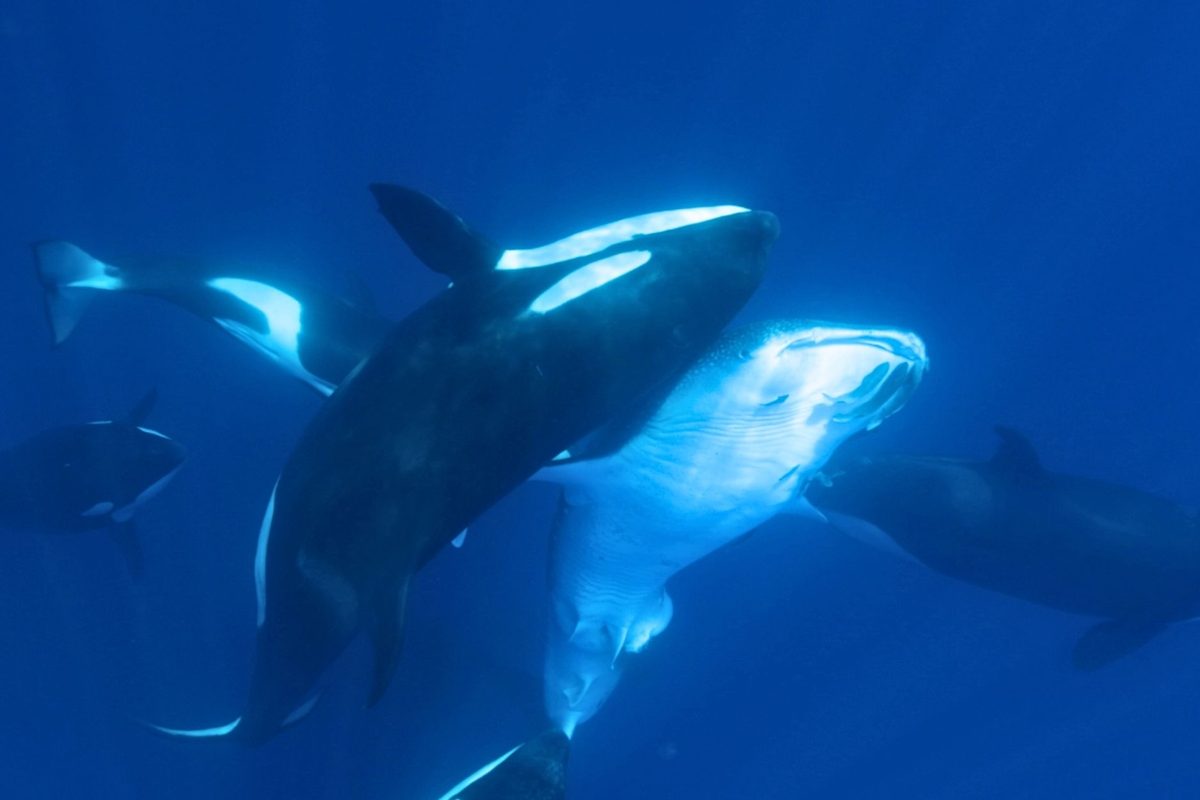
Killer whales, also known as killer whales, are known to feed on a variety of marine life, including mammals, turtles, and fish. Now, a group of orcas in the Gulf of California appears to have developed unique hunting techniques to attack the whale shark, the largest fish in the world. Whale sharks, which can grow up to 18 meters long, often gather in specific locations in the Gulf, where juveniles and smaller individuals are most vulnerable to predators. Anecdotal evidence has suggested that orcas may be taking advantage of this opportunity, but it wasn’t until now that researchers had photographic and video evidence. In 2024, a team of marine biologists documented four separate events in which orcas were observed hunting these enormous sharks. “We show how the orcas deployed a collaborative hunting technique on whale sharks, characterized by focusing on attacking the pelvic area, causing the whale shark to bleed and allowing the orcas to access the lipid-rich liver,” says Erick Higuera Rivas, marine biologist at Conexiones Terramar and lead author of the study published in Frontiers in Marine Science. “One individual participated in three of the four events, along with other members who may belong to a group specializing in shark hunting.” Orcas work together to bring whale shark closer to the surface / Kelsey Williamson Orcas vs whale sharks Documented predation events occurred between 2018 and 2024 in the southern Gulf of California. These cases were captured through photographs and videos taken by both scientists and members of the public. Examining these images, researchers identified individual killer whales based on unique markings on their dorsal fins and scars. A male orca, nicknamed Moctezuma, was present in three of the four recorded hunts. In one case, he was joined by a female orca previously seen with him, suggesting they may belong to the same group or even be related. “When hunting, all members of the pod work together, hitting the whale shark to turn it upside down. In this position, the sharks enter a state of tonic immobility and can no longer move voluntarily or escape by going deeper,” explains Higuera Rivas. “By keeping it under control, the orcas then have greater ease and speed in approaching the pelvic area of the shark and are able to extract organs of nutritional importance to them.” Researchers believe that orcas target the less protected ventral side of whale sharks, where there is less muscle and cartilage, making it easier to access vital organs such as the aorta. Although whale shark livers are highly nutritious and are known to be a valuable part of the orca diet, there was no photographic evidence that the orcas consumed the organ during these hunts. This behavior suggests that some killer whales in the Gulf of California may have developed specific abilities to hunt whale sharks. While similar techniques may exist in other regions, documentation is limited. Above the surface: images show orcas hunting a whale shark in the Gulf of California/Eduardo Miranda. What this behavior means Documenting these hunts was no easy task. Killer whale attacks are unpredictable and obtaining clear images or video is often a challenge due to low quality or limited availability. Despite these obstacles, the researchers believe their findings have important implications. The existence of a pod specialized in hunting whale sharks highlights the need for stricter regulations to protect marine life and promote sustainable tourism in the region. “There must be a specific regulatory standard that guarantees that any type of non-extractive use activity is carried out in a respectful and sustainable manner,” says Higuera Rivas. Additionally, if Montezuma’s pod has developed specialized hunting techniques for whale sharks, they could face risks if their prey declines due to climate change or other environmental factors, the researchers say. Orcas swim to the surface to breathe before delivering the final blow / Kelsey Williamson These findings shed light on the remarkable adaptability of orcas and their intelligence as predators. “It is very impressive how the orcas work together strategically and intelligently to access only a very specific area of the prey. It highlights what great predators they are,” concludes Higuera Rivas. This new knowledge helps deepen our understanding of how orcas adapt their behaviors to suit their environment and prey, an important step in learning how best to protect these extraordinary animals. Several of the orcas were observed with whale shark carrion in their mouths during an attack on May 26, 2024/Kelsey Williamson. Learn more about the study: Killer whales (Orcinus orca) hunt, kill and consume the largest fish on Earth, the whale shark (Rhincodon typus)” Main image: Killer whale hits shark with the side of its head/Kelsey Williamson More wildlife stories from around the world