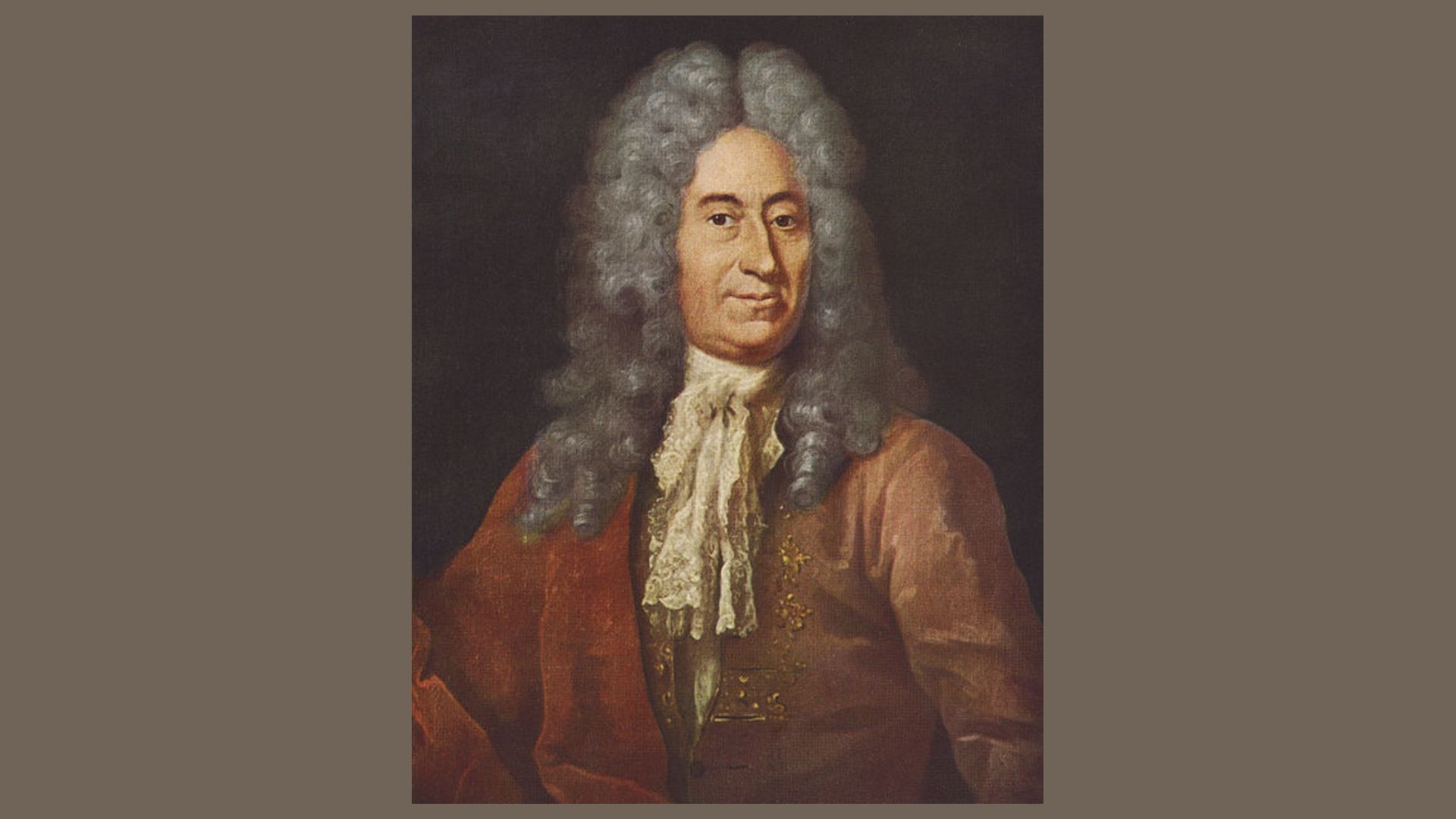
Follow us Add us as a preferred source on Google Newsletter Subscribe to our newsletter On November 21, 1676, Danish astronomer Ole Rømer discovered the speed of light. Before Rømer realized it, scientists thought that light travels instantaneously, or infinitely fast. Rømer disproved this almost by accident when he was studying Jupiter’s moon Io. He was trying to calculate how long it takes for Io to orbit Jupiter in hopes of using it as a cosmic clock. He saw Io disappear behind Jupiter and reappear on the other side. He did this over and over again every 42 hours for years. To their surprise, the timing of the eclipses was not consistent. When Earth was closest to Jupiter, eclipses occurred 11 minutes earlier. Similarly, when the two planets were further away, the eclipses were delayed by 11 minutes. Rømer discovered the pattern and made an accurate prediction for the eclipse of Io on November 9, 1676. Then, on November 21, he took his findings to the Royal Academy of Sciences and explained that a finite speed of light must be responsible. Danish astronomer Ole Rømer (Image credit: Wikimedia Commons) Why it is important Understanding that the speed of light is a constant is the key that unlocked our ability to measure the scale of the universe, as well as being fundamental to the development of modern physics. “The speed of light becomes a kind of upper speed limit,” Live Science explained in an article about why the speed of light matters. “In fact, objects with mass, whether cars or neutrinos, cannot reach the speed of light because they would need infinite energy to do so.” You might like On This Day in Space! November 20, 1998: Russia launches the first module of the International Space Station