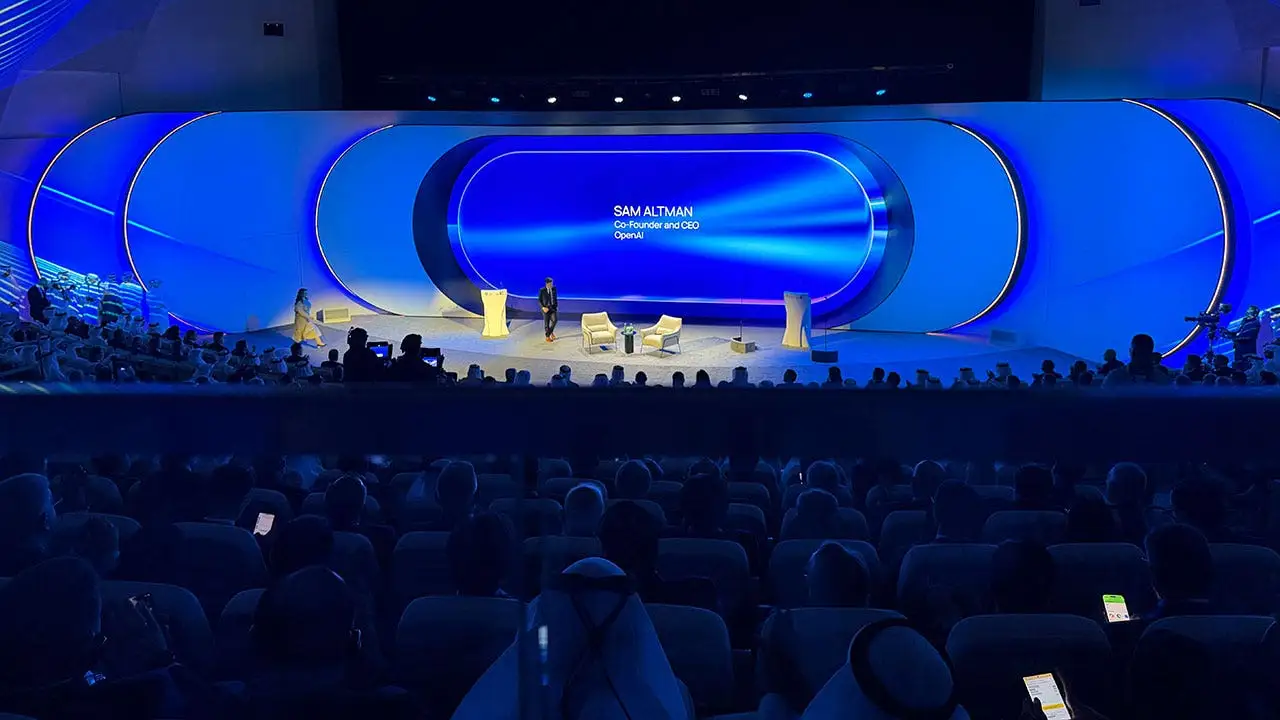
NEWYou can now listen to Fox News articles! One of the biggest court battles over artificial intelligence (AI) is testing an old legal principle and raising important questions about the Trump administration’s AI policy. Several news organizations, including The New York Times, are suing OpenAI and Microsoft for using millions of news articles to train AI systems. The newspapers argue that the technology companies violated basic copyright protections. Tech companies maintain that training their models on such items qualifies as “fair use,” a long-standing principle that allows copyrighted material to be used in certain ways without permission or compensation from the copyright owner. The Department of Justice (DOJ) has sided with OpenAI’s position, breaking with the administration’s previously more balanced stance on the issue. The Justice Department filed a statement of interest encompassing an extreme view of fair use that would give AI companies virtually unlimited access to copyrighted material for commercial training, without obtaining permission or compensating the creators whose works power these systems. MIKE DAVIS: TRUMP’S DOJ SHOULD WITHDRAW ITS DECLARATION OF INTEREST IN OPENAI LAWSUIT This expansive interpretation threatens to turn a narrow copyright exception into a blanket exemption for the world’s most powerful and profitable industries. OpenAI CEO Sam Altman speaks at the opening ceremony of ADIPEC 2026 in Abu Dhabi, United Arab Emirates, November 2, 2026, as ADNOC, OpenAI and G42 announced a major partnership to bring artificial intelligence to the energy industry. (Efrat Lachter/Fox News Digital) The Justice Department’s reasoning is that requiring a copyright license for material used in AI training would impose high costs on AI developers. It claims those costs could make it harder for small businesses to compete and hamper U.S. AI leadership and national security. But the Justice Department’s aggressive arguments in the brief depart from more measured guidance elsewhere in the administration. The official White House AI framework recognizes valid arguments on both sides of the copyright debate. Likewise, the Carolina Principles for Emerging Technologies, adopted by G20 ministers at the Department of Commerce’s recent Innovation Ministerial Conference, recognize that the intersection of AI and copyright raises “complex legal and policy questions.” The principles note the “essential role” of copyright protections in supporting creators and call for respecting intellectual property as a pillar of G20 AI policy. Several AI startups have argued that paying for the material they use provides more reliable access to training material, reduces legal uncertainty, and improves models. Other companies have emerged to add copyrights and facilitate licensing. It is particularly problematic for large AI companies to complain about paying for access to copyrighted materials. They are among the best positioned to pay for those materials, and doing so would help develop the kind of licensing markets they say are missing. OBAMA CRITICIZES TRUMP FOR APPROACH TO AI, SCALES WARN FOR STRONGER REGULATION And even if national security were a legitimate justification, the government couldn’t simply ignore property rights. The Constitution and other laws require fair compensation when private property is used for public use, and intellectual property rights remain property rights. Allowing AI companies to seize creators’ intellectual property without permission or compensation would be akin to allowing data center builders to seize private land without paying fair value. If courts adopt the Justice Department’s position that fair use protects AI developers in virtually all circumstances, the incentives to create new works would be reduced. Copyright encourages creative work by assuring writers, artists, and other creators that their work cannot be easily stolen or copied. Licensing those rights allows creators to make a living and supports more than $1 trillion in American economic activity. Weaker copyrights could lead to fewer human-created books, articles, research papers, movies and songs. Ironically, that could eventually leave AI systems with fewer and lower-quality materials to train on, a scenario that serves no one’s interests. All of this is why the Trump administration would do well to follow its own AI framework and let the court system evaluate AI copyright disputes on a case-by-case basis, rather than advocating for unlimited fair use exceptions. The Justice Department’s reasoning is that requiring a copyright license for material used in AI training would impose high costs on AI developers. He says those costs could make it harder for small businesses to compete and hinder AI leadership and U.S. national security. Policymakers also have a role to play. One promising bill is the bipartisan CLEAR Act. Introduced in February by California Democratic Senator Adam Schiff and Utah Republican Senator John Curtis, the CLEAR Act would require AI developers to publicly disclose the copyrighted works used in the training data set of each new generative AI model. The proposal would not resolve whether any particular training practice qualifies as fair use. But it would give creators more information about whether their work helped train an AI system, allowing them to seek appropriate compensation or other remedies when they believe their rights have been violated. CLICK HERE FOR MORE OPINION FROM FOX NEWS That kind of specific reform offers a useful model for copyright enforcement in the age of AI. Instead of treating licensing as an obstacle to innovation, policymakers should foster a marketplace where AI developers can efficiently license copyrighted material while respecting creators’ rights. CLICK HERE TO DOWNLOAD THE FOX NEWS APPInnovation in AI is vital to America’s future. But America’s creative industries still rely on strong copyright protections. Policymakers should promote both. Coke Morgan Stewart is president and CEO of the Innovation Council and former deputy assistant secretary of Commerce for intellectual property and deputy director of the United States Patent and Trademark Office.